Results by title

7 books match the query 'Prairie Provinces'
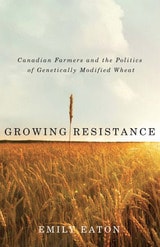
cover of Growing Resistance: Canadian Farmers and the Politics of Genetically-Modified Wheat

Growing Resistance

Canadian Farmers and the Politics of Genetically-Modified Wheat

Emily Eaton

University of Manitoba Press, 2013
[more]
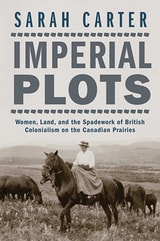
cover of Imperial Plots: Women, Land, and the Spadework of British Colonialism on the Canadian Prairies

Imperial Plots

Women, Land, and the Spadework of British Colonialism on the Canadian Prairies

Sarah Carter

University of Manitoba Press, 2016
[more]
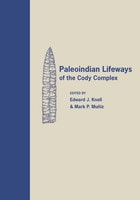
cover of Paleoindian Lifeways of the Cody Complex

Paleoindian Lifeways of the Cody Complex

Edward J. Knell

University of Utah Press, 2013

Paleoindian Lifeways of the Cody Complex represents the first synthesis in the more than fifty year history of one of the most important Paleoindian cultural traditions in North America. Research on the Cody complex (~10,000–8,000 radiocarbon yrs B.P.) began in the 1940s; however, until now publications have focused almost exclusively on specific sites, issues of projectile point technology and typology, and bison hunting. This volume provides fresh perspectives and cutting-edge research that significantly increases our understanding of the Cody complex by focusing more squarely on the human behaviors that created the archaeological record, rather than on more strictly technical aspects of the artifacts and faunal remains.

Because the Cody complex extends from the central Canadian plains to the Gulf of Mexico and from Nevada to the eastern Great Lakes—making it second only to Clovis in geographical expanse—this volume will appeal to a wide range of North American archaeologists. Across this broad geographic distribution, the contributors address hunter-gatherer adaptive strategies from diverse ecosystems at the onset of the Holocene, which will also make it of interest to human ecologists and paleoenvironmental  researchers. Paleoindian Lifeways of the Cody Complex provides an innovative synthesis of a well-known but little-studied cultural tradition that opens the door for a new generation of exciting research.

[more]
cover of Prairie Spirit: Perspectives on the Heritage of the United Church of Canada in the West

Prairie Spirit

Perspectives on the Heritage of the United Church of Canada in the West

Dennis L. Butcher

University of Manitoba Press, 1985
[more]
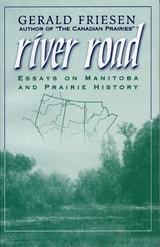
cover of River Road: Essays on Manitoba and Prairie History

River Road

Essays on Manitoba and Prairie History

Gerald Friesen

University of Manitoba Press, 1996
The prairies are a focal point for momentous events in Canadian history, a place where two visions of Canada have often clashed: Louis Riel, the Manitoba School Question, French language rights, the 1919 Winnipeg General Strike, and the dramatic collapse of the Meech Lake Accord when MLA Elijah Harper voted “No.”Gerald Friesen believes that it is the responsibility of the historian to “tell local stories in terms and concepts that make plain their intrinsic value and worth, that explain the relationship between the past and the present.” For local experiences to have any relevant meaning, they must be put into the context of the wider world.These essays were written for the general reader and the academic historian. They include previously published works (many of them revised and updated) from a wide variety of sources, and new pieces written specifically for River Road, examining aspects of prairie and Manitoba history from many different perspectives. They offer portraits of representatives from different sides of the prairie experience, such as Bob Russell, radical socialist and leader of the 1919 General Strike, and J.H. Riddell, conservative Methodist minister who represented “sane and safe” stewardship in the 1920s and 1930s. They explore the changing relationship between Aboriginal peoples and the “dominant” society, from the prosperous Metis community that flourished along the Red River in the 19th century (and produced Manitoba’s first Metis premier) to the events that led to the Manitoba Aboriginal Justice Inquiry in the 1980s.Other essays consider new viewpoints of the prairie past, using the perspectives of ethnic and cultural history, women’s history, regional history, and labour history to raise questions of interpretation and context. The time frame considered is equally wide-ranging, from the Aboriginal and Red River society to the political arena of current constitutional debates.
[more]
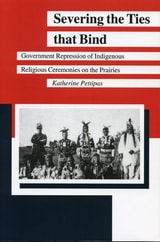
cover of Severing the Ties that Bind: Government Repression of Indigenous Religious Ceremonies on the Prairies

Severing the Ties that Bind

Government Repression of Indigenous Religious Ceremonies on the Prairies

Katherine Pettipas

University of Manitoba Press, 1994
Religious ceremonies were an inseparable part of Aboriginal traditional life, reinforcing social, economic, and political values. However, missionaries and government officials with ethnocentric attitudes of cultural superiority decreed that Native dances and ceremonies were immoral or un-Christian and an impediment to the integration of the Native population into Canadian society. Beginning in 1885, the Department of Indian Affairs implemented a series of amendments to the Canadian Indian Act, designed to eliminate traditional forms of religious expression and customs, such as the Sun Dance, the Midewiwin, the Sweat Lodge, and giveaway ceremonies.However, the amendments were only partially effective. Aboriginal resistance to the laws took many forms; community leaders challenged the legitimacy of the terms and the manner in which the regulations were implemented, and they altered their ceremonies, the times and locations, the practices, in an attempt both to avoid detection and to placate the agents who enforced the law.Katherine Pettipas views the amendments as part of official support for the destruction of indigenous cultural systems. She presents a critical analysis of the administrative policies and considers the effects of government suppression of traditional religious activities on the whole spectrum of Aboriginal life, focussing on the experiences of the Plains Cree from the mid-1880s to 1951, when the regulations pertaining to religious practices were removed from the Act. She shows how the destructive effects of the legislation are still felt in Aboriginal communities today, and offers insight into current issues of Aboriginal spirituality, including access to and use of religious objects held in museum repositories, protection of sacred lands and sites, and the right to indigenous religious practices in prison.
[more]
cover of Towards Defining the Prairies: Region, Culture, and History

Towards Defining the Prairies

Region, Culture, and History

Robert Wardhaugh

University of Manitoba Press, 2001

[more]