Results by title
19 books match the query 'Praise'
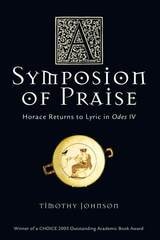
A Symposion of Praise
Horace Returns to Lyric in Odes IVTimothy Johnson
University of Wisconsin Press, 2007
Johnson shows the Horatian panegyrist is more than a dependent poet representing only the desires of his patrons. The poet forges the panegyric agenda, setting out the character of the praise (its mode, lyric, and content both positive and negative), and calls together a community to join in the creation and adaptation of Roman identities and civic ideologies. With this insightful reading, A Symposion of Praise will be of interest to historians of the Augustan period and its literature, and to scholars interested in the dynamics between personal expression and political power.
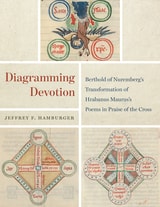
Diagramming Devotion
Berthold of Nuremberg’s Transformation of Hrabanus Maurus’s Poems in Praise of the CrossJeffrey F. Hamburger
University of Chicago Press, 2020
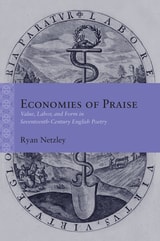
Economies of Praise
Value, Labor, and Form in Seventeenth-Century English PoetryRyan Netzley
Northwestern University Press, 2024
Reevaluates early modern poems of praise as, paradoxically, challenging an artistic economy that values exchange and productivity
Early modern poems of praise typically insist that they do not have a purpose or enact real labor beyond their effortless listing of laudable qualities. And yet the poets discussed in this study, including Ben Jonson, Andrew Marvell, Anne Bradstreet, Lucy Hutchinson, and John Milton, hint at an alternative aesthetic economy at work in their verse. Poetic praise, it turns out, might show us a social world outside the organizing principle of exchange.
In Economies of Praise: Value, Labor, and Form in Seventeenth‑Century English Poetry, Ryan Netzley explores how poems of praise imagine alternatives to market and gift economies and point instead to a self-contained aesthetic economy that works against a more expansive and productivist understanding of literary art. By depicting exchange as inconsequential, unproductive, and redundant rather than a necessary constituent of social order, these poems model for modern readers a world without the imperative to create, appraise, and repeatedly demonstrate one’s own value.
Graceful Errors
Pindar and the Performance of PraiseHilary Mackie
University of Michigan Press, 2003
Reading Pindar's poems with their public performance in mind, Hilary Mackie suggests that the poet was forced to tread a precarious path: weighing the interests of various groups of audience members against one another, balancing praise of the victorious athlete with praise of the deeds of mythic heroes, and catering at the same time to an uncertain future. Mackie's new approach illuminates apparent contradictions in the poet's pronouncements by bringing to the fore the variety of messages conveyed in his wishes and prayers. Her innovative examination of the moment-to-moment dynamic between Pindar and his audience shows that the poet's performance often contained one message for the victor and his family, and quite another for the gods.
Graceful Errors significantly changes our perspective on Pindar's work, providing a lucid appreciation of Pindaric poetry that takes into account the oral context of these poems' performance. It will be of interest not only to classicists but also to scholars and students interested in oral performance, the social function of poetry, and the role and status of poets in traditional cultures, whether ancient or modern.
Hilary Mackie is Associate Professor of Classics at Rice University.

Here on Lake Hallie
In Praise of Barflies, Fix-It Guys, and Other Folks in Our HometownPatti See
Wisconsin Historical Society Press, 2022
Growing up in the 1970s and 1980s as the youngest of eight children, Patti never imagined she’d stay in Chippewa Falls as an adult. Now, living on rural Lake Hallie just five miles from her childhood home, she has a new appreciation for all that comes with country living, from ice fishing and eagle sightings to pontoon rides and tavern dice. These brief essays—many of which were originally published in the Sawdust Stories column of the Eau Claire Leader-Telegram—establish that, above all else, it’s friends, family, and other folks in our hometown who provide us with a sense of belonging.
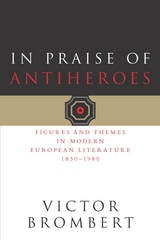
In Praise of Antiheroes
Figures and Themes in Modern European Literature, 1830-1980Victor Brombert
University of Chicago Press, 1999
Though they fail, by design, to live up to conventional expectations of mythic heroes, antiheroes are not necessarily "failures." They display different kinds of courage more in tune with our time and our needs: deficiency translated into strength, failure experienced as honesty, dignity achieved through humiliation. Brombert explores these paradoxes in the works of Büchner, Gogol, Dostoevsky, Flaubert, Svevo, Hašek, Frisch, Camus, and Levi. Coming from diverse cultural and linguistic traditions, these writers all use the figure of the antihero to question handed-down assumptions, to reexamine moral categories, and to raise issues of survival and renewal embodying the spirit of an uneasy age.
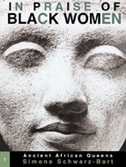
In Praise of Black Women, Volume 1
Ancient African QueensSimone Schwarz-Bart with Andre Schwarz-Bart
University of Wisconsin Press, 2001
Volume 1: Ancient African Queens weaves together oral tradition, folk legends and stories, songs and poems, historical accounts, and travelers’ tales from Egypt to southern Africa, from prehistory to the nineteenth century. These women rulers, warriors, and heroines include Amanirenas, the queen of Kush who battled Roman armies and defeated them at Aswan; Daurama, mother of the seven Hausa kingdoms; Amina Kulibali, founder of the Gabu dynasty in Senegal; Ana de Sousa Nzinga, who resisted the Portuguese conquest of Angola; Beatrice Kimpa Vita, a Kongo prophet burned at the stake by Christian missionaries; Nanda, mother of the famous warrior-king Shaka Zulu; and many others.
These extraordinary women's stories, narrated in the style of African oral tradition, are absorbing, informative, and accessible. The abundant illustrations, many of them rare archival images, depict the diversity among Black women and make this volume a unique treasure for every art lover, every school, and every family.

In Praise of Disobedience
Clare of Assisi, A NovelDacia Maraini
Rutgers University Press, 2023
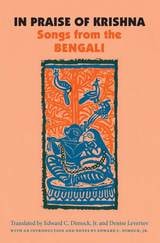
In Praise of Krishna
Songs from the BengaliEdward C. Dimock Jr. and Denise Levertov
University of Chicago Press, 1981

In Praise of Older Women
The Amorous Recollections of A. VStephen Vizinczey
University of Chicago Press, 1990
"A pleasure. Vizinczey writes of women beautifully, with sympathy, tact and delight, and he writes about sex with more lucidity and grace than most writers ever acquire."—Larry McMurtry, Houston Post
"Like James Joyce, who was as far from being a writer of erotica as Dostoevsky, Vizinczey has a refreshing message to deliver: Life is not about sex, sex is about life."—John Podhoretz, Washington Times
"The gracefully written story of a young man growing up among older women . . . although some passages may well arouse the reader, this novel brims with what the courts have termed "redeeming literary merit."—Clarence Petersen, Chicago Tribune
"A funny novel about sex, or rather (which is rarer) a novel which is funny as well as touching about sex . . . elegant, exact and melodious—has style, presence and individuality."—Isabel Quigly, Sunday Telegraph
"The delicious adventures of a young Casanova who appreciates maturity while acquiring it himself. In turn naive, sophisticated, arrogant, disarming, the narrator woos his women and his tale wins the reader."—Polly Devlin, Vogue
In Praise of Philosophy and Other Essays
Maurice Merleau-Ponty
Northwestern University Press, 1988
In Praise of the Impure
Poetry and the Ethical Imagination: Essays, 1980-1991Alan Shapiro
Northwestern University Press, 1993
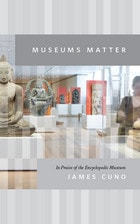
Museums Matter
In Praise of the Encyclopedic MuseumJames Cuno
University of Chicago Press, 2011
The concept of an encyclopedic museum was born of the Enlightenment, a manifestation of society’s growing belief that the spread of knowledge and the promotion of intellectual inquiry were crucial to human development and the future of a rational society. But in recent years, museums have been under attack, with critics arguing that they are little more than relics and promoters of imperialism. Could it be that the encyclopedic museum has outlived its usefulness?
With Museums Matter, James Cuno, president and director of the Art Institute of Chicago, replies with a resounding “No!” He takes us on a brief tour of the modern museum, from the creation of the British Museum—the archetypal encyclopedic collection—to the present, when major museums host millions of visitors annually and play a major role in the cultural lives of their cities. Along the way, Cuno acknowledges the legitimate questions about the role of museums in nation-building and imperialism, but he argues strenuously that even a truly national museum like the Louvre can’t help but open visitors’ eyes and minds to the wide diversity of world cultures and the stunning art that is our common heritage. Engaging with thinkers such as Edward Said and Martha Nussbaum, and drawing on examples from the politics of India to the destruction of the Bramiyan Buddhas to the history of trade and travel, Cuno makes a case for the encyclopedic museum as a truly cosmopolitan institution, promoting tolerance, understanding, and a shared sense of history—values that are essential in our ever more globalized age.
Powerful, passionate, and to the point, Museums Matter is the product of a lifetime of working in and thinking about museums; no museumgoer should miss it.
Praise of Folly
Desiderius Erasmus; Translated by John Wilson
University of Michigan Press, 1958
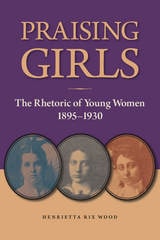
Praising Girls
The Rhetoric of Young Women, 1895-1930Henrietta Rix Wood
Southern Illinois University Press, 2016
The site of the study—Kansas City, Missouri—reflects the diverse rhetorical experiences of girls in cities across the United States at the beginning of the last century. Four case studies examine the writing of privileged white girls at a college preparatory school, Native American girls at an off-reservation boarding school, African American girls at a segregated high school, and working- and middle-class girls at a large whites-only public high school. Wood’s analysis reveals a contemporary concept of epideictic rhetoric that accounts for issues of gender, race, class, and age.

The Effect of Praise and Competition on the Persisting Behavior of Kindergarten Children
Theta Wolf
University of Minnesota Press, 1939
The Eucharistic Vision of Laudato Si
Praise, Conversion, and Integral EcologyLucas Briola
Catholic University of America Press, 2022
The Praise of 'Sons of Bitches'
On the Worship of God by Fallen MenJames V. Schall
St. Augustine's Press, 2014
The Trinity; The Spectacle; Jewish Foods; In Praise of Purity; Letters
Catholic University of America Press, 1974