Results by title
6 books match the query 'Prashad, Vijay'
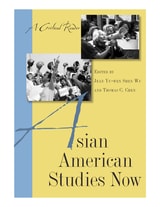
Asian American Studies Now
A Critical ReaderWu, Jean Yu-Wen Shen
Rutgers University Press, 2010
Jean Yu-wen Shen Wu and Thomas C. Chen have selected essays for the significance of their contribution to the field and their clarity, brevity, and accessibility to readers with little to no prior knowledge of Asian American studies. Featuring both reprints of seminal articles and groundbreaking texts, as well as bold new scholarship, Asian American Studies Now addresses the new circumstances, new communities, and new concerns that are reconstituting Asian America.
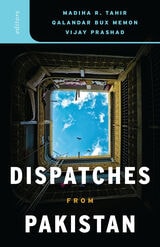
Dispatches from Pakistan
Madiha R. Tahir
University of Minnesota Press, 2014
Since 9/11, Pakistan has loomed large in the geopolitical imagination of the West. A key ally in the global war on terror, it is also the country in which Osama bin Laden was finally found and killed—and the one that has borne the brunt of much of the ongoing conflict’s collateral damage. Despite its prominence on the front lines and on the front pages, Pakistan has been depicted by Western observers simplistically in terms of its corruption, its fundamentalist Islamic beliefs, and its propensity for violence. Dispatches from Pakistan, in contrast, reveals the complexities, the challenges, and the joys of daily life in the country, from the poetry of Gilgit to the graffiti of Gwadar, from an army barrack in Punjab to the urban politics of Karachi.
This timely book brings together journalists, activists, academics, and artists to provide a rich, in-depth, and intriguing portrait of contemporary Pakistani society. Straddling a variety of boundaries—geographic, linguistic, and narrative—Dispatches from Pakistan is a vital attempt to speak for the multitude of Pakistanis who, in the face of seemingly unimaginable hardships, from drone strikes to crushing poverty, remain defiantly optimistic about their future. While engaging in conversations on issues that make the headlines in the West, the contributors also introduce less familiar dimensions of Pakistani life, highlighting the voices of urban poets, rural laborers, industrial workers, and religious-feminist activists—and recovering Pakistani society’s inquilabi (revolutionary) undercurrents and its hopeful overtones.
Contributors: Mahvish Ahmad; Nosheen Ali, U of California, Berkeley; Shafqat Hussain, Trinity College; Humeira Iqtidar, King’s College London; Amina Jamal, Ryerson U; Hafeez Jamali, U of Texas at Austin; Iqbak Khattak; Zahra Malkani; Raza Mir; Hammad Nasar; Junaid Rana, U of Illinois at Urbana–Champaign; Maliha Safri, Drew U; Aasim Sajjad Akhtar, Lahore U of Management Sciences; Ayesha Siddiqa; Sultan-i-Rome, Government Jahanzeb Postgraduate College, Swat, Pakistan; Saadia Toor, Staten Island College.
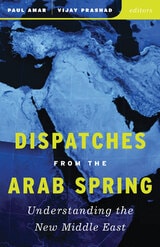
Dispatches from the Arab Spring
Understanding the New Middle EastPaul Amar
University of Minnesota Press, 2013
The Arab Spring unleashed forces of liberation and social justice that swept across North Africa and the Middle East with unprecedented speed, ferocity, and excitement. Although the future of the democratic uprisings against oppressive authoritarian regimes remains uncertain in many places, the revolutionary wave that started in Tunisia in December 2010 has transformed how the world sees Arab peoples and politics. Bringing together the knowledge of activists, scholars, journalists, and policy experts uniquely attuned to the pulse of the region, Dispatches from the Arab Spring offers an urgent and engaged analysis of a remarkable ongoing world-historical event that is widely misinterpreted in the West.
Tracing the flows of protest, resistance, and counterrevolution in every one of the countries affected by this epochal change—from Morocco to Iraq and Syria to Sudan—the contributors provide ground-level reports and new ways of teaching about and understanding the Middle East in general, and contextualizing the social upheavals and political transitions that defined the Arab Spring in particular. Rejecting outdated and invalid (yet highly influential) paradigms to analyze the region—from depictions of the “Arab street” as a mindless, reactive mob to the belief that Arab culture was “unfit” for democratic politics—this book offers fresh insights into the region’s dynamics, drawing from social history, political geography, cultural creativity, and global power politics. Dispatches from the Arab Spring is an unparalleled introduction to the changing Middle East and offers the most comprehensive and accurate account to date of the uprisings that profoundly reshaped North Africa and the Middle East.
Contributors: Sheila Carapico, U of Richmond; Nouri Gana, UCLA; Toufic Haddad; Adam Hanieh, SOAS/U of London; Toby C. Jones, Rutgers U; Anjali Kamat; Khalid Medani, McGill U; Merouan Mekouar; Maya Mikdashi, NYU; Paulo Gabriel Hilu Pinto, U Federal Fluminense, Brazil; Jillian Schwedler, Hunter College, CUNY; Ahmad Shokr; Susan Slyomovics, UCLA; Haifa Zangana.

Karma Of Brown Folk
Vijay Prashad
University of Minnesota Press, 2001
The popular book challenging the idea of a model minority, now in paperback!
“How does it feel to be a problem?” asked W. E. B. Du Bois of black Americans in his classic The Souls of Black Folk. A hundred years later, Vijay Prashad asks South Asians “How does it feel to be a solution?” In this kaleidoscopic critique, Prashad looks into the complexities faced by the members of a “model minority”-one, he claims, that is consistently deployed as "a weapon in the war against black America."
On a vast canvas, The Karma of Brown Folk attacks the two pillars of the “model minority” image, that South Asians are both inherently successful and pliant, and analyzes the ways in which U.S. immigration policy and American Orientalism have perpetuated these stereotypes. Prashad uses irony, humor, razor-sharp criticism, personal reflections, and historical research to challenge the arguments made by Dinesh D’Souza, who heralds South Asian success in the U.S., and to question the quiet accommodation to racism made by many South Asians. A look at Deepak Chopra and others whom Prashad terms “Godmen” shows us how some South Asians exploit the stereotype of inherent spirituality, much to the chagrin of other South Asians. Following the long engagement of American culture with South Asia, Prashad traces India’s effect on thinkers like Cotton Mather and Henry David Thoreau, Ravi Shankar’s influence on John Coltrane, and such essential issues as race versus caste and the connection between antiracism activism and anticolonial resistance.
The Karma of Brown Folk locates the birth of the “model minority” myth, placing it firmly in the context of reaction to the struggle for Black Liberation. Prashad reclaims the long history of black and South Asian solidarity, discussing joint struggles in the U.S., the Caribbean, South Africa, and elsewhere, and exposes how these powerful moments of alliance faded from historical memory and were replaced by Indian support for antiblack racism. Ultimately, Prashad writes not just about South Asians in America but about America itself, in the tradition of Tocqueville, Du Bois, Richard Wright, and others. He explores the place of collective struggle and multiracial alliances in the transformation of self and community-in short, how Americans define themselves.
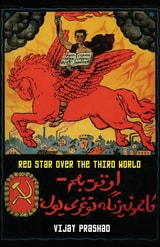
Red Star Over the Third World
Vijay Prashad
Pluto Press, 2019
From Cuba to Vietnam, China to South Africa, the October Revolution of 1917 inspired millions of people beyond the territory of Russia. It proved that the masses could not only overthrow autocratic governments, but that they could also form an opposing government in their own image.
The new idea that the working class and the peasantry could be allied, combined with the clear strength and necessity of a vanguard party, guided multiple revolutions across the globe. Here is much-needed antidote to all the glum histories written on the demise of the Soviet Union. Vijay Prashad throws a spotlight on the way the Russian Revolution was seen and received in the countries colonized by European empires. With Russia as an inspiration and providing support, suddenly workers and peasants, those left out of capitalist prosperity, organized and attempted to create for themselves real socialist revolution. Prashad’s chapters include:
*Eastern Graves
*Red October
*Follow the Path of the Russians
*The Lungs of Russia
*Soviet Asia
*Enemy of Imperialism
*Eastern Marxism
*Colonial Fascism
*Polycentric Communism
*Memories of Communism
The author writes in this Preface, “It has been a quarter-century since the demise of the USSR. And yet, the marks of the October Revolution remain—not just in the territories of the USSR but more so in what used to be known as the Third World. From Cuba to Vietnam, from China to South Africa, the October Revolution remains as an inspiration. After all, that Revolution proved that the working class and the peasantry could not only overthrow an autocratic government but it could form its own government.”
This book explains the power of the October Revolution in the Global South. From Ho Chí Minh to Fidel Castro, reflections on polycentric communism, and collective memories of communism, it shows how, for a brief moment, another world was possible.
Third Worlds Within
Multiethnic Movements and Transnational SolidarityDaniel Widener
Duke University Press, 2024