Results by title
13 books match the query 'Praxis'
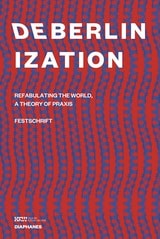
Deberlinization
Refabulating the World, a Theory of PraxisEdited by Bonaventure Soh Bejeng Ndikung, Ibou Coulibaly Diop, and Franck Hermann Ekra
Diaphanes, 2025
In 1884, the Chancellor of the German Empire, Otto von Bismarck, convened a conference in Berlin to organize the division of the African continent among the industrial and military powers of the time. The result was a profound dismemberment of Africa’s original political structures, which, driven by nationalism and a barbaric ethos of rule, had a lasting impact on the continent’s political, socioeconomic, cultural, and spiritual development. One hundred and forty years after the Berlin Conference, it seems more than urgent to disentangle this complex of colonial appropriation, identify its after-effects, and question its epistemological legacy—all the more so as Europe searches for a new positioning in the changing geopolitical balance of power.
This multidisciplinary anthology takes up the idea of a transnational performative utopia to explore the possibilities of refabulating the world order and its future. Between creative action and resistance, memory and foresight, Deberlinization opens up perspectives on trans-African cohesion and outlines a new poetics of sovereignty.
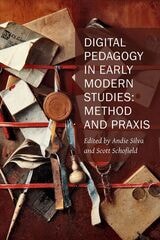
Digital Pedagogy in Early Modern Studies
Method and PraxisEdited by Andie Silva and Scott Schofield
Iter Press, 2023
This collection of essays focuses on teaching at the intersection of early modern literature, book history, and digital media. It considers how teaching different fields and methods of study can be enhanced and facilitated by digital technologies. The volume provides a snapshot of current thinking on digital pedagogy as practiced by leading scholars in the field and offers a series of models that may be adapted, personalized, and repurposed by future teachers seeking to bring digital methodologies to their classrooms. Supplementary materials for this title are available on the Iter Press website (iterpress.org): see under Books/Supplementary Materials.

From the Skin
Defending Indigenous Nations Using Theory and PraxisEdited by J. Jeffery Clark and Elise Boxer; Foreword by Nick Estes
University of Arizona Press, 2023
In this volume, contributors demonstrate the real-world application of Indigenous theory to the work they do in their own communities and how this work is driven by urgency, responsibility, and justice—work that is from the skin.
In From the Skin, contributors reflect on and describe how they apply the theories and concepts of Indigenous studies to their communities, programs, and organizations, and the ways the discipline has informed and influenced the same. They show the ways these efforts advance disciplinary theories, methodologies, and praxes. Chapters cover topics including librarianship, health programs, community organizing, knowledge recovery, youth programming, and gendered violence. Through their examples, the contributors show how they negotiate their peoples’ knowledge systems with knowledge produced in Indigenous studies programs, demonstrating how they understand the relationship between their people, their nations, and academia.
Editors J. Jeffery Clark and Elise Boxer propose and develop the term practitioner-theorist to describe how the contributors theorize and practice knowledge within and between their nations and academia. Because they live and exist in their community, these practitioner-theorists always consider how their thinking and actions benefit their people and nations. The practitioner-theorists of this volume envision and labor toward decolonial futures where Indigenous peoples and nations exist on their own terms.
Contributors
Randi Lynn Boucher-Giago
Elise Boxer
Shawn Brigman
J. Jeffery Clark
Nick Estes
Eric Hardy
Shalene Joseph
Jennifer Marley
Brittani R. Orona
Alexander Soto

Indifference
On the Praxis of Interspecies BeingNaisargi N. Davé
Duke University Press, 2023

Liberation Theology and Praxis in Contemporary Latin America
As It Was in the Beginning?Edited by Pablo Bradbury and Niall H.D. Geraghty
University of London Press, 2025
This highly interdisciplinary collection brings together diverse and complementary approaches from history, theology, cultural studies, architecture, sociology, and anthropology to reevaluate the legacy of liberation theology in Latin America.
Liberation theology was born in the 1960s at a time of Church renewal and socio-economic ferment, as many sought more radical solutions in the context of the exhaustion of developmentalist projects and the institutionalized violence of capitalism. The book’s central focus on the lived experiences and embodied practices of those engaged in social action in the region challenges the narrative that suggests that liberation theology had reached its decline by the end of the 1970s. It demonstrates that liberationist Christianity was at once more diverse and internally conflicted, more widely resonant outside ecclesial confines, and more interconnected over time than often allowed.
The chapters investigate a range of topics: the ecclesiology of a revolutionary movement of Argentine priests in the 1960s and ́1970s, the engagement of liberation theology with Participatory Action Research and its influence on architectural approaches and urbanism, 1980s feminist liberation theology, encounters with Western human rights at a time of Cold War repression and exile, and ecofeminist political theology in contemporary Latin America. Pulling these threads together, Liberation Theology and Praxis in Contemporary Latin America invites us to reconsider how we understand liberation theology’s history as well as its reach into the present day.
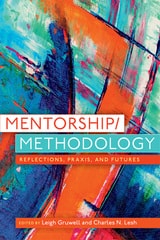
Mentorship/Methodology
Reflections, Praxis, and FuturesLeigh Gruwell
Utah State University Press, 2024
The contributors consider how methodology informs mentorship, how mentorship activates methodology, and how to locate the future of the field in these moments of intersection. Mentorship, through the research and relationships it nourishes, creates the future of writing studies—or, conversely, reproduces the past. At the juncture where this happens, the contributors inquire, Where have current arrangements of mentorship/methodology taken writing studies? Where do these points of intersection exist in performance and practice, in theory, in research? What images of the field do they produce? How can scholars better articulate and write about these moments or spaces in which mentorship and methodology collide in productive disciplinary work?
By making the “slash” more visible, Mentorship/Methodology provides significant opportunities to support and cultivate diverse ways of knowing and being in rhetoric and composition, both locally and globally. The volume will appeal to students and scholars of rhetoric, composition, and technical and professional communication, as well as readers interested in conversations about mentorship and methodology.
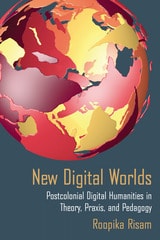
New Digital Worlds
Postcolonial Digital Humanities in Theory, Praxis, and PedagogyRoopika Risam
Northwestern University Press, 2019
New Digital Worlds traces the formation of postcolonial studies and digital humanities as fields, identifying how they can intervene in knowledge production in the digital age. Roopika Risam examines the role of colonial violence in the development of digital archives and the possibilities of postcolonial digital archives for resisting this violence. Offering a reading of the colonialist dimensions of global organizations for digital humanities research, she explores efforts to decenter these institutions by emphasizing the local practices that subtend global formations and pedagogical approaches that support this decentering. Last, Risam attends to human futures in new digital worlds, evaluating both how algorithms and natural language processing software used in digital humanities projects produce universalist notions of the "human" and also how to resist this phenomenon.
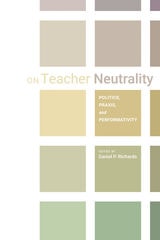
On Teacher Neutrality
Politics, Praxis, and PerformativityDaniel P. Richards
Utah State University Press, 2020
Higher education itself and its stakeholders are continually exploring the role of teachers in the classroom and the extent to which it is possible or ethical to engage in neutrality. Amplifying voices from teachers in underrepresented positions and institutions in discussions of teacher ideology, On Teacher Neutrality shapes the discourse around these topics both within the writing classroom and throughout higher education. The book offers a rich array of practices, pedagogies, and theories that will help ground instructors and posits a way forward toward better dialogue and connections with the various stakeholders of higher education in the United States.
Contributors:
Tristan Abbott, Kelly Blewett, Meaghan Brewer, Christopher Michael Brown, Chad Chisholm, Jessica Clements, Jason C. Evans, Heather Fester, Romeo García, Yndalecio Isaac Hinojosa, Mara Holt, Erika Johnson, Tawny LeBouef Tullia, Lauren F. Lichty, Adam Pacton, Daniel P. Richards, Patricia Roberts-Miller, Karen Rosenberg, Allison L. Rowland, Robert Samuels, David P. Stubblefield, Jennifer Thomas, John Trimbur

Political Theory and Praxis
New PerspectivesTerence Ball, Editor
University of Minnesota Press, 1977
Political Theory and Praxis was first published in 1977. Minnesota Archive Editions uses digital technology to make long-unavailable books once again accessible, and are published unaltered from the original University of Minnesota Press editions.
Nine distinguished contributors—philosophers and political scientists at universities and colleges in the United States, Europe, Canada, and Australia—write essays for this volume in political philosophy. The book is dedicated to the memory of Hannah Arendt, the writer and philosopher who died in 1975. The contributors discuss various aspects of the concepts of theory and practice and their interrelationship. All of the essays were written expressly for this volume. In an introduction, Professor Ball, the volume editor, notes that the essays reflect the diversity of conceptions of theory, of practice, and of their conceptual and practical interrelations, and that the contributors explore various ways and byways of approaching the age-old questions of theory and its relation to practice.
Part I: Origins
"On the History of 'Theory' and 'Praxis'," Nicholas Lobkowicz; "Creatures of a Day: Thought and Action in Thucydides,"J. Peter Euben; " Plato and Aristotle: The Unity Versus the Autonomy of Theory and Practice." Terence Ball.Part II: Developments
"Kant on Theory and Practice," Carl Raschke; "Theory and Practice in Hegel and Marx: An Unfinished Dialogue,"Peter Fuss; "The Unity of Theory and Practice: The Science of Marx and Nietzsche," Edward Andrew.Part II: Dilemmas and New Directions
"Hannah Arendt: The Ambiguities of Theory and Practice," Richard J. Bernstein; "Rebels, Beginners, and Buffoons: Politics as Action," Raymond L. Nichols; "How People Change Themselves: The Relationship between Critical Theory and Its Audience," Brian Fay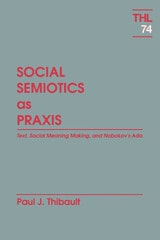
Social Semiotics As Praxis
Text, Social Meaning Making, and Nabokov’s AdaPaul J. Thibault
University of Minnesota Press, 1991
In Social Semiotics as Praxis, Paul J. Thibault rescues semiotics from terminal formalism by recognizing that the object of a semiotic inquiry is necessarily the way in which human beings, individually and collectively, make sense of their lives. Focusing on Vladimir Nabokov’s Ada, he develops a conception of social semiotics that is a form of both social action and political praxis.
Thibault’s principal intellectual sources are, among others, Bakhtin, Volosinov, Derrida, Foucault, Gramsci, Habermas, and Halliday. Thibault combines the work of Halliday in particular with is own theories of semiotics to explore the dynamics of quoting and reporting speech and to develop a critique of the categories of “self” and “representation.” Thibault accounts for the meaningful relationships constructed among texts and elaborates on the two main themes of relational levels in texts and the dynamics of contextualization to give voice to a unifying discourse for talking about social meaning making.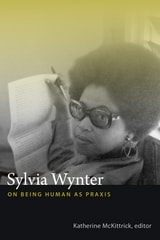
Sylvia Wynter
On Being Human as PraxisKatherine McKittrick, ed.
Duke University Press, 2015

The Black Geographic
Praxis, Resistance, FuturityCamilla Hawthorne and Jovan Scott Lewis, editors
Duke University Press, 2023
Contributors. Anna Livia Brand, C.N.E. Corbin, Lindsey Dillon, Chiyuma Elliott, Ampson Hagan, Camilla Hawthorne, Matthew Jordan-Miller Kenyatta, Jovan Scott Lewis, Judith Madera, Jordanna Matlon, Solange Muñoz, Diana Negrín, Danielle Purifoy, Sharita Towne

Unitary Caring Science
Philosophy and Praxis of NursingJean Watson
University Press of Colorado, 2018
Watson writes for the Caritas Conscious Nurse™ or the Caritas Conscious Scholar/Practitioner/Educator on the journey toward the deeper caring-healing dimensions of life. Unitary Caring Science offers a personal-professional path of authenticity, bringing universals of Love, Energy, Spirit, Infinity of Purpose, and Meaning back into nurses lives and their life’s work. Unitary Caring Science serves as a continuing, evolving message to the next generation of nurse scholars and healing-health practitioners committed to a praxis informed by mature disciplinary consciousness.
Individual customers will also receive a secure link to select copyrighted teaching videos and meditations on www.watsoncaringscience.org.