Results by title
5 books match the query 'Predation (Biology)'
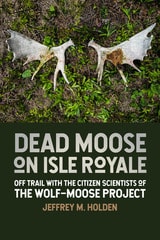
Dead Moose on Isle Royale
Off Trail with the Citizen Scientists of the Wolf-Moose ProjectJeffrey M Holden
Michigan State University Press, 2025
Predatory Economies
The Sanema and the Socialist State in Contemporary AmazoniaAmy Penfield
University of Texas Press, 2023
2024 Honorable Mention, Fernando Coronil Prize, Latin American Studies Association, Section on Venezuelan Studies
A study of the modes of predation used by and against the Sanema people of Venezuela.
Predation is central to the cosmology and lifeways of the Sanema-speaking Indigenous people of Venezuelan Amazonia, but it also marks their experience of modernity under the socialist “Bolivarian” regime and its immense oil wealth. Yet predation is not simply violence and plunder. For Sanema people, it means a great deal more: enticement, seduction, persuasion. It suggests an imminent threat but also opportunity and even sanctuary.
Amy Penfield spent two and a half years in the field, living with and learning from Sanema communities. She discovered that while predation is what we think it is—invading enemies, incursions by gold miners, and unscrupulous state interventions—Sanema are not merely prey. Predation, or appropriation without reciprocity, is essential to their own activities. They use predatory techniques of trickery in hunting and shamanism activities, while at the same time, they employ tactics of manipulation to obtain resources from neighbors and from the state. A richly detailed ethnography, Predatory Economies looks beyond well-worn tropes of activism and resistance to tell a new story of agency from an Indigenous perspective.
The Serengeti Lion
A Study of Predator-Prey RelationsGeorge B. Schaller
University of Chicago Press, 1976
Based on three years of study in the Serengeti National Park, George B. Schaller’s The Serengeti Lion describes the vast impact of the lion and other predators on the vast herds of wildebeest, zebra, and gazelle for which the area is famous. The most comprehensive book available on the lion, this classic work includes the author’s findings on all aspects of lion behavior, including its social system, population dynamics, hunting behavior, and predation patterns.
“If you have only enough time to read one book about field biology, this is the one I recommend.”—Edward O. Wilson, Science
“This book conveys not only the fascination of its particular study of lion behavior but the drama and wonder and beauty of the intimate interdependence of all living things.”—Saturday Review
“This is an important book, not just for its valuable information on lions, but for its broad, open, and intelligent approach to problems that cut across the fields of behavior, populations, ecology, wildlife management, evolution, anthropology, and comparative biology.”—Richard G. Van Gelder, Bioscience
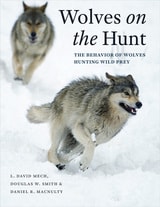
Wolves on the Hunt
The Behavior of Wolves Hunting Wild PreyL. David Mech, Douglas W. Smith, and Daniel R. MacNulty
University of Chicago Press, 2015
Combining behavioral data, thousands of hours of original field observations, research in the literature, a wealth of illustrations, and—in the e-book edition and online—video segments from cinematographer Robert K. Landis, the authors create a compelling and complex picture of these hunters. The wolf is indeed an adept killer, able to take down prey much larger than itself. While adapted to hunt primarily hoofed animals, a wolf—or especially a pack of wolves—can kill individuals of just about any species. But even as wolves help drive the underlying rhythms of the ecosystems they inhabit, their evolutionary prowess comes at a cost: wolves spend one-third of their time hunting—the most time consuming of all wolf activities—and success at the hunt only comes through traveling long distances, persisting in the face of regular failure, detecting and taking advantage of deficiencies in the physical condition of individual prey, and through ceaseless trial and error, all while risking injury or death.
By describing and analyzing the behaviors wolves use to hunt and kill various wild prey—including deer, moose, caribou, elk, Dall sheep, mountain goats, bison, musk oxen, arctic hares, beavers, and others—Wolves on the Hunt provides a revelatory portrait of one of nature’s greatest hunters.
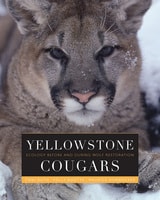
Yellowstone Cougars
Ecology before and during Wolf RestorationToni K. Ruth
University Press of Colorado, 2018
Of practical importance, Yellowstone Cougars addresses the management and conservation of multiple carnivores in increasingly human-dominated landscapes. The authors move beyond a single-species approach to cougar management and conservation to one that considers multiple species, which was impossible to untangle before wolf reestablishment in the Yellowstone area provided biologists with this research opportunity.
Yellowstone Cougars provides objective scientific data at the forefront of understanding cougars and large carnivore community structure and management issues in the Greater Yellowstone Ecosystem, as well as in other areas where wolves and cougars are reestablishing. Intended for an audience of scientists, wildlife managers, conservationists, and academics, the book also sets a theoretical precedent for writing about competition between carnivorous mammals.