Results by title
15 books match the query 'Pregnant women'
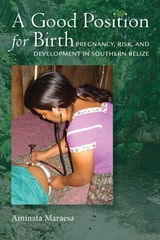
A Good Position for Birth
Pregnancy, Risk, and Development in Southern BelizeAminata Maraesa
Vanderbilt University Press, 2018
Fear and shame are prominent affective tropes that Maraesa uses to understand women's attitudes toward reproduction that are at times contrary to development discourse but that make sense in the lived experiences of the women of southern Belize.
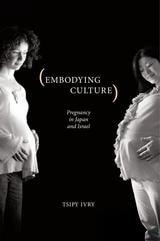
Embodying Culture
Pregnancy in Japan and IsraelIvry, Tsipy
Rutgers University Press, 2009
The ethnography pieces together the voices of pregnant Japanese and Israeli women, their doctors, their partners, the literature they read, and depicts various clinical encounters such as ultrasound scans, explanatory classes for amniocentesis, birthing classes, and special pregnancy events.
The emergent pictures suggest that although experiences of pregnancy in Japan and Israel differ, pregnancy in both cultures is an energy-consuming project of meaning-making— suggesting that the sense of biomedical technologies are not only in the technologies themselves but are assigned by those who practice and experience them.

Family Secrets
Risking Reproduction in Central MozambiqueRachel R. Chapman
Vanderbilt University Press, 2010
Pregnant herself during her research, Chapman interviewed 83 women during pregnancy and postpartum. She discovered that the social relations surrounding traditional Shona practices, Christian faith healing, and Western biomedical treatments are as important to women's choices as the efficacy of the therapies.

Fetal Rights, Women's Rights
Gender Equality in the WorkplaceSuzanne U. Samuels
University of Wisconsin Press, 1995
In the late 1970s and throughout the 1980s, many private employers in the United States enacted fetal protection policies that barred fertile women—that is, women who had not been surgically sterilized—from working in jobs that might expose fetuses to toxins. In Fetal Rights, Women’s Rights, Suzanne Samuels analyzes these policies and the ambiguous responses to them by federal and state courts, legislatures, administrative agencies, litigants, and interest groups. She poses provocative questions about the implicit links between social welfare concerns and paternalism in the workplace, including: are women workers or wombs?
Placing the fetal protection controversy within the larger societal debate about gender roles, Samuels argues that governmental decision-makers confuse sex, which is based solely on biological characteristics, with gender, which is based on societal conceptions. She contends that the debate about fetal protection policies brought this ambiguity into stark relief, and that the response of policy-makers was rooted in assumptions about gender roles. Judges, legislators, and regulators used gender as a proxy, she argues, to sidestep the question of whether fetal protection policies could be justified by the biological differences between women and men.
The fetal protection controversy raises a number of concerns about women's role in the workplace. Samuels discusses the effect on governmental policies of the ongoing controversy over abortion rights and the debates between egalitarian and relational feminists about the treatment of women at work. A timely and engrossing study, Fetal Rights, Women's Rights details the pattern of gender politics in the United States and demonstrates the broader ramifications of gender bias in the workplace.
Medication in Maternity
Infant Exposure and Maternal InformationYvonne Brackbill, Karen McManus, and Lynn Woodward
University of Michigan Press, 1985

Misconceiving Mothers
Legislators, Prosecutors, and the Politics of Prenatal Drug ExposureLaura Gomez
Temple University Press, 1997
Misconceiving Mothers is a case study of how public policy about reproduction and crime is made. Laura E. Gomez uses secondary research and first-hand interviews with legislators and prosecutors to examine attitudes toward the criminalization and/or medicalization of drug use during pregnancy by the legislature and criminal justice systems in California. She traces how an initial tendency toward criminalization gave way to a trend toward seeing the problem of "crack babies" as an issue of social welfare and public health.
It is no surprise that in an atmosphere of mother-blaming, particularly targeted at poor women and women of color, "crack babies" so easily captured the American popular imagination in the late 1980s. What is surprising is the was prenatal drug exposure came to be institutionalized in the state apparatus. Gomez attributes this circumstance to four interrelated cause: the gendered nature of the social problem; the recasting of the problem as fundamentally "medical" rather than "criminal"; the dynamic nature of t he process of institutionalization; and the specific feature of the legal institutions -- that is, the legislature and prosecutors' offices -- the became prominent in the case.
At one level Misconceiving Mothers tells the story of a particular problem at a particular time and place -- how the California legislature and district attorneys grappled with pregnant women's drug use in the late 1980s and early 1990s. At another level, the book tells a more general story about the political nature of contemporary social problems. The story it tells is political not just because it deals with the character of political institutions but because the process itself and the nature of the claims-making concern the power to control the allocation of state resources.
A number of studies have looked at how the initial criminalization of social problems takes place. Misconceiving Mothers looks at the process by which a criminalized social problem is institutionalized through the attitudes and policies of elite decision-makers.

Mothers On The Job
Maternity Policy in the U.S. WorkplaceVogel, Lise
Rutgers University Press, 1993
Women's increasing demands for protection and benefits in the workplace, especially with regard to maternity leave, have sparked more than a century of controversy among feminists on how best to serve the needs of working women. This debate continues to divide the feminist community. One side believes women are better served by emphasizing equality with men--pregnancy should be treated like any other "disability." The other side wants to recognize difference--special provisions should apply only to pregnant women. Lise Vogel examines the evolution of this debate on pregnant women in the workplace, looking at theoretical as well as practical implications.
Vogel begins by assessing the history of the contemporary debate on pregnancy policy in the U.S. Since the middle of the nineteenth-century, American women have been torn by the contradictory demands of motherhood and the workplace. Pregnancy was grounds for dismissal from work and few employers took action to protect pregnant workers. To counter this, early twentieth-century feminists and reformers emphasized female specificity and women's special role.
In the 1960s activists adopted a strategy framed on equality, which moved away from the earlier emphasis on differences. The use of equality strategies to cover the female-specific phenomenon of pregnancy turned out to have problems. Now women's special needs were denied and ignored. These difficulties and a series of court cases in the 1980s triggered debates in the feminist legal community. Vogel looks at the litigation and debates, which pitted advocates of gender-neutral strategies against critics who called for female-specific policies.
Vogel argues that, in terms of practical benefits, women will be served best by a gender-neutral approach to pregnancy policy. She encourages equality advocates to recognize the inherent diversity of individuals, and points out the need to be sensitive to individual factors of race and class, as well as sex.

Mothers On The Job
Maternity Policy in the U.S. WorkplaceVogel, Lise
Rutgers University Press, 1993
Women's increasing demands for protection and benefits in the workplace, especially with regard to maternity leave, have sparked more than a century of controversy among feminists on how best to serve the needs of working women. This debate continues to divide the feminist community. One side believes women are better served by emphasizing equality with men--pregnancy should be treated like any other "disability." The other side wants to recognize difference--special provisions should apply only to pregnant women. Lise Vogel examines the evolution of this debate on pregnant women in the workplace, looking at theoretical as well as practical implications.
Vogel begins by assessing the history of the contemporary debate on pregnancy policy in the U.S. Since the middle of the nineteenth-century, American women have been torn by the contradictory demands of motherhood and the workplace. Pregnancy was grounds for dismissal from work and few employers took action to protect pregnant workers. To counter this, early twentieth-century feminists and reformers emphasized female specificity and women's special role.
In the 1960s activists adopted a strategy framed on equality, which moved away from the earlier emphasis on differences. The use of equality strategies to cover the female-specific phenomenon of pregnancy turned out to have problems. Now women's special needs were denied and ignored. These difficulties and a series of court cases in the 1980s triggered debates in the feminist legal community. Vogel looks at the litigation and debates, which pitted advocates of gender-neutral strategies against critics who called for female-specific policies.
Vogel argues that, in terms of practical benefits, women will be served best by a gender-neutral approach to pregnancy policy. She encourages equality advocates to recognize the inherent diversity of individuals, and points out the need to be sensitive to individual factors of race and class, as well as sex.
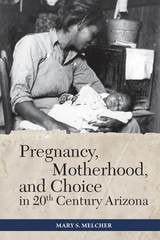
Pregnancy, Motherhood, and Choice in Twentieth-Century Arizona
Mary S. Melcher
University of Arizona Press, 2012
Early twentieth-century Arizona was a life-threatening place for new and expectant mothers. Towns were small and very far apart, and the weather and harsh landscape often delayed midwives. It was not uncommon for a woman to give birth without medical care and with the aid of only family members. By the 1920s, Arizona was at the top of the list for the highest number of infant deaths.
Mary Melcher’s Pregnancy, Motherhood, and Choice in Twentieth-Century Arizona provides a deep and diverse history of the dramatic changes in childbirth, birth control, infant mortality, and abortion over the course of the last century. Using oral histories, memoirs, newspaper accounts, government documents, letters, photos, and biographical collections, this fine-grained study of women’s reproductive health places the voices of real women at the forefront of the narrative, providing a personal view into some of the most intense experiences of their lives.
Tackling difficult issues such as disparities in reproductive health care based on race and class, abortion, and birth control, this book seeks to change the way the world looks at women’s health. An essential read for both historians and public health officials, this book reveals that many of the choices and challenges that women once faced remain even today.
Pregnant Women on Drugs
Combating Stereotypes and StigmaRosenbaum, Marsha
Rutgers University Press, 1998
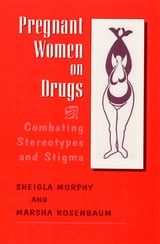
Sociologists Murphy and Rosenbaum interviewed over 120 women who had children while using drugs. Their interviews reveal how the women became addicted, how they may or may not have modified their behavior to protect their children, and how they have dealt with having children and losing them as a result of their addiction. Not all the women interviewed were from abusive or poor families; there is extensive information on how the study population was selected. Also included are suggestions on how to deal with the problem, including women-centered drug treatment and training programs to help women learn trades as well as parenting skills. Though the interviews are enlightening, readers may wish for more answers to the question of how to deal with the root problem and less about the problems drug-addicted mothers face. For academic libraries, especially those with women's studies and sociology collections.?Danna C. Bell-Russel, Natl. Equal Justice Lib., Washington, DC
Review
A powerful refuation of the media-hype stereotypes of pregnant drug users as selfish and unfeeling, Pregnant Women on Drugs shows the extent to which many drug-using women develop the motivation to achieve their dual goals of improving their children's health and maintaining maternal custody. -- Steven R. Kandall, M.D., F.A.A.P., and author Substance and Shadow: Women and Addiction in the United States
Research-based but intensely personal. . . You will be touched by the poignant descriptions about the real lives of pregnant women on drugs. . . Pertinent reading for researchers, clinicians, and all Americans. -- Loretta P. Finnegan, M.D., researcher and perinatal addiction specialist
Touching and informative. . . Drug-addicted women who have either been ignored or reviled are finally given voice to tell their own stories. Their sad, true, and quintessentially human experiences provide persuasive arguments for compassion and supportive approaches to the problems of substance abuse and pregnancy. -- Lynn Paltrow, civil liberties and reproductive freedom attorney
Pregnant on Arrival
Making the Illegal ImmigrantEithne Luibhéid
University of Minnesota Press, 2013
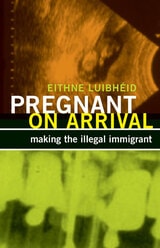
“State alert as pregnant asylum seekers aim for Ireland.” “Country Being Held Hostage by Con Men, Spongers, and Those Taking Advantage of the Maternity Residency Policy.” From 1997 to 2004, headlines such as these dominated Ireland’s mainstream media as pregnant immigrants were recast as “illegals” entering the country to gain legal residency through childbirth. As immigration soared, Irish media and politicians began to equate this phenomenon with illegal immigration that threatened to destroy the country’s social, cultural, and economic fabric.
Pregnant on Arrival explores how pregnant immigrants were made into paradigmatic figures of illegal immigration, as well as the measures this characterization set into motion and the consequences for immigrants and citizens. While focusing on Ireland, Eithne Luibhéid’s analysis illuminates global struggles over the citizenship status of children born to immigrant parents in countries as diverse as the United States, Hong Kong, and elsewhere. Scholarship on the social construction of the illegal immigrant calls on histories of colonialism, global capitalism, racism, and exclusionary nation building but has been largely silent on the role of nationalist sexual regimes in determining legal status. Eithne Luibhéid turns to queer theory to understand how pregnancy, sexuality, and immigrants’ relationships to prevailing sexual norms affect their chances of being designated as legal or illegal.
Pregnant on Arrival offers unvarnished insight into how categories of immigrant legal status emerge and change, how sexual regimes figure prominently in these processes, and how efforts to prevent illegal immigration ultimately redefine nationalist sexual norms and associated racial, gender, economic, and geopolitical hierarchies.
Reproductive Boundaries
Psychosocial Care and Pregnancy in SwitzerlandEdmée Ballif
Rutgers University Press, 2026
Reproductive Boundaries examines the shifting boundaries of prenatal care in Switzerland, focusing on the Pregnancy Support Center's innovative psychosocial model. By redefining the territory of care, the Center extends its reach beyond the medical domain, exemplifying the reproductivization of life, the increasing organization of various life aspects through a reproductive lens. The book explores how this approach challenges traditional borders between medical and psychosocial care, offering an alternative to Switzerland's heavily medicalized reproductive care. Through ethnographic insights into reproductive talk, it reveals how psychosocial advisors shift the boundaries of reproductive care, balancing support with broader state goals of reproductive governance. Set against Switzerland's history of stratified reproductive policies, the study critically examines how psychosocial care reshapes the landscape of pregnancy, raising questions about surveillance and evolving gender roles. This thought-provoking work invites readers to reconsider the limits and possibilities of care in a fragmented society.
This book is also freely available online as an open access digital edition. (https://www.rutgersuniversitypress.org/media/wysiwyg/documents/Reproductive_Boundaries_PDF.pdf)
Smoking and Pregnancy
The Politics of Fetal ProtectionOaks, Laury
Rutgers University Press, 2001
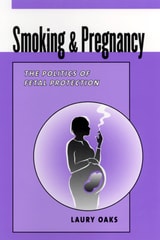
The 1966 edition of the leading medical textbook states that pregnant women can safely smoke half a pack of cigarettes a day. Yet today, women who smoke during pregnancy are among the most vilified figures in public health campaigns. Laury Oaks argues this shift is not due solely to medical findings indicating that cigarette smoking may harm the fetus. Also responsible are a variety of social factors that converged more than a decade ago to construct the demonized category of the “pregnant smoker.”
This book charts the emergence of smoking during pregnancy as a public health concern and social problem. Oaks looks at the emphasis public health educators place on individual responsibility, the current legal and social assertion of fetal personhood, the changing expectations of pregnant and prepregnant women, and the advent of antismoking campaigns. She explores how public health educators discuss “the problem” with one another, how they communicate with pregnant smokers, and how these women themselves understand the “risk” of fetal harm. Finally, Oaks discusses the various meanings of “objective” statistics on the effects of smoking on the fetus, exploring the significance of cultural context in assessing the relative importance of those numbers. She argues that rather than bombarding pregnant women with statistics, health educators should consider the daily lives of these women and their socioeconomic status to understand why some women choose to smoke during pregnancy. Without downplaying the seriousness of the health risks that smoking poses to women and their babies, the book supports new efforts that challenge the moral policing of pregnant smokers.
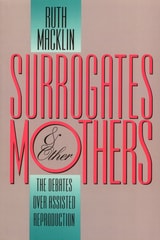
Surrogates and Other Mothers
The Debates over Assisted ReproductionRuth Macklin
Temple University Press, 1994
Developments in new reproductive technologies have confounded public policy and created legal and ethical quandaries for professionals and ordinary citizens alike. Drawing from the most current medical, psychiatric, legal, and bioethical literature, Ruth Macklin, noted author and philosopher, presents the arguments surrounding these advances through the voices of fictional characters. The episodes she narrates are based on real-life situations, both from her personal experience as a hospital ethicist and from the public arena, where such controversial court cases as that of Baby M have sparked a multitude of disparate opinions on surrogacy, in vitro fertilization, and egg and sperm donor program.
Macklin's hypoethical tale centers on Bonnie and Larry, an infertile couple longing for a child. As the couple's quest to become parents begins, they discover that Bonnie is physically incapable of carrying a pregnancy to term. Desperate to explore their options, Bonnie and Larry attempt adoption but are rejected by the agency without explanation. Finally, they contemplate surrogacy as their last chance to have a child. Seeking advice and answers, they consult health professionals, lawyers, pastoral counselors, and a bioethicist. In the course of this complicated and often painful decision-making process, they attend meetings of a government task force on reproduction where they hear both radical and liberal feminist positions.
Their experiences with friends, family members, two surrogates, hospital ethics committees, and special interest groups underscore the difficulty of coming to a consensus on such issues as AIDS, the right to privacy, premenstrual syndrome, the violation of surrogate contracts, and the responsibilities of therapists and physicians to their patients and to the community at large.
addicted.pregnant.poor
Kelly Ray Knight
Duke University Press, 2015