Results by title
19 books match the query 'Prejudices'
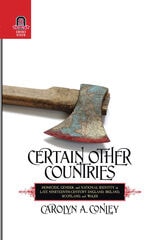
CERTAIN OTHER COUNTRIES
Homicide, Gender, and National Identity in Late Nineteenth-Century England, Ireland, Scotland, and WalesCarolyn A. Conley
The Ohio State University Press, 2007
By combining quantitative techniques in the analysis of over seven thousand cases, as well as careful and detailed readings of individual cases, the book exposes trends and patterns that might not have been evident in works using only one method. For instance, by examining all homicide trials rather than concentrating exclusively on a few highly celebrated ones, it becomes clear that most female killers were not viewed with particular horror, but were treated much like their male counterparts.
The conclusions offer challenges and correctives to existing scholarship on gender, ethnicity, class, and violence. The book also demonstrates that the Welsh, Scots, and English remained quite distinct long after their melding as Britons was announced and celebrated. By blending a study of trends in violent behavior with ideas about national identity, Conley brings together rich and hotly debated fields of modern history. This book will be valuable both for scholars of crime and violence as well as for those studying British history.
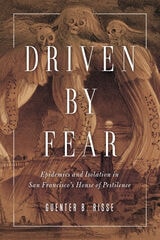
Driven by Fear
Epidemics and Isolation in San Francisco's House of PestilenceGuenter B. Risse
University of Illinois Press, 2015
Filling a significant gap in contemporary scholarship, Driven by Fear looks at the past to offer critical lessons for our age of bioterror threats and emerging infectious diseases.
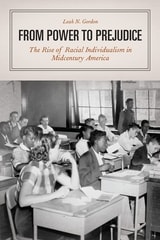
From Power to Prejudice
The Rise of Racial Individualism in Midcentury AmericaLeah N. Gordon
University of Chicago Press, 2015
To answer these questions, From Power to Prejudice examines American academia—both black and white—in the 1940s and ’50s. Gordon presents four competing visions of “the race problem” and documents how an individualistic paradigm, which presented white attitudes as the source of racial injustice, gained traction. A number of factors, Gordon shows, explain racial individualism’s postwar influence: individuals were easier to measure than social forces; psychology was well funded; studying political economy was difficult amid McCarthyism; and individualism was useful in legal attacks on segregation. Highlighting vigorous midcentury debate over the meanings of racial justice and equality, From Power to Prejudice reveals how one particular vision of social justice won out among many contenders.

Inventing the Thrifty Gene
The Science of Settler ColonialismTravis Hay
University of Manitoba Press, 2021

Not of Pure Blood
The Free People of Color and Racial Prejudice in Nineteenth-Century Puerto RicoJay Kinsbruner
Duke University Press, 1996
Following a discussion of Puerto Rican racial prejudice in historical perspective, Kinsbruner describes residential patterns, marriages, births, deaths, occupations, and family and household matters to demonstrate that free people of color were a disadvantaged community whose political, social, and economic status was diminished by racism. He analyzes the complexities and contradictions of Puerto Rican racial prejudice and discrimination, explains the subtleties of “shade discrimination,” and examines the profoundly negative impact on race relations of the U.S. occupation of the island following the Spanish American War.
Looking behind the myth of Puerto Rican racial equity, Not of Pure Blood will be of interest to specialists in Caribbean studies, Puerto Rican history, and Latin America studies, and to scholars in a variety of fields investigating questions of racism and discrimination.
On Teacher Neutrality
Politics, Praxis, and PerformativityDaniel P. Richards
Utah State University Press, 2020
Higher education itself and its stakeholders are continually exploring the role of teachers in the classroom and the extent to which it is possible or ethical to engage in neutrality. Amplifying voices from teachers in underrepresented positions and institutions in discussions of teacher ideology, On Teacher Neutrality shapes the discourse around these topics both within the writing classroom and throughout higher education. The book offers a rich array of practices, pedagogies, and theories that will help ground instructors and posits a way forward toward better dialogue and connections with the various stakeholders of higher education in the United States.
Contributors:
Tristan Abbott, Kelly Blewett, Meaghan Brewer, Christopher Michael Brown, Chad Chisholm, Jessica Clements, Jason C. Evans, Heather Fester, Romeo García, Yndalecio Isaac Hinojosa, Mara Holt, Erika Johnson, Tawny LeBouef Tullia, Lauren F. Lichty, Adam Pacton, Daniel P. Richards, Patricia Roberts-Miller, Karen Rosenberg, Allison L. Rowland, Robert Samuels, David P. Stubblefield, Jennifer Thomas, John Trimbur
Parties and Prejudice
The Normalization of Antiminority Rhetoric in US PoliticsManeesh Arora
University of Chicago Press, 2025
An essential guide to how the interactions between social norms, party politics, and expressions of prejudice are driving contemporary politics.
Antiminority rhetoric in American politics has grown more overt. What were once fringe comments on Stormfront have now become typical campaign appeals from many mainstream politicians. If there was ever a doubt, this is a poignant reminder that the boundaries of what is “acceptable” and “unacceptable” to say and do are fluid and socially enforced.
In Parties and Prejudice, Maneesh Arora offers a broad framework for understanding this new political terrain. Arora argues that the interaction between social norms and party politics determines what the political consequence of prejudicial speech will be. He illuminates this nuanced relationship by showing that norms vary based on the targeted minority group and the intended audience.
Drawing on experiments, survey data, news coverage, and real-world examples, Parties and Prejudice examines the distinctive ways that egalitarian/inegalitarian norms have developed—within each party—for Black, Muslim, and LGBTQ+ Americans. It is essential reading for understanding Donald Trump’s rise to power, the modern conservative agenda (including opposition to critical race theory and transgender rights), and threats to the development of a multiracial democracy.
Pattern Discrimination
Clemens Apprich
University of Minnesota Press, 2018
How do “human” prejudices reemerge in algorithmic cultures allegedly devised to be blind to them?
How do “human” prejudices reemerge in algorithmic cultures allegedly devised to be blind to them? To answer this question, this book investigates a fundamental axiom in computer science: pattern discrimination. By imposing identity on input data, in order to filter—that is, to discriminate—signals from noise, patterns become a highly political issue. Algorithmic identity politics reinstate old forms of social segregation, such as class, race, and gender, through defaults and paradigmatic assumptions about the homophilic nature of connection.
Instead of providing a more “objective” basis of decision making, machine-learning algorithms deepen bias and further inscribe inequality into media. Yet pattern discrimination is an essential part of human—and nonhuman—cognition. Bringing together media thinkers and artists from the United States and Germany, this volume asks the urgent questions: How can we discriminate without being discriminatory? How can we filter information out of data without reinserting racist, sexist, and classist beliefs? How can we queer homophilic tendencies within digital cultures?
Possessive Investment In Whiteness
George Lipsitz
Temple University Press, 1998
Lipsitz's ultimate point is not to condemn all white people as racists but to challenge everyone to begin a principled examination of personal actions and political commitments. Exposing the system of unfairness is not enough. People of all groups -- but especially white people because they benefit from that system -- have to work toward eradicating the rewards of whiteness.
Prejudicial Appearances
The Logic of American Antidiscrimination LawRobert C. Post, with K. Anthony Appiah, Judith Butler, Thomas C. Grey, and Reva B. Siegel
Duke University Press, 2001
Four distinguished commentators respond to Post’s provocative essay. Each adopts a distinctive perspective. K. Anthony Appiah investigates the philosophical logic of stereotyping and of equality. Questioning whether the law ought to endorse any social practices that define persons, Judith Butler explores the tension between sociological and postmodern approaches to antidiscrimination law. Thomas C. Grey examines whether Post’s proposal can be reconciled with the values of the rule of law. And Reva B. Siegel applies critical race theory to query whether antidiscrimination law’s reshaping of race and gender should best be understood in terms of practices of subordination and stratification.
By illuminating the consequential rhetorical maneuvers at the heart of contemporary U.S. antidiscrimination law, Prejudical Appearances forces readers to reappraise the relationship between courts of law and social behavior. As such, it will enrich scholars interested in the relationships between law, rhetoric, postmodernism, race, and gender.
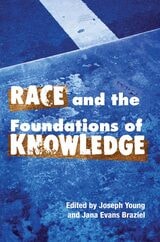
Race and the Foundations of Knowledge
Cultural Amnesia in the AcademyEdited by Joseph Young and Jana Evans Braziel
University of Illinois Press, 2006

Scapegoats of September 11th
Hate Crimes & State Crimes in the War on TerrorWelch, Michael
Rutgers University Press, 2006
The altered American landscape, however, includes more than security measures and ID cards. The country's desperate quest for security is visible in many less obvious, yet more insidious ways. In Scapegoats of September 11th, criminologist Michael Welch argues that the "war on terror" is a political charade that delivers illusory comfort, stokes fear, and produces scapegoats used as emotional relief. Regrettably, much of the outrage that resulted from 9/11 has been targeted at those not involved in the attacks on the Pentagon or the Twin Towers. As this book explains, those people have become the scapegoats of September 11th. Welch takes on the uneasy task of sorting out the various manifestations of displaced aggression, most notably the hate crimes and state crimes that have become embarrassing hallmarks both at home and abroad.
Drawing on topics such as ethnic profiling, the Abu Ghraib scandal, Guantanamo Bay, and the controversial Patriot Act, Welch looks at the significance of knowledge, language, and emotion in a post-9/11 world. In the face of popular and political cheerleading in the war on terror, this book presents a careful and sober assessment, reminding us that sound counterterrorism policies must rise above, rather than participate in, the propagation of bigotry and victimization.
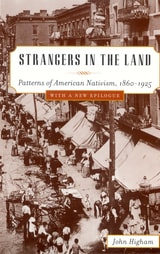
Strangers in the Land
Patterns of American Nativism, 1860-1925Higham, John
Rutgers University Press, 1988
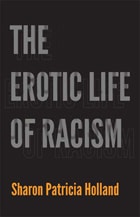
The Erotic Life of Racism
Sharon Patricia Holland
Duke University Press, 2012
Reemphasizing the black/white binary, Holland reinvigorates critical engagement with race and racism. She argues that only by bringing critical race theory, queer theory, and black feminist thought into conversation with each other can we fully envision the relationship between racism and the personal and political dimensions of our desire. The Erotic Life of Racism provocatively redirects our attention to a desire no longer independent of racism but rather embedded within it.
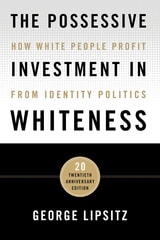
The Possessive Investment in Whiteness
How White People Profit from Identity PoliticsGeorge Lipsitz
Temple University Press, 2018
George Lipsitz’s classic book The Possessive Investment in Whiteness argues that public policy and private prejudice work together to create a possessive investment in whiteness that is responsible for the racialized hierarchies of our society. Whiteness has a cash value: it accounts for advantages that come to individuals through profits made from housing secured in discriminatory markets, through the unequal educational opportunities available to children of different races, through insider networks that channel employment opportunities to the friends and relatives of those who have profited most from past and present discrimination, and especially through intergenerational transfers of inherited wealth that pass on the spoils of discrimination to succeeding generations. White Americans are encouraged to invest in whiteness, to remain true to an identity that provides them with structured advantages.
In this twentieth anniversary edition, Lipsitz provides a new introduction and updated statistics; as well as analyses of the enduring importance of Hurricane Katrina; the nature of anti-immigrant mobilizations; police assaults on Black women, the killings of Trayvon Martin, Michael Brown, and Freddie Gray; the legacy of Obama and the emergence of Trump; the Charleston Massacre and other hate crimes; and the ways in which white fear, white fragility, and white failure have become drivers of a new ethno-nationalism.
As vital as it was upon its original publication, the twentieth anniversary edition of The Possessive Investment in Whiteness is an unflinching but necessary look at white supremacy.
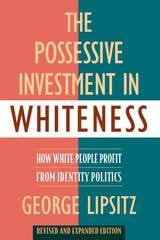
The Possessive Investment in Whiteness
How White People Profit from Identity Politics, Revised and Expanded EditionGeorge Lipsitz
Temple University Press, 2006
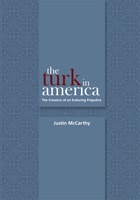
The Turk in America
The Creation of an Enduring PrejudiceJustin McCarthy
University of Utah Press, 2010
Utah Series in Middle East Studies
In The Turk in America, historian Justin McCarthy seeks to explain the historical basis for American prejudice towards Turks in the nineteenth and early twentieth centuries. The volume focuses on fraudulent characterizations of Turks, mostly stemming from an antipathy in Europe and America toward non-Christians, and especially Muslims. Spanning one hundred and fifty years, this history explores the misinformation largely responsible for the negative stereotypes of Turks during this period.
Us and Them
The Science of IdentityDavid Berreby
University of Chicago Press, 2008
In this award-winning book, David Berreby describes how twenty-first-century science is addressing these age-old questions. Ably linking neuroscience, social psychology, anthropology, and other fields, Us and Them investigates humanity’s “tribal mind” and how this alters our thoughts, affects our health, and is manipulated for good and ill. From the medical effects of stress to the rhetoric of politics, our perceptions of group identity affect every part of our lives. Science, Berreby argues, shows how this part of human nature is both unexpectedly important and surprisingly misunderstood.
Humans need our tribal sense—it tells us who we are, how we should behave, and links us to others as well as the past and future. Some condemn this instinct, while others celebrate it. Berreby offers in Us and Them a third alternative: how we can accept and understand our inescapable tribal mind.
“[A] brave book. . . . Berreby’s quest is to understand what he sees as a fundamental human urge to classify and identify with ‘human kinds.’”—Henry Gee, Scientific American
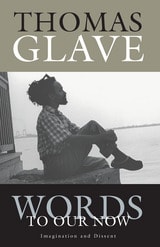
Words to Our Now
Imagination and DissentThomas Glave
University of Minnesota Press, 2007
In these lyrical and powerful essays, Thomas Glave draws on his experiences as a politically committed, gay Jamaican American to deliver a condemnation of the prejudices, hatreds, and inhumanities that persist in the United States and elsewhere. Exposing the hypocrisies of liberal multiculturalism, Glave offers instead a politics of heterogeneity in which difference informs the theory and practice of democracy. At the same time, he experiments with language to provide a model of creative writing as a tool for social change. From the death of black gay poet Essex Hemphill to the revelations of abuse at Abu Ghraib, Glave puts forth an ethical understanding of human rights to make vital connections across nations, races, genders, and sexualities.
Thomas Glave is assistant professor of English at SUNY Binghamton. He is author of Whose Song? and Other Stories.