Results by title
6 books match the query 'Prestige'
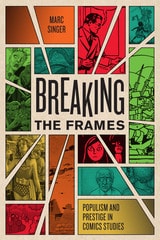
Breaking the Frames
Populism and Prestige in Comics StudiesBy Marc Singer
University of Texas Press, 2018
A CHOICE Outstanding Academic Title, 2019
Comics studies has reached a crossroads. Graphic novels have never received more attention and legitimation from scholars, but new canons and new critical discourses have created tensions within a field built on the populist rhetoric of cultural studies. As a result, comics studies has begun to cleave into distinct camps—based primarily in cultural or literary studies—that attempt to dictate the boundaries of the discipline or else resist disciplinarity itself. The consequence is a growing disconnect in the ways that comics scholars talk to each other—or, more frequently, do not talk to each other or even acknowledge each other’s work.
Breaking the Frames: Populism and Prestige in Comics Studies surveys the current state of comics scholarship, interrogating its dominant schools, questioning their mutual estrangement, and challenging their propensity to champion the comics they study. Marc Singer advocates for greater disciplinary diversity and methodological rigor in comics studies, making the case for a field that can embrace more critical and oppositional perspectives. Working through extended readings of some of the most acclaimed comics creators—including Marjane Satrapi, Alan Moore, Kyle Baker, and Chris Ware—Singer demonstrates how comics studies can break out of the celebratory frameworks and restrictive canons that currently define the field to produce new scholarship that expands our understanding of comics and their critics.
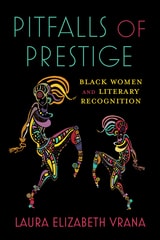
Pitfalls of Prestige
Black Women and Literary RecognitionLaura Elizabeth Vrana
The Ohio State University Press, 2024
Winner, 2025 College Language Association Book Award
From 1987, when Rita Dove won the Pulitzer Prize for Poetry, to 2021, when Amanda Gorman skyrocketed to celebrity status after performing during Biden’s inauguration and the Super Bowl, Black women have seemingly attained secure, stable positions at the forefront of American poetry. But this prominence comes at a price. As figures like Dove and Elizabeth Alexander have become well known, receiving endorsements and gaining visible platforms from major prizes, academic institutions, and publishing houses, the underlying terms of evaluation that greet Black women’s poetics often remain superficial, reflecting efforts to co-opt and contain rather than meaningfully consider new voices and styles. In Pitfalls of Prestige, Laura Elizabeth Vrana surveys how developments in American literary institutions since 1980 have shaped—and been shaped by—Black women poets. Grappling with the refulgent works of the most acclaimed contemporary figures alongside those of lesser-known poets, Vrana both elucidates how seeming gestures of inclusion can actually result in constraining Black women poets’ works and also celebrates how these writers draw on a rich lineage and forge alternative communities in order to craft continually innovative modes of transgressing such limits, on the page and in life.

Power, Profit and Prestige
A History of American Imperial ExpansionPhilip S. Golub
Pluto Press, 2010
Power, Profit and Prestige applies incisive historical and sociological analysis to make sense of the United States’ post-Cold War imperial behaviour.
Philip Golub studies imperial identity formation and shows how an embedded culture of force and expansion has shaped American foreign policy. He argues that the US logic of world power and deeply rooted assumptions about American primacy inhibits democratic transformation at domestic and international levels. This resistance to change may lead the US empire into a crisis of its own making.
This enlightening book will be particularly useful to students of history and international relations as they explore a world where America is no longer able to set the global agenda.

Showing Off
The Geltung HypothesisBy Philip L. Wagner
University of Texas Press, 1996
Hardly a place exists on earth that has not been shaped in some way by human beings. Every day we modify and even sweep away natural landscapes as we build places to live and work. But why we react and interact as social beings intent on exercising ecological dominance poses an endlessly compelling puzzle for everyone from novelists to geographers.
In Showing Off, distinguished geographer Philip L. Wagner offers a persuasive hypothesis. Drawing on a lifetime of inquiry, travel, and teaching, he asserts that the strive for Geltung—personal standing, recognition, acceptance, esteem, and influence—shapes all of our interactions and defines the unique social character of human beings.
Wagner applies the Geltung hypothesis to a wide range of human activities from falling in love and spreading gossip to buying goods and making war. His examples demonstrate how communication and display—"showing off"—impel geographic change, as they reveal how and why people with the most Geltung tend to occupy the most desirable places.
This broad vision draws insights from many fields. A major contribution to cultural geography, the book also sheds new light on individual psychology and psychopathology and suggests new themes for cognitive science and even philosophy. Sure to stir lively debate in many circles, it will be provocative reading for everyone fascinated by the continuum between people and places.

The Art of Prestige
The Formative Years at Knopf, 1915-1929Amy Clements
University of Massachusetts Press, 2014
Capturing the little-known early history of Knopf, The Art of Prestige explores the origins of the company's rise to success during the Jazz Age, when Alfred and Blanche established themselves as literary impresarios on both sides of the Atlantic. Drawing on key archival documents from all phases of the publishing process, Amy Root Clements reconstructs the turning points and rhetorical exchanges that made Knopf's initial books noteworthy, from the acquisitions process to design, consumer marketing, and bookselling.
Lasting cornerstones of the young firm include alliances with pivotal figures in the world of graphic arts and book production and with European publishers who brought numerous Nobel Prize winners to the Borzoi list during the company's first fifteen years. Other featured luminaries include the American authors Willa Cather, Dashiell Hammett, and Langston Hughes. The Art of Prestige also examines Alfred Knopf's ancestry, up-bringing, and formal education at Columbia, as well as his apprenticeships with Frank Nelson Doubleday and Mitchell Kennerley—factors that would influence his business decisions for years to come.
The result is a portrait of innovative branding that seamlessly merged book production with book promotion in a literary landscape that was ripe for transformation.
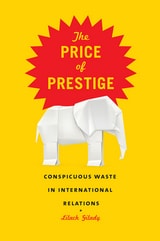
The Price of Prestige
Conspicuous Consumption in International RelationsLilach Gilady
University of Chicago Press, 2018
In The Price of Prestige, Gilady shows how many seemingly wasteful government expenditures that appear to contradict the laws of demand actually follow the pattern for what are known as Veblen goods, or positional goods for which demand increases alongside price, even when cheaper substitutes are readily available. From flashy space programs to costly weapons systems a country does not need and cannot maintain to foreign aid programs that offer little benefit to recipients, these conspicuous and strategically timed expenditures are intended to instill awe in the observer through their wasteful might. And underestimating the important social role of excess has serious policy implications. Increasing the cost of war, for example, may not always be an effective tool for preventing it, Gilady argues, nor does decreasing the cost of weapons and other technologies of war necessarily increase the potential for conflict, as shown by the case of a cheap fighter plane whose price tag drove consumers away. In today’s changing world, where there are high levels of uncertainty about the distribution of power, Gilady also offers a valuable way to predict which countries are most likely to be concerned about their position and therefore adopt costly, excessive policies.