Results by title
15 books match the query 'Primer'
A Primer of Pastoral Spanish
Michael J. McGrath
Catholic University of America Press, 2022
A Primer of Probability Logic
Ernest W. Adams
CSLI, 1996
This book is meant to be a primer, that is, an introduction, to probability logic, a subject that appears to be in its infancy. Probability logic is a subject envisioned by Hans Reichenbach and largely created by Adams. It treats conditionals as bearers of conditional probabilities and discusses an appropriate sense of validity for arguments such conditionals, as well as ordinary statements as premisses.
This is a clear well-written text on the subject of probability logic, suitable for advanced undergraduates or graduates, but also of interest to professional philosophers. There are well-thought-out exercises, and a number of advanced topics treated in appendices, while some are brought up in exercises and some are alluded to only in footnotes. By this means, it is hoped that the reader will at least be made aware of most of the important ramifications of the subject and its tie-ins with current research, and will have some indications concerning recent and relevant literature.
Constructed Climates
A Primer on Urban EnvironmentsWilliam G. Wilson
University of Chicago Press, 2011
As our world becomes increasingly urbanized, an understanding of the context, mechanisms, and consequences of city and suburban environments becomes more critical. Without a sense of what open spaces such as parks and gardens contribute, it’s difficult to argue for their creation and maintenance: in the face of schools needing resources, roads and sewers needing maintenance, and people suffering at the hands of others, why should cities and counties spend scarce dollars planting trees and preserving parks?
In Constructed Climates, ecologist William G. Wilson demonstrates the value of urban green. Focusing specifically on the role of vegetation and trees, Wilson shows the costs and benefits reaped from urban open spaces, from cooler temperatures to better quality ground water—and why it all matters. While Constructed Climates is a work of science, it does not ignore the social component. Wilson looks at low-income areas that have poor vegetation, and shows how enhancing these areas through the planting of community gardens and trees can alleviate social ills. This book will be essential reading for environmentalists and anyone making decisions for the nature and well-being of our cities and citizens.
Democracy's News
A Primer on Journalism for Citizens Who Care about DemocracyG. Michael Killenberg and Rob Anderson
University of Michigan Press, 2023
Since the Founding, America’s faith in a democratic republic has depended on citizens who could be trusted to be communicators. Vigorous talk about equality, rights, and collaboration fueled the revolution, the Declaration of Independence, and the Constitution with its amendments. In a republic, the people set the terms for their lives not individually, but in community. The genius of keeping it alive exists in how everyday citizens talk and listen, write and read, for a common good. Dialogue and deliberation—rather than an accumulation of individual preferences—sustains a republic, yet a diminished and scarred institution of journalism jeopardizes citizens’ access to shared and truthful information. A disturbing “what’s in it for me?” attitude has taken over many citizens, and a creeping, autocratic sense of dismissive accusation too often characterizes the political style of elected officials.
The basic fuel for democracy is the willingness of informed citizens to take each other seriously as they talk about political choices. Once we begin to clam up, build walls, and dismiss each other, we unravel the threads tying us to the Founders’ vision of a republic. A free press and free speech become meaningless if not supported by sustained listening to multiple positions. There are those who profit by dividing citizens into two camps: a comfortable “us” versus a scary “them.” They make their case with accusations and often with lies. They warp the very meaning of communication, hoping citizens never truly discover each other’s humanity. Democracy’s News discusses today’s problems of public communication in the context of history, law, and interpersonal life. News should not be something to dread, mistrust, or shun. Aided by reliable, factual journalism, citizens can develop a community-based knowledge to cope with social issues great and small. They come to treat neighbors and strangers as more than stereotypes or opponents. They become collaborators with whom to identify and sustain a working republic where news, citizenship, and public discourse merge.
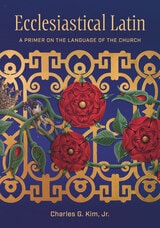
Ecclesiastical Latin
A Primer on the Language of the ChurchCharles G. Kim, Jr.
Catholic University of America Press, 2024

Environmental Program Evaluation
A PrimerEdited by Gerrit Knaap and Tschango John Kim: Foreword by Ravinder K. Jain
University of Illinois Press, 1998
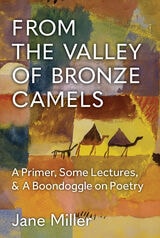
From the Valley of Bronze Camels
A Primer, Some Lectures, & A Boondoggle on PoetryJane Miller
University of Michigan Press, 2022
Jane Miller loves poetry. In these provocative and deeply insightful essays, she unpacks the work of giants like Adrienne Rich, Paul Celan, Marina Tsvetaeva, Osip Mandelstam, and Federico García Lorca alongside painters such as Caravaggio and Paul Klee, as well as ancient Chinese music and techniques of the contemporary poem. Miller explores the use of the question mark in the history of poetry and its function as a revelation of poetic voice. She considers the positive and negative aspects of surrealism on the contemporary poem, its anti-feminist origins in France, its contemporary usage, and the benefits of super-real images. Miller examines how identity politics might affect the imagination. She describes ancient Chinese musical instruments to show how their sounds resonate off/in American poems and on the aural integrity of the lyric poem. She interrogates the political implications of language and the degeneration and regeneration of words. Finally, in an essay about what she dares not say about poetry, she comes out against forms of surrealism, narrative, jargon, rhetoric, irony, and appropriation. This masterful work can be read as advice to a young writer, but it also invites us into the mind of a writer who has developed her craft through the course of a lifetime of writing, reading, and exploring the world, showing not only the ideas that influenced her—feminist, lesbian, and international works—but also how Miller has, in turn, influenced ideas.
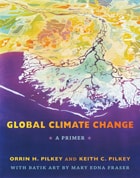
Global Climate Change
A PrimerOrrin H. Pilkey and Keith C. Pilkey
Duke University Press, 2011
After explaining the greenhouse effect, Pilkey, writing with son Keith, turns to the damage it is causing: sea level rise, ocean acidification, glacier and sea ice melting, changing habitats, desertification, and the threats to animals, humans, coral reefs, marshes, and mangroves. These explanations are accompanied by Mary Edna Fraser’s stunning batiks depicting the large-scale arenas in which climate change plays out.
The Pilkeys directly confront and rebut arguments typically advanced by global change deniers. Particularly valuable are their discussions of “Climategate,” a manufactured scandal that undermined respect for the scientific community, and the denial campaigns by the fossil fuel industry, which they compare to the tactics used by the tobacco companies a generation ago to obfuscate findings on the harm caused by cigarettes.
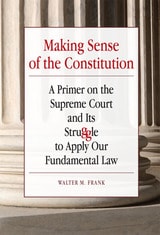
Making Sense of the Constitution
A Primer on the Supreme Court and Its Struggle to Apply Our Fundamental LawWalter M. Frank
Southern Illinois University Press, 2012
In Making Sense of the Constitution: A Primer on the Supreme Court and Its Struggle to Apply Our Fundamental Law, Walter Frank tackles in a comprehensive but lively manner subjects rarely treated in one volume.
Aiming at both the general reader and students of political science, law, or history, Frank begins with a brief discussion of the nature of constitutional law and why the Court divides so closely on many issues. He then proceeds to an analysis of the Constitution and subsequent amendments, placing them in their historical context. Next, Frank shifts to the Supreme Court and its decisions, examining, among other things, doctrinal developments, the Court’s decision making processes, how justices interact with each other, and the debate over how the Constitution should be interpreted.
The work concludes with a close analysis of Court decisions in six major areas of continuing controversy, including abortion, affirmative action, and campaign finance.
Outstanding by the University Press Books for Public and Secondary Schools

Nostalgia and Videogame Music
A Primer of Case Studies, Theories and Analyses for the Player-AcademicEdited by Vincent E. Rone, Can Aksoy, and Sarah Pozderac-Chenevey
Intellect Books, 2022
This book allows readers to understand the relationships and memories they often form around games, and music is central to this process. The quest into the past begins with this book, a map that leads to the intersection between nostalgia and videogame music. Informed by research on musicology, memory, and practices of gaming culture, this edited volume discusses different forms of nostalgia, considers how videogames display their relation to those forms, and explores the ways theoretically self-conscious positions can be found in games. An important scholarly addition to the burgeoning field of ludomusicology, this book will appeal to researchers, educators, practitioners, undergraduate and graduate students, and videogame fans and players alike.
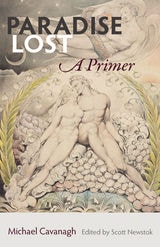
Paradise Lost
A PrimerMichael Cavanagh
Catholic University of America Press, 2020

Precision Medicine Oncology
A PrimerLorna Rodriguez-Rodriguez
Rutgers University Press, 2019
Precision Medicine Oncology: A Primer is a concise review of the fundamental principles and applications of precision medicine, intended for clinicians, particularly those working in oncology. It provides an accessible introduction to the technological advances in DNA and RNA sequencing, gives a detailed overview of approaches to the interpretation of molecular test results and their point-of-care implementation for individual patients, and describes innovative clinical trial designs in oncology as well as characteristics of the computational infrastructures through which massive quantities of data are collected, stored, and used in precision medicine oncology.
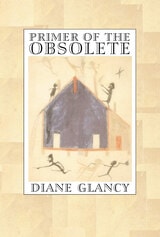
Primer of the Obsolete
Diane Glancy
University of Massachusetts Press, 2004
The poems have roots in history, religion, and illiteracy. They are inspired by folk artists who use materials and textures at hand—enamel and cornmeal on plywood, house paint on tar and tin, model airplane paint on corrugated scrap metal. The resulting lyrics walk the boundary between worlds, weaving remnants of the old way of viewing the world with pieces of the new world, such as a clapper that turns lights on and off. The experimental text revisits the gap between past and present. The past is just beneath a newly painted surface. The newly painted surface is not quite dry.
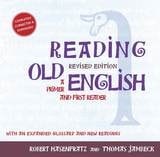
Reading Old English
A Primer and First Reader, Revised EditionROBERT HASENFRATZ
West Virginia University Press, 2010
With the immersion method dominating contemporary language learning, the knowledge of traditional grammar is at a low ebb, creating real barriers to any student wanting to learning dead or historical languages. This revised edition of Reading Old English aims to equip readers (advanced undergraduates, graduate students, and autodidacts) with the necessary tools to read the oldest recorded forms of the English language by explaining key language features clearly and methodically, without simplifying any of the core grammatical concepts. It includes a number of helpful exercises, a variety of interesting and unusual Old English texts to translate, as well as appendices covering the basics of traditional grammar and sound changes in Old English, along with an introduction to poetic structure.

The Idea of Democratic Capitalism
A Primer to Micheal Novak's Political, Economic, and Social ThoughtRobert Felice
Catholic University of America Press, 2026