Results by title
6 books match the query 'Printmaking'
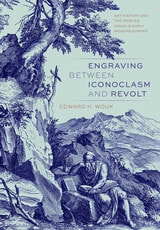
Engraving Between Iconoclasm and Revolt
Art History and the Printed Image in Early Modern EuropeEdward H. Wouk
University of Chicago Press, 0
An alternative history of Renaissance art from a Netherlandish perspective and focusing on printed images.
Through his treatises, letters, and support of printmaking projects, Bruges-born humanist Dominicus Lampsonius (1532–1599) tested the limits of what it meant to be an artist in the early modern period. This book—the first monographic study of Lampsonius to appear in the English language—investigates the convergence of art history, aesthetics, cultural politics, and theology in Lampsonius’s writings, with a particular focus on his novel theory of the printed image as a work of art.
In Lampsonius’s art history, painting recedes and engraving comes to the fore. This inversion of traditional hierarchies entailed a remaking of the Renaissance image as a graphic and replicable phenomenon. Here was a new way of looking at the image: not as a painted likeness of the sacred or the world, but rather as a graphic representation formed from the attenuated patterns of the engraved surface. In both meaning and making, printed images deflected the threats of iconoclasm precisely because, as manufactured objects, they could never be confused for what they represented—the sacred “prototype” they explicitly did not resemble. Tracing Lampsonius’s evolving views against the religious, political, and cultural upheaval of the Dutch Revolt, Edward H. Wouk considers the lasting implications of his efforts to change the course of art history.
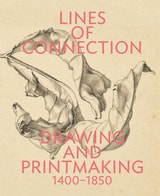
Lines of Connection
Drawing and Printmaking, 1400-1850Edina Adam
J. Paul Getty Trust, The, 2025
While often viewed and studied separately, drawings and prints have always been closely intertwined. They facilitated and generated the production of one another, and in some instances, clear distinctions between the two dissolved. Many artists created drawings specifically intended for translation into print, and an even greater number used prints as a training tool, copying from them to hone drawing skills. This reciprocal relationship goes even deeper, however, as innovative artists made fascinating hybrid works that blurred the boundaries between the two media, pushing against modern definitions and hierarchies.
Lines of Connection charts these historical and geographical continuities for the first time by bringing together works on paper of superb quality, foregrounding issues of artistic process and collaboration, technical innovation, and creative ingenuity. Featuring over 170 prints and drawings by such artists as Albrecht Dürer, Parmigianino, Hendrick Goltzius, Maria Sibylla Merian, Rembrandt van Rijn, and William Blake, this catalogue is a rich narrative introduction to the compelling, yet understudied, relationship between drawing and printmaking.
This volume is published to accompany an exhibition on view at The Art Institute of Chicago from March 15 to June 1, 2025 and at the J. Paul Getty Museum at the Getty Center from July 1 to September 14, 2025.

Tactile Sensibilities
Seeing Through Print in American ArtJuliet Sperling
University of Chicago Press, 0
A print-driven history of American art in the long nineteenth century.
Juliet Sperling’s Tactile Sensibilities uses interactive printed objects to uncover culturally instilled ideas about touch’s role in perception and shows how these frameworks were integral to ways of making and appreciating even seemingly untouchable works of painting and sculpture. Crucial to Sperling’s argument is a genre of paper constructions designed to engage the hand and eye in tandem: multilayered and lift-the-flap book plates, pull-tab engravings, foldable playbills, and spinning paper wheels that built expectations of touch as a trained, focused process into their structure and material. Intimately scaled and portable, tactile prints cut across multiple spheres of experience, including spaces in which people learned to view, understand, and create art.
Sperling reverses standard procedures for integrating prints into art history. Rather than working her way outward from canonical artworks toward ephemeral sources within the artist’s orbit, she uses previously unstudied printed materials to open period discourses of tactile sensibility that ultimately lead to art objects, unlocking new meanings behind works of painting and sculpture by artists including Raphaelle Peale, Hiram Powers, William Sidney Mount, and Winslow Homer. In treating sidelined materials as dedicated objects of study in their own right, Tactile Sensibilities reveals that in the long nineteenth century, print was an intellectually dense and powerfully connective medium, vital in mediating the tactile sensibilities that shaped ways of making and appreciating art.
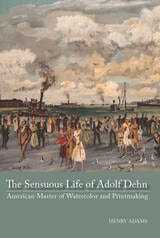
The Sensuous Life of Adolf Dehn
American Master of Watercolor and PrintmakingHenry Adams
University of Missouri Press, 2020
In this wide-ranging biography, Henry Adams explores how a once central figure can come to be forgotten. Noting that Dehn’s watercolor Spring in Central Park has been widely reproduced on calendars, postcards, and other Metropolitan Museum of Art souvenirs, Adams asks why it is that some artists are celebrated as key figures while others, even those who created images that form an integral part of our visual culture, are relatively unknown. With his account of the life of the prolific and influential Dehn, and a look at the circles of artists and writers in which Dehn moved, Adams helps to fill in what he calls the “secret or subterranean history of art.”
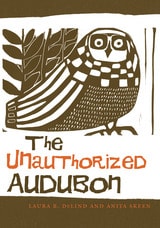
The Unauthorized Audubon
Anita Skeen and Laura B. DeLind
Michigan State University Press, 2014
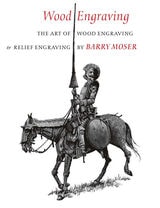
Wood Engraving
The Art of Wood Engraving and Relief EngravingBarry Moser
Brandeis University Press, 2021
Written and illustrated by master wood engraver Barry Moser, this primer on the art of wood engraving is filled with valuable knowledge including how to prepare a printing block; how to think in the medium’s properties of line, shape, and ink; and how to transfer a drawing onto a block. It also offers practical advice on which tools to use for a project and which ink works best. A highly illustrated guide to this art form, Wood Engraving will be useful to experienced and beginner engravers alike. This book features stunning examples of Moser’s art and skill to admire and inspire.