Results by title
17 books match the query 'Prints'
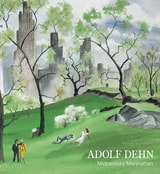
Adolf Dehn
Midcentury ManhattanAdolf Dehn
The Artist Book Foundation, 2017
Adolf Dehn (1895–1968), American painter in multimedia and acclaimed master lithographer, left his Minnesota hometown after formal training at the Minneapolis Art Institute to study at the Art Students League in New York. He toured Europe in the early 1920s, quickly acclimating to the continental lifestyle and adeptly depicting its nuances and idiosyncrasies with prolific lithographs and sketches. His critical and satirical renderings of the political movements, social conventions, and governmental policies in post-World War I Europe during "Le Crazy Years" gave the Midwestern artist ample material for his growing body of work.
Sailing back to the United States in 1929, Dehn survived the Great Depression with commercial artwork and contributions to popular magazines such as The New Yorker, Vogue, and Vanity Fair. His clever drawings that reflected the Jazz Age's culture and fashionable society made him a favorite of Frank Crowninshield, Vanity Fair's renowned editor.
During this time, while Dehn captured the heyday of Manhattan's burlesque theaters, lively Harlem nightclubs, impressive skyline, and busy harbor, he was continuously drawn to Central Park—his predilection for the city's magnificent green space was a sustaining source of inspiration and subject matter. Adolf Dehn: Midcentury Manhattan candidly examines the life and work of this exceptional, adventurous, and intrepid artist as he moved skillfully and capably between lithography, ink-wash drawings, gouache, casein painting, and watercolors. Combining numerous vintage photographs with newly discovered, Manhattan-inspired prints and drawings from the collections of, among others, the Whitney Museum of American Art, MoMA, and The Metropolitan Mesuem of Art, Adolf Dehn: Midcentury Manhattan traces how Dehn's art reflected the spirit, pulse, and uniquely American tonalities of The City of Dreams.

Engraving the Savage
The New World and Techniques of CivilizationMichael Gaudio
University of Minnesota Press, 2008
In 1585, the British painter and explorer John White created images of Carolina Algonquian Indians. These images were collected and engraved in 1590 by the Flemish publisher and printmaker Theodor de Bry and were reproduced widely, establishing the visual prototype of North American Indians for European and Euro-American readers.
In this innovative analysis, Michael Gaudio explains how popular engravings of Native American Indians defined the nature of Western civilization by producing an image of its “savage other.” Going beyond the notion of the “savage” as an intellectual and ideological construct, Gaudio examines how the tools, materials, and techniques of copperplate engraving shaped Western responses to indigenous peoples. Engraving the Savage demonstrates that the early visual critics of the engravings attempted-without complete success-to open a comfortable space between their own “civil” image-making practices and the “savage” practices of Native Americans-such as tattooing, bodily ornamentation, picture-writing, and idol worship. The real significance of these ethnographic engravings, he contends, lies in the traces they leave of a struggle to create meaning from the image of the American Indian.
The visual culture of engraving and what it shows, Gaudio reasons, is critical to grasping how America was first understood in the European imagination. His interpretations of de Bry’s engravings describe a deeply ambivalent pictorial space in between civil and savage-a space in which these two organizing concepts of Western culture are revealed in their making.
Michael Gaudio is assistant professor of art history at the University of Minnesota.
Even the Least of These
Anita Skeen
Michigan State University Press, 2024
Inglorious Artists
Art World Satire and the Emergence of a Capitalist Art Market in Paris, 1750-1850Kathryn Desplanque
University of Delaware Press, 2025
This book is also freely available online as an open access digital edition.
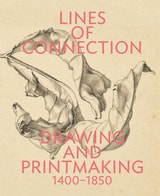
Lines of Connection
Drawing and Printmaking, 1400-1850Edina Adam
J. Paul Getty Trust, The, 2025
While often viewed and studied separately, drawings and prints have always been closely intertwined. They facilitated and generated the production of one another, and in some instances, clear distinctions between the two dissolved. Many artists created drawings specifically intended for translation into print, and an even greater number used prints as a training tool, copying from them to hone drawing skills. This reciprocal relationship goes even deeper, however, as innovative artists made fascinating hybrid works that blurred the boundaries between the two media, pushing against modern definitions and hierarchies.
Lines of Connection charts these historical and geographical continuities for the first time by bringing together works on paper of superb quality, foregrounding issues of artistic process and collaboration, technical innovation, and creative ingenuity. Featuring over 170 prints and drawings by such artists as Albrecht Dürer, Parmigianino, Hendrick Goltzius, Maria Sibylla Merian, Rembrandt van Rijn, and William Blake, this catalogue is a rich narrative introduction to the compelling, yet understudied, relationship between drawing and printmaking.
This volume is published to accompany an exhibition on view at The Art Institute of Chicago from March 15 to June 1, 2025 and at the J. Paul Getty Museum at the Getty Center from July 1 to September 14, 2025.
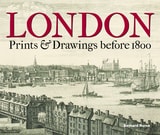
London
Prints & Drawings before 1800Bernard Nurse
Bodleian Library Publishing, 2017
This book presents more than a hundred images of Greater London from before 1800, all from the Gough Collection of the Bodleian Library. We see prints of London before and after the Great Fire, images of the 1780 tornado, panoramas of the Thames, depictions of the building and destruction of landmark bridges, and much more. Making brilliant use of the most extensive collection of London images amassed by any private collector of the period, the book will be essential to anyone delving into the history of the city.
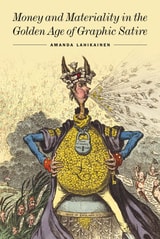
Money and Materiality in the Golden Age of Graphic Satire
Amanda Lahikainen
University of Delaware Press, 2022
This book examines the entwined and simultaneous rise of graphic satire and cultures of paper money in late eighteenth- and early nineteenth-century Britain. Asking how Britons learned to value both graphic art and money, the book makes surprising connections between two types of engraved images that grew in popularity and influence during this time. Graphic satire grew in visual risk-taking, while paper money became a more standard carrier of financial value, courting controversy as a medium, moral problem, and factor in inflation. Through analysis of satirical prints, as well as case studies of monetary satires beyond London, this book demonstrates several key ways that cultures attach value to printed paper, accepting it as social reality and institutional fact. Thus, satirical banknotes were objects that broke down the distinction between paper money and graphic satire altogether.
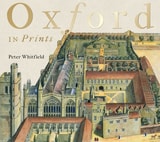
Oxford in Prints
1675-1900Peter Whitfield
Bodleian Library Publishing, 2016
With Oxford in Prints, Peter Whitfield has assembled a rich selection of more than seventy illustrations and prints that offer a portrait of Oxford before it became the modern city it is today. Seventeenth-century prints by David Loggan show the medieval origins of Oxford University already overlaid by Tudor and Stuart buildings. Eighteenth-century editions of the Oxford Almanack depict a city dominated by neoclassical ideas. By the nineteenth-century, illustrations in the Almanack had an increasingly romantic feel, with buildings against a natural background of the river, trees, and sky. Each illustration or print is accompanied by an insightful description, including salient historical features.
Richard Segalman Black & White
Muses, Magic & MonotypesRichard Segalman
The Artist Book Foundation, 2015
For many, the name Richard Segalman conjures up a vision of light-infused paintings of women gathered on a beach, gazing out the window of a New York City brownstone, or dressed in vcostumes from another era. But just as Edgar Degas, approaching his 60th year, surprised gallery goers with an exhibition not of ballerinas or race horses, but of highly atmospheric monotype landscapes, so too does Segalman surprise us with this exceptional collection of monotypes he began to produce in 1993, at nearly 60. "I reached a sort of plateau and needed a new direction," says the artist. "I came across a monotype... took a course... made one and I was hooked."
The significance of Segalman's shift into this medium is most powerfully conveyed through his arresting black-and-white prints that range from anonymous crowds on Coney Island beaches or New York City streets to a solitary figure in private contemplation. This monochromatic focus makes perfect sense: Segalman's first gallery appearance in New York—a sold-out show that gave him the courage to embrace the life of an artist—consisted entirely of black-and-white charcoal drawings, several stunning examples of which open this book.
Author Susan F. Castle's essay about the artist and his muses—the people, places, and things for which Richard Segalman has an abiding love—illuminates the exceptional work collected for this monograph. She combines excerpts from interviews with the artist and the three master printmakers with whom he has worked in Woodstock and Brooklyn, New York, and in Santa Fe, New Mexico. In addition, Anthony Kirk's insightful introudction provides an essential historical perspective on the artist and his printmaking process.
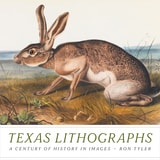
Texas Lithographs
A Century of History in ImagesRon Tyler
University of Texas Press, 2023
2024 Ewell L. Newman Book Award, American Historical Print Collectors Society
2024 Kate Broocks Bates Award for Historical Research, Texas State Historical Association
2024 TCU Texas Book Prize, Friends of the TCU Library and the TCU Press
2024 Kempner Family Book Prize—Nonfiction,The Philosophical Society of Texas
A stunning and comprehensive collection of lithographs from 1818 to 1900 Texas.
Westward expansion in the United States was deeply intertwined with the technological revolutions of the nineteenth century, from telegraphy to railroads. Among the most important of these, if often forgotten, was the lithograph. Before photography became a dominant medium, lithography—and later, chromolithography—enabled inexpensive reproduction of color illustrations, transforming journalism and marketing and nurturing, for the first time, a global visual culture. One of the great subjects of the lithography boom was an emerging Euro-American colony in the Americas: Texas.
The most complete collection of its kind—and quite possibly the most complete visual record of nineteenth-century Texas, period—Texas Lithographs is a gateway to the history of the Lone Star State in its most formative period. Ron Tyler assembles works from 1818 to 1900, many created by outsiders and newcomers promoting investment and settlement in Texas. Whether they depict the early French colony of Champ d’Asile, the Republic of Texas, and the war with Mexico, or urban growth, frontier exploration, and the key figures of a nascent Euro-American empire, the images collected here reflect an Eden of opportunity—a fairy-tale dream that remains foundational to Texans’ sense of self and to the world’s sense of Texas.
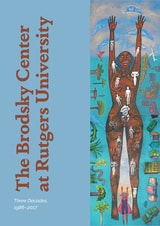
The Brodsky Center at Rutgers University
Three Decades, 1986-2017Ferris Olin
Rutgers University Press, 2024
Published in partnership with the Zimmerli Museum.
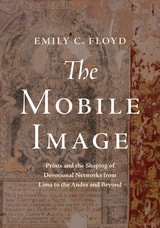
The Mobile Image
Prints and the Shaping of Devotional Networks from Lima to the Andes and BeyondEmily C. Floyd
University of Texas Press, 2025
A study of the production and movement of prints in colonial South America.
Printed images have had a central place in art-historical studies of colonial Spanish America, but scholars have typically focused on imported prints, designed and produced in Europe. The Mobile Image focuses instead on works printed in colonial Lima, generating there a distinctive print culture that served local and regional needs, while also appealing to European print consumers.
Inexpensive, easily transportable, and numerous, Lima’s prints traversed the varied geographies of the Viceroyalty of Peru both as loose sheets and within the protective covers of printed books. In the process, limeño devotional prints encouraged the development of shared regional imaginaries about the sacred Andean landscape, a space marked by miracle-working Virgins, potential saints, and powerful images of Christ. These same prints traveled abroad, where they promoted iconographies developed in Lima and influenced European conceptions of the Andes. Simultaneously, the visual language of limeño prints often challenges conventional approaches to interpreting colonial depictions of race. In analyzing limeño prints, and the identities of their makers, patrons, and consumers, The Mobile Image demonstrates that race is harder to recognize in colonial images than we might think. Unearthing hundreds of forgotten prints, Emily C. Floyd provides a fresh resource for interpreting colonial artworks, troubling established understandings of their aesthetics, and compelling us to reexamine colonial South American material cultures.
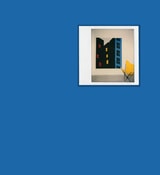
Tom Slaughter (Blue)
Tom Slaughter
The Artist Book Foundation, 2019
Of Tom Slaughter, Henry Geldzahler, the first curator of twentieth-century art at The Metropolitan Museum of Art, commented: "The quality of freshness, the familiar world re-seen, from the water towers of New York City to the rural pleasures of boating, is the most immediately arresting aspect of Tom Slaughter's art... Bold bright colors swiftly laid down echo with resonances: Léger and Stuart Davis, Raoul Dufy and Roy Lichtenstein." His work, with its seemingly effortless whimsy rendered with a strong sense of line, color, and rhythm, has also been compared to Matisse.
Slaughter's Pop-inflected drawings, prints, paintings, and illustrations convey his love of life as he relentlessly explored the complexities of the urban scene or the simple pleasures of boating. The Artist Book Foundation is pleased to publish Tom Slaughter, an extensive monograph of the artist's enormous body of work that celebrates his enduring optimism, personal and artistic honesty, and charming brashness in a landscape of pure joy.
Glenn Lowry, director of the Museum of Modern Art, reveals Slaughter as a treasured friend whose artistry was fueled by endless curiosity about life's simple pleasures, a man who made his innumerable friends and acquaintances part of his personal community. Slaughter's lifelong friend, actor and writer David Marshall Grant, remembers the artist's delight when, in a high school art class, he was introduced to the mysteries of negative space and the enigmatic power it brings to an artwork. Artist, art critic, and independent curator Andy Fabo describes his friend's vibrant art as all about pleasure. Even in the most turbulent of times, he took a celebratory approach to his art, offering his viewers a sensual and visual delight. For Jon Robin Baitz, playwright and screenwriter, the "sweetness" of Slaughter's images was insistent, a compulsive scrutinizing of the visual world of small domesticities. Marthe Jocelyn, the artist's former wife and a children's book author and illustrator, reflects on the couple's acclaimed collaboration on a series of books for the very youngest readers. Jim Kempner, gallery owner, recalls Slaughter as a man of charm and enormous artistic talent who always managed to retain a childlike innocence. Artist George Negroponte remembers Slaughter as focusing on the life around him, especially his daughters, in a unique mixture of everyday images, abstracted yet conveying popular culture. And in an interview both informative and poignant, Slaughter's friends, artists Stephen Hannock,
Tom Slaughter (Red)
Tom Slaughter
The Artist Book Foundation, 2019
Of Tom Slaughter, Henry Geldzahler, the first curator of twentieth-century art at The Metropolitan Museum of Art, commented: "The quality of freshness, the familiar world re-seen, from the water towers of New York City to the rural pleasures of boating, is the most immediately arresting aspect of Tom Slaughter's art... Bold bright colors swiftly laid down echo with resonances: Léger and Stuart Davis, Raoul Dufy and Roy Lichtenstein." His work, with its seemingly effortless whimsy rendered with a strong sense of line, color, and rhythm, has also been compared to Matisse.
Slaughter's Pop-inflected drawings, prints, paintings, and illustrations convey his love of life as he relentlessly explored the complexities of the urban scene or the simple pleasures of boating. The Artist Book Foundation is pleased to publish Tom Slaughter, an extensive monograph of the artist's enormous body of work that celebrates his enduring optimism, personal and artistic honesty, and charming brashness in a landscape of pure joy.
Glenn Lowry, director of the Museum of Modern Art, reveals Slaughter as a treasured friend whose artistry was fueled by endless curiosity about life's simple pleasures, a man who made his innumerable friends and acquaintances part of his personal community. Slaughter's lifelong friend, actor and writer David Marshall Grant, remembers the artist's delight when, in a high school art class, he was introduced to the mysteries of negative space and the enigmatic power it brings to an artwork. Artist, art critic, and independent curator Andy Fabo describes his friend's vibrant art as all about pleasure. Even in the most turbulent of times, he took a celebratory approach to his art, offering his viewers a sensual and visual delight. For Jon Robin Baitz, playwright and screenwriter, the "sweetness" of Slaughter's images was insistent, a compulsive scrutinizing of the visual world of small domesticities. Marthe Jocelyn, the artist's former wife and a children's book author and illustrator, reflects on the couple's acclaimed collaboration on a series of books for the very youngest readers. Jim Kempner, gallery owner, recalls Slaughter as a man of charm and enormous artistic talent who always managed to retain a childlike innocence. Artist George Negroponte remembers Slaughter as focusing on the life around him, especially his daughters, in a unique mixture of everyday images, abstracted yet conveying popular culture. And in an interview both informative and poignant, Slaughter's friends, artists Stephen Hannock,
Town
Prints & Drawings of Britain before 1800Bernard Nurse
Bodleian Library Publishing, 2020
True Grit
American Prints from 1900 to 1950Stephanie Schrader
J. Paul Getty Trust, The, 2019
In the first half of the twentieth century, a group of American artists influenced by the painter and teacher Robert Henri aimed to reject the pretenses of academic fine art and polite society. Embracing the democratic inclusiveness of the Progressive movement, these artists turned to making prints, which were relatively inexpensive to produce and easy to distribute. For their subject matter, the artists mined the bustling activity and stark realities of the urban centers in which they lived and worked. Their prints feature sublime towering skyscrapers and stifling city streets, jazzy dance halls and bleak tenement interiors—intimate and anonymous everyday scenes that addressed modern life in America.
True Grit examines a rich selection of prints by well-known figures like George Bellows, Edward Hopper, Joseph Pennell, and John Sloan as well as lesser-known artists such as Ida Abelman, Peggy Bacon, Miguel Covarrubias, and Mabel Dwight. Written by three scholars of printmaking and American art, the essays present nuanced discussions of gender, class, literature, and politics, contextualizing the prints in the rapidly changing milieu of the first decades of twentieth-century America.
This volume is published to accompany an exhibition on view at the J. Paul Getty Museum at the Getty Center October 15, 2019, to January 19, 2020.
Will Barnet
Will Barnet
The Artist Book Foundation, 2024
The first monograph on Will Barnet in nearly 40 years, this title reflect's the artist's unique interpretation of the world's evolving genres.
Will Barnet’s artistic career as a painter and printmaker spanned nearly eight decades of continuous creativity. Few artists, other than perhaps Picasso or Monet, can claim such an extended period of uninterrupted and innovative art making. From the darkness of the Great Depression to the opening decade of the twenty-first century, his oeuvre reflects his unique interpretation of the art world’s evolving genres: Social Realism, Modernism, Abstract Expressionism, and ultimately representational Minimalism with the human figure as his primary subject.
This book is the first comprehensive monograph on Will Barnet in nearly 40 years. With scholarly essays by the four distinguished authors, an extensive plate section, a comprehensive chronology, lists of awards and exhibitions, and a detailed bibliography, this monograph is a thorough presentation of Barnet's iconic images and consistently evolving style while celebrating his unquenchable joie de vivre.
Barnet was devoted to making art every day and worked diligently even at the very end of his life. "The Old Masters are still alive after 400 years, and that's what I want to be," he once said. "At the age of 10 or 12, I discovered that being an artist would give me an ability to create something which would live on after death." Live on it does; in addition to his acclaimed body of work, he influenced a broad spectrum of artists such as Jackson Pollock, Mark Rothko, James Rosenquist, Cy Twombly, and Ethel Fisher.