Results by title
6 books match the query 'Prisoner'
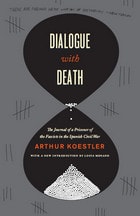
Dialogue with Death
The Journal of a Prisoner of the Fascists in the Spanish Civil WarArthur Koestler
University of Chicago Press, 2011
In 1937 during the Spanish Civil War, Arthur Koestler, a German exile writing for a British newspaper, was arrested by Nationalist forces in Málaga. He was then sentenced to execution and spent every day awaiting death—only to be released three months later under pressure from the British government. Out of this experience, Koestler wrote Darkness at Noon, his most acclaimed work in the United States, about a man arrested and executed in a Communist prison.
Dialogue with Death is Koestler’s riveting account of the fall of Málaga to rebel forces, his surreal arrest, and his three months facing death from a prison cell. Despite the harrowing circumstances, Koestler manages to convey the stress of uncertainty, fear, and deprivation of human contact with the keen eye of a reporter.
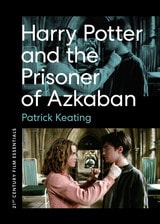
Harry Potter and the Prisoner of Azkaban
By Patrick Keating
University of Texas Press, 2021
An essential work of twenty-first-century cinema, Alfonso Cuarón’s 2004 film Harry Potter and the Prisoner of Azkaban is an elegant exemplar of contemporary cinematic trends, including serial storytelling, the rise of the fantasy genre, digital filmmaking, and collaborative authorship. With craft, wonder, and wit, the film captures the most engaging elements of the novel while artfully translating its literary point of view into cinematic terms that expand on the world established in the book series and previous films.
In this book, Patrick Keating examines how Cuarón and his collaborators employ cinematography, production design, music, performance, costume, dialogue, and more to create the richly textured world of Harry Potter—a world filtered principally through Harry’s perspective, characterized by gaps, uncertainties, and surprises. Rather than upholding the vision of a single auteur, Keating celebrates Cuarón’s direction as a collaborative achievement that resulted in a family blockbuster layered with thematic insights.
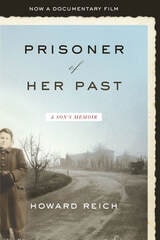
Prisoner of Her Past
A Son's MemoirHoward Reich
Northwestern University Press, 2011
Until February 15, 2001, Howard Reich’s mother, Sonia, had managed to keep almost everything about her experience of the Holocaust from her son. That night, she packed some clothes and fled her house in Skokie, Illinois, convinced that someone was trying to kill her. This was the first indication that she was suffering from late-onset post traumatic stress disorder, a little-known condition that can emerge decades after the initial trauma. For Howard, it was also the opening of a window onto his mother’s past.
In Prisoner of Her Past, Howard Reich has written a moving memoir about growing up as the child of Holocaust survivors and finding refuge from silence and fear in the world of jazz. It is only when Sonia’s memories overwhelm her and Howard begins to piece together her story that he comes to understand how his parents’ lives shaped his own. The paperback edition includes an epilogue by the author that relates developments since the publication of the cloth edition.
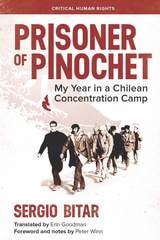
Prisoner of Pinochet
My Year in a Chilean Concentration CampSergio Bitar
University of Wisconsin Press, 2017
Prisoner of Pinochet is the gripping first-person chronicle of Bitar's year as a political prisoner before being expelled from Chile; a poignant narrative of men held captive together in a labor camp under harsh conditions, only able to guess at their eventual fate; and an insightful memoir of the momentous events of the early 1970s that led to seventeen years of bloody authoritarian rule in Chile. Available in English for the first time, this edition includes maps and photos from the 1970s and contextual notes by historian Peter Winn.
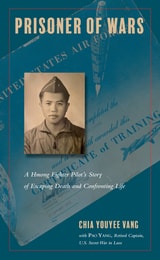
Prisoner of Wars
A Hmong Fighter Pilot's Story of Escaping Death and Confronting LifeChia Youyee Vang
Temple University Press, 2021
Retired Captain Pao Yang was a Hmong airman trained by the U.S. Air Force and CIA to fly T-28D aircraft for the U.S. Secret War in Laos. However, his plane was shot down during a mission in June 1972. Yang survived, but enemy forces captured him and sent him to a POW camp in northeastern Laos. He remained imprisoned for four years after the United States withdrew from Vietnam because he fought on the American side of the war.
Prisoner of Wars shows the impact the U.S Secret War in Laos had on Hmong combatants and their families. Chia Vang uses oral histories thatpoignantly recount Yang’s story and the deeply personal struggles his loved ones—who feared he had died—experienced in both Southeast Asia and the United States. As Yang eventually rebuilt his life in America, he grappled with issues of freedom and trauma.
Yang’s life provides a unique lens through which to better understand the lasting impact of the wars in Southeast Asia and the diverse journeys that migrants from Asia made over the last two centuries. Prisoner of Wars makes visible an aspect of the collateral damage that has been left out of dominant Vietnam War narratives.
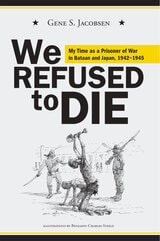
We Refused to Die
My time as a prisoner of war in Bataan and Japan, 1942-1945Gene S Jacobsen
University of Utah Press, 2004
In engaging, direct prose, Jacobsen’s three-and-a-half year experience as a prisoner of war takes the reader on a brutal and harrowing march through hatred and forgiveness, fortitude and freedom. We Refused to Die is an honest memoir that shines light on one of history’s darkest moments.