Results by title
21 books match the query 'Privilege'
"The Wrong Side of Privilege"
Advocacy, Community, and Politics: The Collected Essays of Stephen J. Parks, 2000–2020Stephen J. Parks
University Press of Colorado, 2025
A Privilege of Intellect
Conscience and Wisdom in Newman’s NarrativeD. A. Drennen
University of Scranton Press, 2010
Based on decades of research, A Privilege of Intellect is D. A. Drennen’s portrait of the English cardinal John Henry Newman (1801–90), whose conversion to the Roman Catholic Church in 1845 significantly boosted the presence of the Catholic Church in England and caused many Anglicans to follow his example. Newman—who will be beatified this fall—devoted his life both to the Church and to the university, demonstrating that religious faith and intellectual pursuits could exist in harmony. Drennen’s biography combines theology with psychology and philosophy and will appeal to anyone interested in the history of the Church of England and the Roman Catholic Church.
Accent On Privilege
English Identities & Anglophilia In The U.S.Katharine Jones
Temple University Press, 2001
The political and cultural ties between England and the US act as a backdrop for the identity negotiations of these English people, many of whom do not even consider themselves to be immigrants. This unique exploration of the workings of white privilege offers an important new understanding of the paradoxes of how class, gender, and race are formed in the US and, by implication, in the UK.
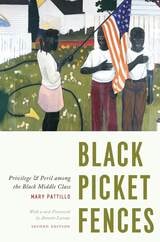
Black Picket Fences, Second Edition
Privilege and Peril among the Black Middle ClassMary Pattillo
University of Chicago Press, 2013
Stark, moving, and still timely, the book is updated for this edition with a new epilogue by the author that details how the neighborhood and its residents fared in the recession of 2008, as well as new interviews with many of the same neighborhood residents featured in the original. Also included is a new foreword by acclaimed University of Pennsylvania sociologist Annette Lareau.
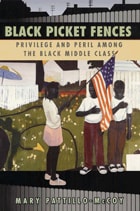
Black Picket Fences
Privilege and Peril among the Black Middle ClassMary Pattillo-McCoy
University of Chicago Press, 1999
"An insightful look at the socio-economic experiences of the black middle class. . . . Through the prism of a South Side Chicago neighborhood, the author shows the distinctly different reality middle-class blacks face as opposed to middle-class whites." —Ebony
"A detailed and well-written account of one neighborhood's struggle to remain a haven of stability and prosperity in the midst of the cyclone that is the American economy." —Emerge
Color of Privilege
Three Blasphemies on Race and FeminismAida Hurtado
University of Michigan Press, 1996
Distinguishing Disability
Parents, Privilege, and Special EducationColin Ong-Dean
University of Chicago Press, 2009
Students in special education programs can have widely divergent experiences. For some, special education amounts to a dumping ground where schools unload their problem students, while for others, it provides access to services and accommodations that drastically improve chances of succeeding in school and beyond. Distinguishing Disability argues that this inequity in treatment is directly linked to the disparity in resources possessed by the students’ parents.
Since the mid-1970s, federal law has empowered parents of public school children to intervene in virtually every aspect of the decision making involved in special education. However, Colin Ong-Dean reveals that this power is generally available only to those parents with the money, educational background, and confidence needed to make effective claims about their children’s disabilities and related needs. Ong-Dean documents this class divide by examining a wealth of evidence, including historic rates of learning disability diagnosis, court decisions, and advice literature for parents of disabled children. In an era of expanding special education enrollment, Distinguishing Disability is a timely analysis of the way this expansion has created new kinds of inequality.
Families for Mobility
Elite Korean Students Abroad and Their Parents' Reproduction of PrivilegeJuyeon Park
Rutgers University Press, 2025
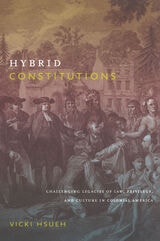
Hybrid Constitutions
Challenging Legacies of Law, Privilege, and Culture in Colonial AmericaVicki Hsueh
Duke University Press, 2010
Hsueh traces the historical development and theoretical implications of proprietary constitutionalism by examining the founding of the colonies of Maryland, Carolina, and Pennsylvania. She provides close readings of colonial proclamations, executive orders, and assembly statutes, as well as the charter granting Cecilius Calvert the colony of Maryland in 1632; the Fundamental Constitutions of Carolina, adopted in 1669; and the treaties brokered by William Penn and various Lenni Lenape and Susquehannock tribes during the 1680s and 1690s. These founding documents were shaped by ambition, contingency, and limited resources; they reflected an ambiguous and unwieldy colonialism rather than a purposeful, uniform march to modernity. Hsueh concludes by reflecting on hybridity as a rubric for analyzing the historical origins of colonialism and reconsidering contemporary indigenous claims in former settler colonies such as Australia, New Zealand, and the United States.
NURSING AND THE PRIVILEGE OF PRESCRIPTION
1893-2000Arlene W. Keeling
The Ohio State University Press, 2007
Negotiating Power and Privilege
Career Igbo Women in Contemporary NigeriaPhilomina E. Okeke-Ihejirika
Ohio University Press, 2004
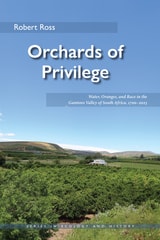
Orchards of Privilege
Water, Oranges, and Race in the Gamtoos Valley of South Africa, 1700–2023Robert Ross
Ohio University Press, 2025
This study of the Gamtoos River floodplain in South Africa’s Eastern Cape Province traces its transformation from an eighteenth-century natural landscape of thick bush into an agricultural zone now threatened by climate change. The first half of the book explains how missionaries from the London Missionary Society and residents of the Hankey Mission Station introduced irrigation, turning the area into a community of small-scale farmers. Despite early failures, by 1849 they had constructed South Africa’s first major irrigation tunnel and aqueduct. However, conflicts between the missionaries and residents led to the loss of communal lands to privatization, which ultimately impoverished the local farmers. The second half explores efforts to develop the valley for large-scale agriculture, addressing challenges like drought, flash floods, and saline water. By the mid-twentieth century, Afrikaners dominated the area, benefiting from the construction in 1970 of the Kouga Dam, which provided fresh water for the floodplain. This led to the rise of a wealthy white farming community, sustained by apartheid policies and labor from the “Coloured” and African populations. In the early twenty-first century, however, this prosperity has become threatened by severe droughts linked to global climate change. In view of these historical transformations, the Gamtoos River floodplain exemplifies the complex interplay between human ambition, environmental challenges, and sociopolitical forces.
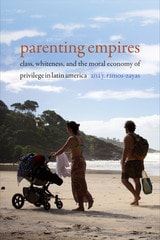
Parenting Empires
Class, Whiteness, and the Moral Economy of Privilege in Latin AmericaAna Yolanda Ramos-Zayas
Duke University Press, 2020
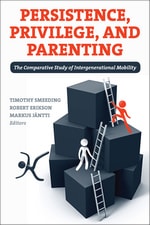
Persistence, Privilege, and Parenting
The Comparative Study of Intergenerational MobilityTimothy Smeeding
Russell Sage Foundation, 2012
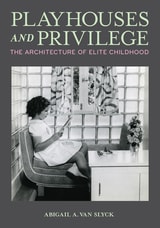
Playhouses and Privilege
The Architecture of Elite ChildhoodAbigail A. Van Slyck
University of Minnesota Press, 2025
Examining playhouses of the super-rich to understand how architecture contributed to the construction of elite identity and modern childhood
Playhouses and Privilege explores children’s playhouses built on British and American estates between the 1850s and the mid-1930s. Different from the prefabricated buildings that later populated suburban backyards, these playhouses were often fully functional cottages designed by well-known architects for British royalty, American industrialists, and Hollywood stars. As Abigail A. Van Slyck shows, these buildings were more than extravagant spaces to cultivate children’s imaginations and fantasy lives.
Reviewing a rich archive that includes extant buildings, site plans, family photographs, baby books, and intimate household correspondence, Van Slyck demonstrates that these structures were tools of social reproduction shaped by elite parents’ attitudes toward child-rearing, education, and class privilege. Recognizing playhouses as stages for the purposeful performance of upper-class identity, she illuminates their importance in influencing children to internalize gendered codes of conduct as they enacted rituals of hospitality and learned how to supervise servants.
From Queen Victoria and Prince Albert’s Swiss Cottage, built on their Osborne estate in 1853, to the children’s cottage constructed on the grounds of Cornelius Vanderbilt’s Newport mansion in 1886, and from the miniature bungalow commissioned in 1926 for the Dodge Brothers Motor Company heiress to the corporate-sponsored glass-block playhouse given to Shirley Temple in 1936, Van Slyck surveys a variety of playhouses and their milieus to trace the evolution of elite childhood and the broader social practices of wealth. Playhouses and Privilege makes clear that, far from being frivolous, playhouses were carefully planned architectural manifestations of adult concerns, integral to the reproduction of class privilege.
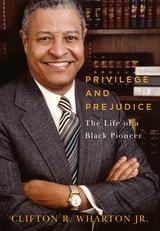
Privilege and Prejudice
The Life of a Black PioneerClifton R. Wharton
Michigan State University Press, 2015
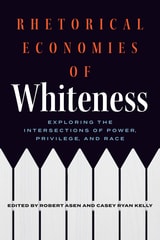
Rhetorical Economies of Whiteness
Exploring the Intersections of Power, Privilege, and RaceEdited by Robert Asen and Casey Ryan Kelly
The Ohio State University Press, 2024
Contributors:
Godfried Asante, Robert Asen, Charles Athanasopoulos, Paulami Banerjee, Anne Bonds, Linsay M. Cramer, Derek G. Handley, V. Jo Hsu, Kelly Jensen, Casey Ryan Kelly, Kyle R. Larson, George (Guy) F. McHendry Jr., Thomas K. Nakayama, Adedoyin Ogunfeyimi, Rico Self, Stacey K. Sowards, Corinne Mitsuye Sugino
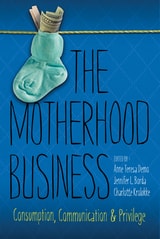
The Motherhood Business
Consumption, Communication, and PrivilegeEdited by Anne Teresa Demo, Jennifer L. Borda, and Charlotte Kroløkke
University of Alabama Press, 2015
Examining how motherhood, consumption, and privilege shape identities in contemporary culture.
The Motherhood Business is a piercing collection of ten original essays that reveal the rhetoric of the motherhood industry. Focusing on the consumer life of mothers and the emerging entrepreneurship associated with motherhood, the collection considers how different forms of privilege (class, race, and nationality) inform discourses about mothering, consumption, mobility, and leisure.
The Motherhood Business follows the harried mother’s path into the anxious maelstrom of intelligent toys, healthy foods and meals, and educational choices. It also traces how some enterprising mothers leverage cultural capital and rhetorical vision to create thriving baby- and child-based businesses of their own, as evidenced by the rise of mommy bloggers and “mompreneurs”over the last decade.
Starting with the rapidly expanding global fertility market, The Motherhood Business explores the intersection of motherhood, consumption, and privilege in the context of fertility tourism, international adoption, and transnational surrogacy. The synergy between motherhood and the marketplace demonstrated across the essays affirms the stronghold of “intensive mothering ideology” in decisions over what mothers buy and how they brand their businesses even as that ideology evolves. Across diverse contexts, the volume also identifies how different forms or privilege shape how mothers construct their identities through their consumption and entrepreneurship.
Although social observers have long commented on the link between motherhood and consumerism, little has been written within the field of rhetoric. Penetrating and interdisciplinary, The Motherhood Business illuminates how consumer culture not only shapes contemporary motherhood but also changes in response to mothers who constitute a driving force of the economy.
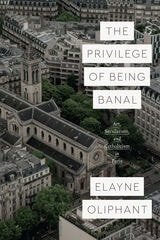
The Privilege of Being Banal
Art, Secularism, and Catholicism in ParisElayne Oliphant
University of Chicago Press, 2021
Exploring the violent histories and alternate trajectories effaced through this banal backgrounding of a crucial aspect of French history and culture, this richly textured ethnography lays bare the profound nostalgia that undergirds Catholicism’s circulation in nonreligious sites such as museums, corporate spaces, and political debates. Oliphant’s aim is to unravel the contradictions of religion and secularism and, in the process, show how aesthetics and politics come together in contemporary France to foster the kind of banality that Hannah Arendt warned against: the incapacity to take on another person’s experience of the world. A creative meditation on the power of the taken-for-granted, The Privilege of Being Banal is a landmark study of religion, aesthetics, and public space.
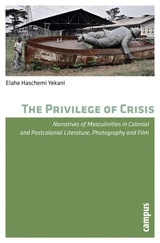
The Privilege of Crisis
Narratives of Masculinities in Colonial and Postcolonial Literature, Photography, and FilmElahe Haschemi Yekani
Campus Verlag, 2011
Despite the understanding of scholars that masculinity, far from being a natural or stable concept, is in reality a social construction, the culture at large continues to privilege an idealized, coherent male point of view. The Privilege of Crisis draws on the work of authors such as H. Rider Haggard, Rudyard Kipling, and Joseph Conrad—as well as contemporary postcolonial writers such as J. M. Coetzee, Hanif Kureishi and Zadie Smith—to show how recurrent references to a "crisis" of masculinity or the decline of masculinity serve largely to demonstrate and support positions of male privilege.
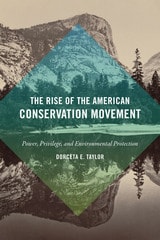
The Rise of the American Conservation Movement
Power, Privilege, and Environmental ProtectionDorceta E. Taylor
Duke University Press, 2016