Results by title
60 books match the query 'Problem' and 3 start with a
A Problem of Fit
How the Complexity of College Pricing Hurts Students—and UniversitiesPhillip B. Levine
University of Chicago Press, 2022
How much does it cost to attend college in the United States today? The answer is more complex than many realize. College websites advertise a sticker price, but uncovering the actual price—the one after incorporating financial aid—can be difficult for students and families. This inherent uncertainty leads some students to forgo applying to colleges that would be the best fit for them, or even not attend college at all. The result is that millions of promising young people may lose out on one of society’s greatest opportunities for social mobility. Colleges suffer too, losing prospective students and seeing lower enrollments and less socioeconomic diversity. If markets require prices to function well, then the American higher-education system—rife as it is with ambiguity in its pricing—amounts to a market failure.
In A Problem of Fit, economist Phillip B. Levine explains why institutions charge the prices they do and discusses the role of financial aid systems in facilitating—and discouraging—access to college. Affordability issues are real, but price transparency is also part of the problem. As Levine makes clear, our conversations around affordability and free tuition miss a larger truth: that the opacity of our current college-financing systems is a primary driver of inequities in education and society. In a clear-eyed assessment of educational access and aid in a post-COVID-19 economy, A Problem of Fit offers a trenchant new argument for educational reforms that are well within reach.
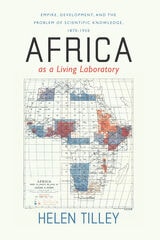
Africa as a Living Laboratory
Empire, Development, and the Problem of Scientific Knowledge, 1870-1950Helen Tilley
University of Chicago Press, 2011
Tropical Africa was one of the last regions of the world to experience formal European colonialism, a process that coincided with the advent of a range of new scientific specialties and research methods. Africa as a Living Laboratory is a far-reaching study of the thorny relationship between imperialism and the role of scientific expertise—environmental, medical, racial, and anthropological—in the colonization of British Africa.
A key source for Helen Tilley’s analysis is the African Research Survey, a project undertaken in the 1930s to explore how modern science was being applied to African problems. This project both embraced and recommended an interdisciplinary approach to research on Africa that, Tilley argues, underscored the heterogeneity of African environments and the interrelations among the problems being studied. While the aim of British colonialists was unquestionably to transform and modernize Africa, their efforts, Tilley contends, were often unexpectedly subverted by scientific concerns with the local and vernacular. Meticulously researched and gracefully argued, Africa as a Living Laboratory transforms our understanding of imperial history, colonial development, and the role science played in both.
Art in Doubt
Tolstoy, Nabokov, and the Problem of Other MindsTatyana Gershkovich
Northwestern University Press, 2021
Leo Tolstoy’s and Vladimir Nabokov’s radically opposed aesthetic worldviews emanate from a shared intuition—that approaching a text skeptically is easy, but trusting it is hard
Two figures central to the Russian literary tradition—Tolstoy, the moralist, and Nabokov, the aesthete—seem to have sharply conflicting ideas about the purpose of literature. Tatyana Gershkovich undermines this familiar opposition by identifying a shared fear at the root of their seemingly antithetical aesthetics: that one’s experience of the world might be entirely one’s own, private and impossible to share through art.
Art in Doubt: Tolstoy, Nabokov, and the Problem of Other Minds reconceives the pair’s celebrated fiction and contentious theorizing as coherent, lifelong efforts to reckon with the problem of other people’s minds. Gershkovich demonstrates how the authors’ shared yearning for an impossibly intimate knowledge of others formed and deformed their fiction and brought them through parallel logic to their rival late styles: Tolstoy’s rustic simplicity and Nabokov’s baroque complexity. Unlike those authors for whom the skeptical predicament ends in absurdity or despair, Tolstoy and Nabokov both hold out hope that skepticism can be overcome, not by force of will but with the right kind of text, one designed to withstand our impulse to doubt it. Through close readings of key canonical works—Anna Karenina, The Kreutzer Sonata, Hadji Murat, The Gift, Pale Fire—this book brings the twin titans of Russian fiction to bear on contemporary debates about how we read now, and how we ought to.