Results by title
4 books match the query 'Problem children'
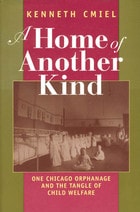
A Home of Another Kind
One Chicago Orphanage and the Tangle of Child WelfareKenneth Cmiel
University of Chicago Press, 1995
The book begins with the fascinating history of the Chicago Nursery and Half-Orphan Asylum from 1860 through 1984, when it became a full-time research institute. Founded by a group of wealthy volunteers, the asylum was a Protestant institution for Protestant children—one of dozens around the country designed as places where single parents could leave their children if they were temporarily unable to care for them.
But the asylum, which later became known as Chapin Hall, changed dramatically over the years as it tried to respond to changing policies, priorities, regulations, and theories concerning child welfare. Cmiel offers a vivid portrait of how these changes affected the day-to-day realities of group living. How did the kind of care given to the children change? What did the staff and management hope to accomplish? How did they define "family"? Who were the children who lived in the asylum? What brought them there? What were their needs? How did outside forces change what went on inside Chapin Hall?
This is much more than a richly detailed account of one institution. Cmiel shatters a number of popular myths about orphanages. Few realize that almost all children living in nineteenth-century orphanages had at least one living parent. And the austere living conditions so characteristic of the orphanage were prompted as much by health concerns as by strict Victorian morals.
Elements of Discipline
Nine Principles for Teachers and ParentsStephen Greenspan
Temple University Press, 2012
Elements of Discipline is a timely and helpful book for teachers, parents, and day-care professionals that provides a simple set of rules for managing—successfully and humanely—a wide range of discipline situations and challenges. A well-respected child development specialist, Stephen Greenspan outlines his “ABC Theory of Discipline.” He combines an Affective approach, a Behavioral approach, and a Cognitive approach that, when used in a coordinated fashion, will contribute to greater child compliance and family/classroom harmony.
Greenspan suggests that, using his matrix, caregivers can provide the warmth, tolerance, and influence that will help children become competent in three socio-emotional domains—happiness, boldness, and niceness. He recommends caregivers pick and choose from the discipline literature in a manner that best suits their individual style and values.
Elements of Discipline is a lively guide to effective classroom or family management.
Expelled to a Friendlier Place
A Study of Effective Alternative SchoolsMartin Gold and David W. Mann
University of Michigan Press, 1984
The Child Who Walks Alone
Case Studies of Rejection in the SchoolsBy Anne and Hart Stilwell
University of Texas Press, 1996
There is an old song that goes, "Look down, look down, that lonesome road, before you travel on." Facing that lonesome road, the adult might travel on. Often, the child can't.
During her twenty-year career as a school social worker, Anne Stilwell worked with two thousand "problem" children. She and her husband, professional writer Hart Stilwell, present here twenty-one factual accounts of children who suffered rejection in the public schools.
Some of the children in these accounts are unusually bright and some are mentally retarded. They are belligerent and destructive or withdrawn. They are from broken homes or happy homes, from the slums or Middle America. They are blacks, Chicanos, and Anglos. There is only one common denominator among these children—tragedy.
Every classroom teacher will gain from this sympathetic evaluation of the problems faced by children in the public schools. No one who reads this book can remain unaware of major areas that call for deep concern on the part of educators and parents. The Stilwells have described school children and their problems and at the same time offered telling portraits of the families of which the youngsters are a part. In the struggle to see that the problem child has a chance to develop and advance within the limits of his or her ability, parents, teachers, administrators, and social workers must work together or all fail. When they fail, the child must walk alone.
The authors' objective in presenting these cases is to show what has happened and does happen, and to encourage others to work for change. A prominent educator describes their account as "an exceptionally worthwhile teaching document—stimulating, touching, well written, and honest."
While this book was originally written in 1972, the issue of rejection in the public schools is, sadly, still timely.