Results by title
6 books match the query 'Producing'
American Theater in the Culture of the Cold War
Producing and Contesting Containment, 1947-1962Judith M. Melton
University of Iowa Press, 1998
In this groundbreaking study, Bruce McConachie uses the primary metaphor of containment—what happens when we categorize a play, a television show, or anything we view as having an inside, an outside, and a boundary between the two—as the dominant metaphor of cold war theatergoing. Drawing on the cognitive psychology and linguistics of George Lakoff and Mark Johnson, he provides unusual access to the ways in which spectators in the cold war years projected themselves into stage figures that gave them pleasure.
McConachie reconstructs these cognitive processes by relying on scripts, set designs, reviews, memoirs, and other evidence. After establishing his theoretical framework, he focuses on three archtypal figures of containment significant in Cold War culture, Empty Boys, Family Circles, and Fragmented Heroes. McConachie uses a range of plays, musicals, and modern dances from the dominant culture of the Cold War to discuss these figures, including The Seven Year Itch, Cat on a Hot Tin Roof, The King and I, A Raisin in the Sun, Night Journey, and The Crucible. In an epilogue, he discusses the legacy of Cold War theater from 1962 to 1992.
Original and provocative, American Theater in the Culture of the Cold War illuminates the mind of the spectator in the context of Cold War culture; it uses cognitive studies and media theory to move away from semiotics and psychoanalysis, forging a new way of interpreting theater history.
[more]
American Theater in the Culture of the Cold War
Producing and Contesting Containment, 1947-1962Bruce A. Mcconachie
University of Iowa Press, 2003
In this groundbreaking study, Bruce McConachie uses the primary metaphor of containment—what happens when we categorize a play, a television show, or anything we view as having an inside, an outside, and a boundary between the two—as the dominant metaphor of cold war theatergoing. Drawing on the cognitive psychology and linguistics of George Lakoff and Mark Johnson, he provides unusual access to the ways in which spectators in the cold war years projected themselves into stage figures that gave them pleasure.
McConachie reconstructs these cognitive processes by relying on scripts, set designs, reviews, memoirs, and other evidence. After establishing his theoretical framework, he focuses on three archtypal figures of containment significant in Cold War culture, Empty Boys, Family Circles, and Fragmented Heroes. McConachie uses a range of plays, musicals, and modern dances from the dominant culture of the Cold War to discuss these figures, including The Seven Year Itch, Cat on a Hot Tin Roof; The King and I,A Raisin in the Sun, Night Journey, and The Crucible. In an epilogue, he discusses the legacy of Cold War theater from 1962 to 1992.
McConachie reconstructs these cognitive processes by relying on scripts, set designs, reviews, memoirs, and other evidence. After establishing his theoretical framework, he focuses on three archtypal figures of containment significant in Cold War culture, Empty Boys, Family Circles, and Fragmented Heroes. McConachie uses a range of plays, musicals, and modern dances from the dominant culture of the Cold War to discuss these figures, including The Seven Year Itch, Cat on a Hot Tin Roof; The King and I,A Raisin in the Sun, Night Journey, and The Crucible. In an epilogue, he discusses the legacy of Cold War theater from 1962 to 1992.
[more]
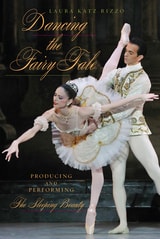
Dancing the Fairy Tale
Producing and Performing The Sleeping BeautyLaura Katz Rizzo
Temple University Press, 2015
In Dancing the Fairy Tale, Laura Katz Rizzo claims that The Sleeping Beauty is both a metaphor for ballet itself, and a powerful case study for examining ballet and its production and performance. Using Marius Petipa and Pyotr Tchaikovsky's classical dance--specifically as it was staged in Philadelphia over nearly 70 years--Katz Rizzo looks at the gendered nature of women staging, coaching, and reanimating this magnificent ballet, and well as the ongoing push-pull between tradition and innovation within the art form.
Using extensive archival research, dance analysis, and American feminist theory, Dancing the Fairy Tale places women at the center of a historical narrative to reveal how the production and performance of The Sleeping Beauty in the years between 1937 and 2002 made significant contributions to the development and establishment of an American classical ballet. Katz Rizzo highlights not only what women have done not only behind the scenes, as administrators, producers, or directors of ballet companies and schools, but also as active interpreters embodying the ballet's title role.
In the process, Katz Rizzo also emphasizes the importance of regional sites outside of locations traditionally understood as central to the development of ballet in the United States.
[more]
Producing
Lewis, Jon
Rutgers University Press, 2015
Of all the job titles listed in the opening and closing screen credits, producer is certainly the most amorphous. There are businessmen (and women)-producers, writer-director- and movie-star-producers; producers who work for the studio; executive producers whose reputation and industry clout alone gets a project financed (though their day-to-day participation in the project may be negligible). The job title, regardless of the actual work involved, warrants a great deal of prestige in the film business; it is the credited producers, after all, who collect the Oscar for Best Picture. But what producers do and what they don’t or won’t do varies from project to project.
Producing is the first book to provide a comprehensive overview of the roles that producers have played in Hollywood, from the dawn of the twentieth century to the present day. It introduces readers to the colorful figures who helped to define and reimagine the producer’s role, including inventors like Thomas Edison, moguls like Darryl F. Zanuck, entrepreneurs like Walt Disney, and mavericks like Roger Corman. Readers also get an inside look at the less glamorous jobs producers have often performed: shepherding projects through many years of development, securing financial backers, and supervising movie shoots.
The latest book in the acclaimed Behind the Silver Screen series, Producing includes essays written by seven film scholars, each an expert in a different period of cinema history. Together, they give readers a full picture of how the art and business of producing films has changed over time—and how the producer’s myriad job duties continue to evolve in the digital era.
[more]

Producing the Sacred
AN ESSAY ON PUBLIC RELIGIONRobert Wuthnow
University of Illinois Press, 1994
What is Public religion? How does it manifest the sacred? These are the fundamental questions Robert Wuthnow addresses in Producing the Sacred.
Wuthnow uses as a guiding assumption the idea that cultural expressions, religious or otherwise, do not simply happen but are produced. He considers the major kinds of organizations that produce public religion--congregations, hierarchies, special interests, academies, and public rituals--showing how these organizational vehicles shape public religion's messages and how specific types of religious organization draw resources from their environments. He also reveals the implicit and unintended ways in which sacredness is expressed in modern society.
A volume in the series Public Expressions of Religion in America
[more]
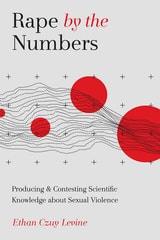
Rape by the Numbers
Producing and Contesting Scientific Knowledge about Sexual ViolenceEthan Czuy Levine
Rutgers University Press, 2021
Science plays a substantial, though under-acknowledged, role in shaping popular understandings of rape. Statistical figures like “1 in 4 women have experienced completed or attempted rape” are central for raising awareness. Yet such scientific facts often become points of controversy, particularly as conservative scholars and public figures attempt to discredit feminist activists. Rape by the Numbers explores scientists’ approaches to studying rape over more than forty years in the United States and Canada. In addition to investigating how scientists come to know the scope, causes, and consequences of rape, this book delves into the politics of rape research. Scholars who study rape often face a range of social pressures and resource constraints, including some that are unique to feminized and politicized fields of inquiry. Collectively, these matters have far-reaching consequences. Scientific projects may determine who counts as a potential victim/survivor or aggressor in a range of contexts, shaping research agendas as well as state policy, anti-violence programming and services, and public perceptions. Social processes within the study of rape determine which knowledges count as credible science, and thus who may count as an expert in academic and public contexts.
[more]