Results by title
15 books match the query 'Profession'
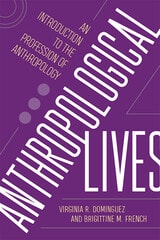
Anthropological Lives
An Introduction to the Profession of AnthropologyVirginia R Dominguez
Rutgers University Press, 2020
Anthropologists profiled: Leslie Aiello, Lee Baker, João Biehl, Tom Boellstorff, Jacqueline Comito, Shannon Dawdy, Virginia R. Dominguez, T.J. Ferguson, Brigittine French, Agustín Fuentes, Amy Goldenberg, Mary Gray, Sarah Green, Monica Heller, Douglas Hertzler, Ed Liebow, Mariano Perelman, Jeremy Sabloff, Carolyn Sargent, Marilyn Strathern, Nandini Sundar, Alaka Wali.

Front-Page Detective
William J. Burns and the Detective Profession, 1880–1930William R. Hunt
University of Wisconsin Press, 1990

Health Psychology
A Discipline and a ProfessionEdited by George C. Stone
University of Chicago Press, 1987
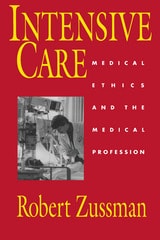
Intensive Care
Medical Ethics and the Medical ProfessionRobert Zussman
University of Chicago Press, 1992
His book is a portrait of the way careful planning is undermined by the unpredictability of illness and the persistence of self-interest, by high principle and curious compromise.
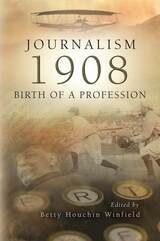
Journalism 1908
Birth of a ProfessionEdited by Betty Houchin Winfield
University of Missouri Press, 2008
Journalism—1908 opens a window on mass communication a century ago. It tells how the news media in the United States were fundamentally changed by the creation of academic departments and schools of journalism, by the founding of the National Press Club, and by exciting advances that included early newsreels, the introduction of halftones to print, and even changes in newspaper design.
Journalism educator Betty Houchin Winfield has gathered a team of well-known media scholars, all specialists in particular areas of journalism history, to examine the status of their profession in 1908: news organizations, business practices, media law, advertising, forms of coverage from sports to arts, and more. Various facets of journalism are explored and situated within the country’s history and the movement toward reform and professionalism—not only formalized standards and ethics but also labor issues concerning pay, hours, and job differentiation that came with the emergence of new technologies.
This overview of a watershed year is national in scope, examining early journalism education programs not only at Missouri but also at such schools as Colgate, Washington and Lee, Wisconsin, and Columbia. It also reviews the status of women in the profession and looks beyond big-city papers to Progressive Era magazines, the immigrant press, and African American publications.
Journalism—1908 commemorates a century of progress in the media and, given the place of Missouri’s School of Journalism in that history, is an appropriate celebration of that school’s centennial. It is a lode of information about journalism education history that will surprise even many of those in the field and marks a seminal year with lasting significance for the profession.
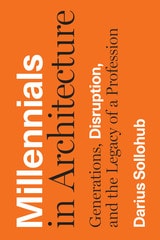
Millennials in Architecture
Generations, Disruption, and the Legacy of a ProfessionDarius Sollohub
University of Texas Press, 2019
Much has been written about Millennials, but until now their growing presence in the field of architecture has not been examined in depth. In an era of significant challenges stemming from explosive population growth, climate change, and the density of cities, Millennials in Architecture embraces the digitally savvy disruptors who are joining the field at a crucial time as it grapples with the best ways to respond to a changing physical world.
Taking a clear-eyed look at the new generation in the context of the design professions, Darius Sollohub begins by situating Millennials in a line of generations stretching back to early Modernism, exploring how each generation negotiates the ones before and after. He then considers the present moment, closely evaluating the significance of Millennial behaviors and characteristics (from civic-mindedness to collaboration, and time management in a 24/7 culture), all underpinned by fluency in the digital world. The book concludes with an assessment of the profound changes and opportunities that Millennial disruption will bring to education, licensure, and firm management. Encouraging new alliances, Millennials in Architecture is an essential resource for the architectural community and its stakeholders.
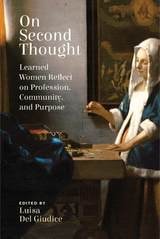
On Second Thought
Learned Women Reflect on Profession, Community, and PurposeLuisa Del Giudice
University of Utah Press, 2017
In these dynamic essays, thirteen wise women review their lives for meaning and purpose, striving to integrate both head and heart. They consider how their spiritual paradigms have shaped their vocations as teachers, scholars, guides, mentors, and advocates and how these roles have been integral to their life’s work, not merely to their work life. With courageous and insightful testimonies they narrate the intersecting relationships of work, family, students, patients, and colleagues, weaving them together rather than compartmentalizing them. Challenges inside and outside the academy and other professional settings are revealed, to tell of suffering and transformation, to tally hard-earned life lessons and to share wisdom achieved.
Lives and words are gathered and generously shared, allowing these women to make sense of their own lives while mentoring a wider circle of younger and older readers alike. These “travel tales” of journeys through knowledge and self-knowledge will inform, challenge, surprise, entertain, and inspire.
Profession of Medicine
A Study of the Sociology of Applied KnowledgeEliot Freidson
University of Chicago Press, 1988
"Profession of Medicine is a challenging monograph; the ideas presented are stimulating and thought provoking. . . . Given the expanding domain of what illness is and the contentions of physicians about their rights as professionals, Freidson wonders aloud whether expertise is becoming a mask for privilege and power. . . . Profession of Medicine is a landmark in the sociological analysis of the professions in modern society."—Ron Miller, Sociological Quarterly
"This is the first book that I know of to go to the root of the matter by laying open to view the fundamental nature of the professional claim, and the structure of professional institutions."—Everett C. Hughes, Science
Public Administration's Final Exam
A Pragmatist Restructuring of the Profession and the DisciplineMichael M. Harmon
University of Alabama Press, 2006
A bold rethinking of public administration through the lens of pragmatism, governance, and democratic practice.
Michael Harmon employs the literary conceit of a Final Exam, first “written” in the early 1930s, in a critique of the field’s answers to the legitimacy question. Because the assumptions that underwrite the question preclude the possibility of a coherent answer, the exam should be canceled and its question rewritten. Envisaging a public administration no longer hostage to the legitimacy question, Harmon explains how the study and practice of public administration might proceed from adolescence to maturity.
Drawing chiefly from pragmatist philosophy, he argues that despite the universal rejection of the “politics/administration” dichotomy on factual grounds, the pseudo-problem of legitimacy nonetheless persists in the guise of four related conceptual dualisms: 1) values and facts, 2) thinking and doing, 3) ends and means, and 4) theory and practice. Collectively, these dualisms demand an impossible answer to the practical question of how we might live, and govern, together in a world of radical uncertainty and interdependence. Only by dissolving them can the legitimacy question (Woodrow Wilson’s ghost) finally be banished, clearing away the theoretical debris that obscures a more vital and useful conception of governance.
Signed Language Interpreting in the 21st Century
An Overview of the ProfessionLen Roberson
Gallaudet University Press, 2018
Each chapter provides students with objectives, keywords, and discussion questions. The chapters convey clear information about topics that include credentialing, disposition and aptitude for becoming an interpreter, interpreting for people who are DeafBlind, and working within specialty settings, such as legal and healthcare. A key resource for interpreter certification test preparation, this text follows the interpreter’s ethical, practical, and professional development through a career of lifelong learning and service.

Taking Stock of the Profession & Teaching the Faerie Queen, Volume 3
Jennifer L. Holberg and Marcy Taylor, eds.
Duke University Press, 0
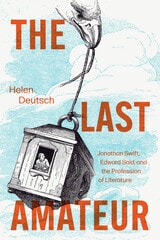
The Last Amateur
Jonathan Swift, Edward Said, and the Profession of LiteratureHelen Deutsch
University of Chicago Press, 2026
Joining the unfinished conversation between the satirist Jonathan Swift and the critic Edward Said, The Last Amateur argues for the transformative potential of literature.
What does “Swiftian” mean to you? For many, the name is synonymous with ingenious satire and an acid, clarifying mix of decorum and outrage. Jonathan Swift was, of course, the author of not only Gulliver’s Travels but also A Modest Proposal, which the columnist Gene Lyons recently called “perhaps the most penetrating anti-racist essay in the English language.” Small wonder, then, that the Anglo-Irish satirist was a lifelong inspiration to the great Palestinian American critic Edward Said, who for many years worked on an unfinished book about Swift and cultivated a Swiftian voice across his career.
Helen Deutsch’s highly personal book explores what Said’s love of Swift—and hers of both—tells us about not only these authors but also the powers of criticism itself. The Last Amateur is about how one comes to love one writer through another. Deutsch scrutinizes Said in relationship to Swift to raise questions of her own about the profession of literary studies. At a time when many in the field have lost faith in critique, Deutsch shows how passion and a refusal of professional propriety—the hallmarks of the amateur—can enliven critique again.
What, then, does it mean to be a Swiftian? The Swiftian hears Swift’s animus and uses it as an incentive for their own freedom of thought. Said was a Swiftian because the experience of reading Swift freed him to speak out, to have something serious to say. Deutsch’s revelatory book is an exercise in hearing Swift’s voice and speaking in her own.
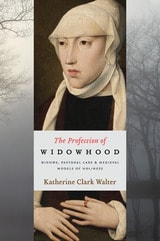
The Profession of Widowhood
Widows, Pastoral Care, and Medieval Models of HolinessKatherine Clark Walter
Catholic University of America Press, 2018
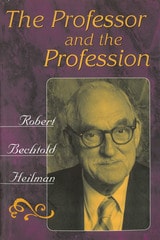
The Professor and the Profession
Robert Bechtold Heilman
University of Missouri Press, 1999
Robert Bechtold Heilman is one of the last survivors of a remarkable generation of American critics that included such literary giants as Cleanth Brooks, Allen Tate, and Edmund Wilson, men to whom literary criticism was not a profession or an academic necessity but a calling. In a distinguished career that has spanned nearly six decades, Heilman has influenced generations of scholars and critics through his exquisitely written commentaries on subjects ranging from William Shakespeare to Thomas Hardy.
In The Professor and the Profession, Heilman looks back over his life and times from his perspective as both an academic and an American. Differing in theme and subject matter, the essays included in this collection are ultimately unified by the author himself. Whether the topic is football, Robert Penn Warren, or education, Heilman's generous and intelligent voice emerges on every page. Yet this collection is more than one academic's personal reminiscences; it is a reflection upon American literary history itself.
In the first section of essays, "The Self Displayed," Heilman reveals how he developed from a small-town boy into a distinguished critic and teacher, touching upon his participation in baseball and love of football along the way. "Writers Portrayed" and "Literary Types and Problems Inspected," the following sections, offer his opinions on the past and on the current state of American literary criticism, including personal portraits of such renowned friends as Eric Voegelin, Robert Penn Warren, Theodore Roethke, and Malcolm Cowley. The final section, "Education Examined," is an enlightening inquiry into the development of American universities in the twentieth century.
A fascinating chronicle of a significant academic life, The Professor and the Profession will appeal to a broad array of scholars, from young academics wanting to know where they came from to those of Heilman's generation who can appreciate this personal reminiscence into the world of letters.
Toward a Phenomenological Rhetoric
Writing, Profession, and AltruismBarbara Couture
Southern Illinois University Press, 1998
Current rhetorical and critical theory for the most part separates writing from consciousness and presumes relative truth to be the only possible expressive goal for rhetoric. These presumptions are reflected in our tradition of persuasive rhetoric, which values writing that successfully argues one person’s belief at the expense of another’s. Barbara Couture presents a case for a phenomenological rhetoric, one that values and respects consciousness and selfhood and that restores to rhetoric the possibility of seeking an all-embracing truth through pacific and cooperative interaction.
Couture discusses the premises on which current interpretive theory has supported relative truth as the philosophical grounding for rhetoric, premises, she argues, that have led to constraints on our notion of truth that divorce it from human experience. She then shows how phenomenological philosophy might guide the theory and practice of rhetoric, reanimating its role in the human enterprise of seeking a shared truth. She proposes profession and altruism as two guiding metaphors for the phenomenological activity of "truth-seeking through interaction."
Among the contemporary rhetoricians and philosophers who influence Couture are Pierre Teilhard de Chardin, Martin Buber, Charles Altieri, Charles Taylor, Alasdair Maclntyre, and Jürgen Habermas.