Results by title
4 books match the query 'Profits'
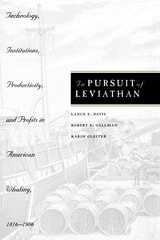
In Pursuit of Leviathan
Technology, Institutions, Productivity, and Profits in American Whaling, 1816-1906Lance E. Davis, Robert E. Gallman, and Karin Gleiter
University of Chicago Press, 1997
Providing a wealth of historical information, In Pursuit of Leviathan is a classic industry study that will provide intriguing reading for anyone interested in the history of whaling.
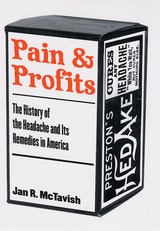
Pain and Profits
The History of the Headache and Its Remedies in AmericaMcTavish, Jan R.
Rutgers University Press, 2004
Pain and Profits tells the story of how a common ailment—the headache—became the center of a multibillion dollar pharmaceutical industry in the United States. Despite the increasing authority of the medical profession in the twentieth century, treatment of this condition has remained largely in the hands of the public. Using the headache as a case study, and advertising as a significant source of information, Jan McTavish traces the beginnings of the modern over-the-counter industry.
The American pharmaceutical industry developed from nineteenth-century suppliers of plant-derived drugs for both professional and home care. Two branches of the industry evolved over time—the ethical branch, which sold products only with prescriptions, and the nostrum branch, which was noted for its energetic marketing techniques. At the end of the century, they were joined by German companies that combined a strong commitment to science with aggressive salesmanship. Since German drugs were both highly effective in treating headaches and commonly available, sufferers wanting quick relief could easily obtain them. The result was a new kind of “legitimate” pharmaceutical industry that targeted consumers directly.
Historians of medicine as well as more general readers interested in the history of the headache will enjoy this fascinating account of the creation of the modern pharmaceutical industry.

Profits and Morality
Edited by Robin Cowan and Mario J. Rizzo
University of Chicago Press, 1995
Presenting arguments for and against the morality of profit making, the contributors examine the nature of profits and which ethical theories can support them. Two essays address how profits are made: one explores entrepreneurship as a legitimate source of profit, while another argues that recent advances in welfare economics weaken the case for the morality of profits. The other chapters focus on ethical theory, covering the right to profits from economic rent; the morality of how profits are used—those directed toward library or university endowments, for example, are considered morally acceptable—and whether or not profits are deserved.

Water Wars
Pollution, Profits and PrivatizationVandana Shiva
Pluto Press, 2002