Results by title
17 books match the query 'Prohibition'
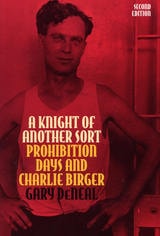
A Knight of Another Sort
Prohibition Days and Charlie Birger, Second EditionGary DeNeal. Foreword by Jim Ballowe
Southern Illinois University Press, 1998
In 1913 Charlie Birger began his career as a bootlegger, supplying southern Illinois with whiskey and beer. He was charismatic, with an easygoing manner and a cavalier generosity that made him popular. The stuff of legend, he was part monster, part Robin Hood. In the early days, he would emerge from his restaurant/saloon in tiny Ledford in Saline County with a cigar box full of coins and throw handfuls in the air for the children. Echoing the consensus on Birger, an anonymous gang member called him "enigmatic," noting that "he had a wonderful quality, a heart of gold. There in Harrisburg sometimes he'd support twelve or fifteen families, buy coal, groceries. . . . [But] he had cold eyes, a killer's eyes. He would kill you for something somebody else would punch you in the nose for."
Drawing from the colorful cast of the living, the dead, and the soon-to-be-dead—a state shared by many associated with Birger and his enemies, the Shelton gang—DeNeal re-creates Prohibition-era southern Illinois. He depicts the fatal shootout between S. Glenn Young and Ora Thomas, the battle on the Herrin Masonic Temple lawn in which six were slain and the Ku Klux Klan crushed, and the wounding of Williamson County state's attorney Arlie O. Boswell. As the gang wars escalated and the roster of corpses lengthened, the gangsters embraced technology. The Sheltons bombed Birger's roadhouse, Shady Rest, from a single-engine airplane. Both Birger and the Sheltons used armored vehicles to intimidate their enemies, and the chatter of machine gun fire grew common.
The gang wars ended with massive arrests, trials, and convictions of gangsters who once had seemed invincible. Charlie Birger was convicted of the murder of West City mayor Joe Adams and sentenced to death. On April 19, 1928, he stood on the gallows looking down on the large crowd that had come to see him die. "It's a beautiful world," Birger said softly as he prepared to leave it.
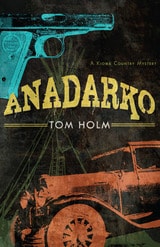
Anadarko
A Kiowa Country MysteryTom Holm
University of Arizona Press, 2015
J.D. and Hoolie find their simple missing person case hides a web of murder, graft, and injustice tied to a network of bootleggers with links to the Ku Klux Klan. Set in the aftermath of the violent Tulsa race riot of 1921, Anadarko reveals a deadly and corrupt town filled with a toxic cocktail of booze, greed, and bigotry.
Tackling racial prejudice head-on, author Tom Holm expertly weaves a vivid and suspenseful tale set in Prohibition-era Indian Country. This gritty whodunit shows nothing is ever simple in the fight between good and evil.
Federal Criminal Law Doctrines
The Forgotten Influence of National ProhibitionKenneth M. Murchison
Duke University Press, 1994
In this detailed examination, Murchison considers a portion of the Supreme Court’s work prior to the New Deal crisis, a period insufficiently considered until now. Among the developments he discusses are those relating to the defense of entrapment, the Fourth Amendment’s protection against unreasonable search and seizure, the Fifth Amendment’s prohibition against double jeopardy, property forfeitures, and the jury trial guarantees for criminal proceedings. His analysis reveals a court less rigid, less consistently divided along modern ideological lines, and more tolerant of governmental authority than traditional wisdom would suggest. Thus, Murchison offers a framework for a revisionist view of the Supreme Court’s activities during this period.
Exploring an important connection between the Eighteenth Amendment, the Volstead Act, and the development of federal criminal law, this book documents what was arguably the nation’s first criminal law revolution at the federal level. Explaining the modern origins of doctrines that still inform federal criminal law, Murchison also provides a case study of how legal doctrine responds to changing social conditions. Federal Criminal Law Doctrines will add immeasurably to the work of historians and legal scholars alike.
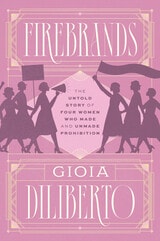
Firebrands
The Untold Story of Four Women Who Made and Unmade ProhibitionGioia Diliberto
University of Chicago Press, 2024
In the popular imagination, the story of Prohibition in America is a story of men and male violence, one full of federal agents fighting gangsters over the sale of moonshine. In contrast, Firebrands is the story of four Jazz Age dynamos—all women –who were forces behind the passage, the enforcement, the defiance, and, ultimately, the repeal of the Eighteenth Amendment. They battled each other directly, and they learned to marshal clout with cowed and hypocritical legislators, almost all of them men. Their clash over Prohibition stands as the first significant exercise of women’s political power since women gained the right to vote, and their influence on the American political scene wouldn’t be equaled for decades.
In Gioia Diliberto’s fresh and timely take on this period of history, we meet Ella Boole, the stern and ambitious leader of the Woman’s Christian Temperance Union, who campaigned fiercely to introduce Prohibition and fought desperately to keep it alive. We also meet Mabel Walker Willebrandt, the most powerful woman in America at the time, who served as the top federal prosecutor charged with enforcing Prohibition. Diliberto tells the story, too, of silent film star Texas Guinan, who ran New York speakeasies backed by the mob and showed that Prohibition was not only absurd but unenforceable. And, she follows Pauline Morton Sabin, a glamorous Manhattan aristocrat who belatedly recognized the cascading evil in Prohibition and mobilized the movement to kill it.
These women led their opposing forces of “Wets” and “Drys” across a teeming landscape of bootleggers, gangsters, federal agents, temperance fanatics, and cowardly politicians, many of them secret drunks. Building on the momentum of suffrage, they forged a path for the activists who followed during the great civil rights battles of the mid-twentieth century. Yet, they have been largely lost to history. In Firebrands, Diliberto finally gives these dynamic figures their due, creating a varied and dramatic portrait of women wielding power, in politics, society, and popular culture.
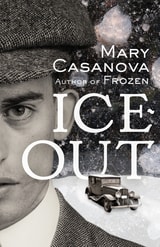
Ice-Out
Mary Casanova
University of Minnesota Press, 2016
Walking on thin ice: on Rainy Lake, in the northern reaches of Minnesota, it’s more than a saying. And for Owen Jensen, nineteen and suddenly responsible for keeping his mother and five brothers alive, the ice is thin indeed.
Ice-Out returns to the frigid and often brutal Prohibition-era borderland of Mary Casanova’s beloved novel Frozen, and to the characters who made it a favorite among readers of all ages. Owen, smitten with Frozen’s Sadie Rose, is struggling to make something of himself at a time when no one seems to hold the moral high ground. Bootlegging is rife, corruption is rampant, and lumber barons run roughshod over the people and the land. As hard as things seem when his father dies, stranding his impoverished family, they get considerably tougher—and more complicated—when Owen gets caught up in the suspicious deaths of a sheriff and deputy on the border.
Inspired by real events in early 1920s Minnesota, and by Mary Casanova’s own family history, Ice-Out is at once a story of young romance against terrible odds and true grit on the border between license and responsibility, rich and poor, and right and wrong in early twentieth-century America.
John Barleycorn Must Die
The War Against Drink in ArkansasBen F. Johnson III
University of Arkansas Press, 2005
Others Had It Worse
Sour Dock, Moonshine, and Hard Times in Davis County, IowaVetra Melrose Padget Covert and Chris D. Baker
University of Iowa Press, 2013
Pathways to Prohibition
Radicals, Moderates, and Social Movement OutcomesAnn-Marie E. Szymanski
Duke University Press, 2003
Combining historical research with the insights of social movement theory, Pathways to Prohibition shows how a locally based, moderate strategy allowed the early-twentieth-century prohibition crusade both to develop a potent grassroots component and to transcend the limited scope of local politics. Szymanski describes how the prohibition movement’s strategic shift toward moderate goals after 1900 reflected the devolution of state legislatures’ liquor licensing power to localities, the judiciary’s growing acceptance of these local licensing regimes, and a collective belief that local electorates, rather than state legislatures, were best situated to resolve controversial issues like the liquor question. "Local gradualism" is well suited to the porous, federal structure of the American state, Szymanski contends, and it has been effectively used by a number of social movements, including the civil rights movement and the Christian right.
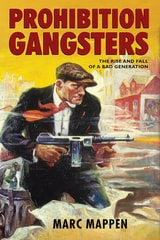
Prohibition Gangsters
The Rise and Fall of a Bad GenerationMappen, Marc
Rutgers University Press, 2013
On January 16, 1920, the Eighteenth Amendment to the Constitution went into effect in the United States, “outlawing the manufacture, sale, or transportation of intoxicating liquors.” A group of young criminals from immigrant backgrounds in cities around the nation stepped forward to disobey the law of the land in order to provide alcohol to thirsty Americans.
Today the names of these young men—Al Capone, Lucky Luciano, Dutch Schultz, Legs Diamond, Nucky Johnson—are more familiar than ever, thanks in part to such cable programs as Boardwalk Empire. Here, Mappen strips way the many myths and legends from television and movies to describe the lives these gangsters lived and the battles they fought. Placing their criminal activities within the context of the issues facing the nation, from the Great Depression, government crackdowns, and politics to sexual morality, immigration, and ethnicity, he also recounts what befell this villainous group as the decades unwound.
Making use of FBI and other government files, trial transcripts, and the latest scholarship, the book provides a lively narrative of shootouts, car chases, courtroom clashes, wire tapping, and rub-outs in the roaring 1920s, the Depression of the 1930s, and beyond. Mappen asserts that Prohibition changed organized crime in America. Although their activities were mercenary and violent, and they often sought to kill one another, the Prohibition generation built partnerships, assigned territories, and negotiated treaties, however short lived. They were able to transform the loosely associated gangs of the pre-Prohibition era into sophisticated, complex syndicates. In doing so, they inspired an enduring icon—the gangster—in American popular culture and demonstrated the nation’s ideals of innovation and initiative.
View a three minute video of Marc Mappen speaking about Prohibition Gangsters.
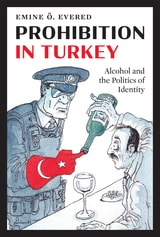
Prohibition in Turkey
Alcohol and the Politics of IdentityEmine Ö. Evered
University of Texas Press, 2024
A social history of alcohol, identity, secularism, and modernization from the late Ottoman and early Turkish republican eras to the present day.
Prohibition in Turkey investigates the history of alcohol, its consumption, and its proscription as a means to better understand events and agendas of the late Ottoman and early Turkish republican eras. Through a comprehensive examination of archival, literary, popular culture, media, and other sources, it unveils a traditionally overlooked—and even excluded—aspect of human history in a region that many do not associate with intoxicants, inebriation, addiction, and vigorous wet-dry debates.
Historian Emine Ö. Evered’s account uniquely chronicles how the Turko-Islamic Ottoman Empire developed strategies for managing its heterogeneous communities and their varied rights to produce, market, and consume alcohol, or to simply abstain. The first author to reveal this experience’s connections with American Prohibition, she demonstrates how—amid modernization, sectarianism, and imperial decline—drinking practices reflected, shifted, and even prompted many of the changes that were underway and that hastened the empire’s collapse. Ultimately, Evered’s book reveals how Turkey’s alcohol question never went away but repeatedly returns in the present, in matters of popular memory, public space, and political contestation.
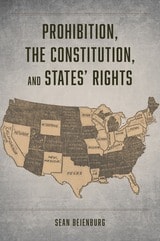
Prohibition, the Constitution, and States' Rights
Sean Beienburg
University of Chicago Press, 2019
Sean Beienburg recovers a largely forgotten constitutional debate, revealing how Prohibition became a battlefield on which skirmishes of American political development, including the debate over federalism and states’ rights, were fought. Beienburg focuses on the massive extension of federal authority involved in Prohibition and the passage of the Eighteenth Amendment, describing the roles and reactions of not just Congress, the presidents, and the Supreme Court but political actors throughout the states, who jockeyed with one another to claim fidelity to the Tenth Amendment while reviling nationalism and nullification alike. The most comprehensive treatment of the constitutional debate over Prohibition to date, the book concludes with a discussion of the parallels and differences between Prohibition in the 1920s and debates about the legalization of marijuana today.
Symbolic Crusade
Status Politics and the American Temperance MovementJoseph R. Gusfield
University of Illinois Press, 1986
This significant contribution to the theory of status conflict also discloses the importance of political acts as symbolic acts and offers a dramatistic theory of status politics, Gusfield provides a useful addition to the economic and psychological modes of analysis current in the study of political and social movements.

The Earps Invade Southern California
Bootlegging Los Angeles, Santa Monica, and the Old Soldiers' HomeDon Chaput
University of North Texas Press, 2020
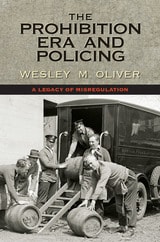
The Prohibition Era and Policing
A Legacy of MisregulationWesley M. Oliver
Vanderbilt University Press, 2018
Intrusive searches for alcohol during Prohibition destroyed middle-class Americans' faith in police and ushered in a new basis for controlling police conduct. State courts in the 1920s began to exclude perfectly reliable evidence obtained in an illegal search. Then, as Prohibition drew to a close, a presidential commission awakened the public to torture in interrogation rooms, prompting courts to exclude coerced confessions irrespective of whether the technique had produced a reliable statement.
Prohibition's scheme lingered long past the Roaring '20s. Racial tensions and police brutality were bigger concerns in the 1960s than illegal searches, yet when the Supreme Court imposed limits on officers' conduct in 1961, searches alone were regulated. Interrogation law during the 1960s, fundamentally reshaped by the Miranda ruling, ensured that suspects who invoked their rights would not be subject to coercive tactics, but did nothing to ensure reliable confessions by those who were questioned. Explicitly recognizing that its decisions excluding evidence had not been well-received, the Court in the 1970s refused to exclude identifications merely because they were made in suggestive lineups. Perhaps a larger project awaits—refocusing our rules of criminal procedure on those concerns from which Prohibition distracted us: conviction accuracy and the use of force by police.
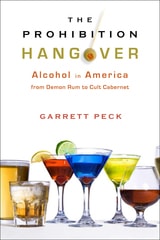
The Prohibition Hangover
Alcohol in America from Demon Rum to Cult CabernetPeck, Garrett
Rutgers University Press, 2009
In The Prohibition Hangover, Garrett Peck explores the often-contradictory social history of alcohol in America, from the end of Prohibition in 1933 to the twenty-first century. For Peck, Repeal left American society wondering whether alcohol was a consumer product or a controlled substance, an accepted staple of social culture or a danger to society. Today the legal drinking age, binge drinking, the neo-prohibitionist movement led by Mothers Against Drunk Driving, the 2005 Supreme Court decision in Granholm v. Heald that rejected discriminatory curbs on wine sales, the health benefits of red wine, advertising, and other issues remain highly contested.
Based on primary research, including hundreds of interviews with those on all sides, clergy, bar and restaurant owners, public health advocates, citizen crusaders, industry representatives, and more, as well as secondary sources, The Prohibition Hangover provides a panoramic assessment of alcohol in American culture. Traveling through the California wine country, the beer barrel backroads of New England and Pennsylvania, and the blue hills of Kentucky's bourbon trail, Peck places the concerns surrounding alcohol use within the broader context of American history, religious traditions, and governance.
Society is constantly evolving, and so are our drinking habits. Cutting through the froth and discarding the maraschino cherries, The Prohibition Hangover examines the modern American temperament toward drink amid the $189-billion-dollar-a-year industry that defines itself by the production, distribution, marketing, and consumption of alcoholic beverages.

The Saloon
Public Drinking in Chicago and Boston, 1880-1920Perry R. Duis
University of Illinois Press, 1983
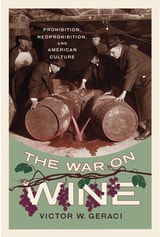
The War on Wine
Prohibition, Neoprohibition, and American CultureVictor W. Geraci
University of Nevada Press, 2023
The development of an American wine ethos.
The history of wine is a tale of capitalist production and consumer experience, and early Americans embraced the idea of having their own wine culture. But many began to believe that excessive alcohol consumption had become a moral, ethical, economic, political, social, and health conundrum. The result was a national on-again, off-again relationship with the concept of an American wine culture.
Citizens struggled to build a wine culture patterned after their diasporic European custom of wine as a moderating beverage that was part of a healthy diet. Yet, as America grew, untold attempts to create a wine culture failed due to climate, pests, diseases, wars, and depressions, resulting in some people considering the nation an alcoholic republic. Thus began an anti-alcohol culture war aimed at restricting or prohibiting alcoholic beverages.
With the passage of the Eighteenth Amendment (Prohibition), a culture war started between wet and dry proponents. After the repeal of Prohibition, the decimated wine industry responded by forming the Wine Institute to rebrand wine’s role in American society, after which neoprohibitionists attempted to restrict alcohol availability and consumption. To confront these aggressive actions, the Wine Institute hired politically trained John A. De Luca to navigate the new attacks and pushed for rebranding wine as a cultural spirit with health benefits.