Results by title
14 books match the query 'Projectile points'
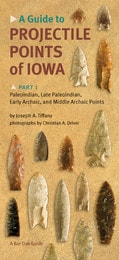
A Guide to Projectile Points of Iowa, Part 1
Paleoindian, Late Paleoindian, Early Archaic, and Middle Archaic PointsJoseph A. Tiffany
University of Iowa Press, 2009
The two beautifully illustrated parts depict a total of sixty-one full-size stone point types in color by archaeological period. References are provided for those wishing to learn more about each type shown. Archaeologist Joseph Tiffany lists the stone type for each point as well as its estimated range of use based on calibrated radiocarbon age, catalog number, and the county where it was found. By providing actual-size color images of the typed points, each part is very easy to use in the field, lab, or classroom.
From the highly finished Clovis points of the Paleoindian period to the delicate notched and stemmed points of the Woodland period, these tangible remnants of vanished cultures reveal the huge changes in the lifeways of Iowa’s native populations over time. Lay and professional archaeologists, collectors, students, and enthusiasts will appreciate the beauty of the photos and the usefulness of the information in this pocket guide to Iowa projectile points.
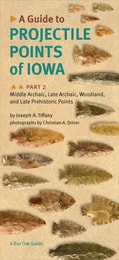
A Guide to Projectile Points of Iowa, Part 2
Middle Archaic, Late Archaic, Woodland, and Late Prehistoric PointsTiffany, Joseph A.
University of Iowa Press, 2009
The two beautifully illustrated parts depict a total of sixty-one full-size stone point types in color by archaeological period. References are provided for those wishing to learn more about each type shown. Archaeologist Joseph Tiffany lists the stone type for each point as well as its estimated range of use based on calibrated radiocarbon age, catalog number, and the county where it was found. By providing actual-size color images of the typed points, each part is very easy to use in the field, lab, or classroom.
From the highly finished Clovis points of the Paleoindian period to the delicate notched and stemmed points of the Woodland period, these tangible remnants of vanished cultures reveal the huge changes in the lifeways of Iowa’s native populations over time. Lay and professional archaeologists, collectors, students, and enthusiasts will appreciate the beauty of the photos and the usefulness of the information in this pocket guide to Iowa projectile points.
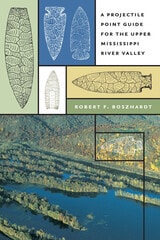
A Projectile Point Guide for the Upper Mississippi River Valley
Robert F. Boszhardt
University of Iowa Press, 2003
The most common relics of the 12,000-year occupancy of the Upper Mississippi River Valley may be the chipped stone projectile points that Native Americans fastened to the ends of their spears, darts, and arrow shafts. This useful guide provides a key to identifying the various styles of points found along the Upper Mississippi River in the Driftless region stretching roughly from Dubuque, Iowa, to Red Wing, Minnesota, but framed within a somewhat larger area extending from the Rock Island Rapids at the modern Moline-Rock Island area to the Falls of St. Anthony at Minneapolis-St. Paul.
Logging tens of thousands of miles and visiting private collectors from all walks of life since 1982, Robert Boszhardt has documented thousands of projectile points found in this region. In addition to drawings of each style, he provides other accepted names as well as names of related points, age, distribution, a description (including length and width), material, and references for each type. The guide is meant for the many avocational archaeologists who collect projectile points in the Upper Midwest and will be a useful reference tool for professional field archaeologists as well.
Emphasizing the preservation of sites as well as a mutual exchange of information between professional and avocational archaeologists, this guide will reveal projectile points as clues to the past, time markers which embody crucial information about the cultures of the Mississippi River Valley's early inhabitants.
Crowfield (Af Hj-31)
A Unique Paleoindian Fluted Point Site from Southwestern OntarioD. Brian Deller and Christopher J. Ellis with contributions by James R. Keron and Roger H. King and a foreword by Henry T. Wright
University of Michigan Press, 2011
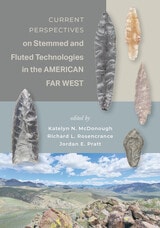
Current Perspectives on Stemmed and Fluted Technologies in the American Far West
Edited by Katelyn N. McDonough, Richard L. Rosencrance, and Jordan E. Pratt
University of Utah Press, 2023
This volume provides the most comprehensive overview of archaeological research into the late Pleistocene and early Holocene occupation of the North American Far West in over a decade. It focuses on the relationship between stemmed and fluted point technologies in the region, which has recently risen to the forefront of debate about the initial settlement of the Americas. Established and early career researchers apply a wide range of analytical approaches to explore chronological, geographical, and technological aspects of these tools and what they reveal about the people who made them. While such interrelationships have intrigued archaeologists for nearly a century, until now they have not been systematically examined together in a single curated volume.
Contributions are organized into three main sections: stemmed point technologies, fluted point technologies, and broader interactions. Topics range from regional overviews of chronologies and technologies to site-level findings containing extensive new data. The culmination of many years of work by dozens of researchers, this volume lays new groundwork for understanding technological innovation, diversity, and exchange among early Indigenous peoples in North America.
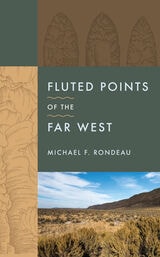
Fluted Points of the Far West
Michael F. Rondeau
University of Utah Press, 2022
Fluted Points of the Far West provides the first large-scale overview of fluted points in the far western United States, including details of their attributes, trends in production, and range of variability. It serves as a compendium of groundbreaking research by the California Fluted Lanceolate Uniform Testing and Evaluation Database (CalFLUTED) project. Details regarding size, morphology, material, basal flaking technology, breakage patterns, repair patterns, manufacturing (as revealed by unfinished fluted bifaces), margin grinding, and flute scratching are provided through this research, both in terms of general trends and noteworthy exceptions.
Designed as a ready reference, these data are also summarized for each of the four sample states covered: California, Nevada, Oregon, and Utah. Summaries introduce the history and circumstances of fluted point studies by state, a list of references for each state used in the CalFLUTED study reports, a comprehensive listing of the relevant CalFLUTED study reports, and a breakdown by state of fluted point attribute details as listed above.
Reviews and discussions cover a range of topics, including classification of fluted points, identifying flute scars, and indicative traits that a fluted point is not from the prehistoric Far West. Additional discussions cover hafting alternatives, fluted point dating, far western fluted point typology, and the likely direction of further research on a range of fluted point topics.

In the Eastern Fluted Point Tradition
Joseph A. M. Gingerich
University of Utah Press, 2013
Eastern North America has one of the largest inventories of Paleoindian sites anywhere in the Americas. Despite this rich record of early human settlement during the late Pleistocene, there are few widely published reports or summaries of Paleoindian research in the region. The contributors to this volume present more than four decades of Early Paleoindian research in eastern North America, including previously unpublished site reports and updates on recent research. Their work helps create a more cohesive picture of the early human occupation of North America.
This data-rich volume provides specific information on artifacts and basic site descriptions which will allow for more thorough comparisons of eastern fluted point sites. Divided into four sections—chronology and environment, reinvestigations of classic sites, new sites and perspectives, and synthesis and conclusions—the volume will encourage further consideration of the sites included and their role in shaping our understanding of huntergatherer lifeways during the late Pleistocene. In the Eastern Fluted Point Tradition is a must read for scholars of Paleoindian archaeology and those generally interested in the prehistory of North America.
In the Eastern Fluted Point Tradition
Volume IIEdited by Joseph A. M. Gingerich
University of Utah Press, 2017
Paleoindian Lifeways of the Cody Complex
Edward J. Knell
University of Utah Press, 2013
Paleoindian Lifeways of the Cody Complex represents the first synthesis in the more than fifty year history of one of the most important Paleoindian cultural traditions in North America. Research on the Cody complex (~10,000–8,000 radiocarbon yrs B.P.) began in the 1940s; however, until now publications have focused almost exclusively on specific sites, issues of projectile point technology and typology, and bison hunting. This volume provides fresh perspectives and cutting-edge research that significantly increases our understanding of the Cody complex by focusing more squarely on the human behaviors that created the archaeological record, rather than on more strictly technical aspects of the artifacts and faunal remains.
Because the Cody complex extends from the central Canadian plains to the Gulf of Mexico and from Nevada to the eastern Great Lakes—making it second only to Clovis in geographical expanse—this volume will appeal to a wide range of North American archaeologists. Across this broad geographic distribution, the contributors address hunter-gatherer adaptive strategies from diverse ecosystems at the onset of the Holocene, which will also make it of interest to human ecologists and paleoenvironmental researchers. Paleoindian Lifeways of the Cody Complex provides an innovative synthesis of a well-known but little-studied cultural tradition that opens the door for a new generation of exciting research.
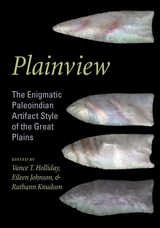
Plainview
The Enigmatic Paleoindian Artifact Style of the Great PlainsEdited by Vance T. Holliday, Eileen Johnson, and Ruthann Knudson
University of Utah Press, 2017
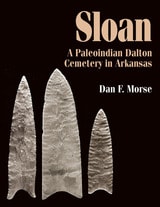
Sloan
A Paleoindian Dalton Cemetery in ArkansasDan Morse
University of Arkansas Press, 1997
New in Paper!
Excavated in 1974, the Sloan site in northeast Arkansas is the earliest recognized cemetery in the New World, containing the graves of a small group of Native Americans who died over ten thousand years ago. Although no skeletons were found in the acidic soil, the number, size, and quality of its artifacts attest to the presence of a far more complicated and sophisticated culture than had previously been thought to exist during the Dalton period.
Bringing together the work of thirteen eminent scholars, Dan F. Morse describes and assesses the assemblage of points, adzes, scrapers, abraders, and other stone artifacts as an indicator of the territorial stability of late Pleistocene peoples. The tools show that hunter-gatherer-fisher populations lived in small, semipermanent villages, hunted and butchered white-tailed deer, processed and ate vegetables, and made dugout canoes. And they buried their dead in cemeteries, a practice previously associated only with the rise of horticultural societies. Many of the tools are unused, suggesting ritual interments and a well-developed system of trade with groups in rockier areas.
Including an overview of the Dalton period in the southeastern United States and a discussion of the region’s geologic and vegetal prehistory—and newly supported by extensive high-quality image galleries now available at the website of the Arkansas Archeological Survey (see inside cover)—this comprehensive study of the Sloan artifacts provides a multifaceted assessment of a site rich in information about the technology of a single prehistoric society.
The Archaeology of the Eastern Nevada Paleoarchaic, Part 1
The Sunshine LocalityCharlotte Beck
University of Utah Press, 2009
The Sunshine Locality in the geographic center of the Great Basin has been the focus of scientific research since the mid-1960s. Authors Charlotte Beck and George T. Jones began studies there in 1992 and carried out excavations between 1993 and 1997 with the assistance of Hamilton College Field School. The area has yielded a rich and varied collection of diagnostic lithic tools, including fluted and unfluted lanceolate projectile points and a crescent, and a variety of gravers, scrapers, notches, and other tools common in Paleoindian toolkits across North America.
This volume provides the first comprehensive treatment that combines historical research with the more recent studies. Analysis and interpretations of the stratigraphic sequence in Sunshine Wash are presented, including analyses of sedimentary textures and structure, depositional processes, and chronology. Faunal remains are used to evaluate local and regional environmental changes. Finally, the authors address the nature of the processes that created the archaeological record at Sunshine Locality, its age, and whether artifacts and remains of extinct mammals also recovered at the site are associated. This work begins to answer unresolved questions about the paleoenvironmental resources of the Sunshine Locality.
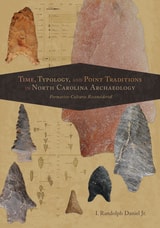
Time, Typology, and Point Traditions in North Carolina Archaeology
Formative Cultures ReconsideredI. Randolph Daniel Jr.
University of Alabama Press, 2021
Revisiting the stone tools that reshaped our understanding of North Carolina's prehistoric past.
In the 1964 landmark publication The Formative Cultures of the Carolina Piedmont, Joffre Coe established a projectile point typology and chronology that, for the first time, allowed archaeologists to identify the relative age of a site or site deposit based on the point types recovered there. Consistent with the cultural-historical paradigm of the day, the “Coe axiom” stipulated that only one point type was produced at one moment in time in a particular location. Moreover, Coe identified periods of “cultural continuity” and “discontinuity” in the chronology based on perceived similarities and differences in point styles through time.
In Time, Typology, and Point Traditions in North Carolina Archaeology: Formative Cultures Reconsidered, I. Randolph Daniel Jr. reevaluates the Coe typology and sequence, analyzing their strengths and weaknesses. Daniel reviews the history of the projectile point type concept in the Southeast and revisits both Coe’s axiom and his notions regarding cultural continuity and change based on point types. In addition, Daniel updates Coe’s typology by clarifying or revising existing types and including types unrecognized in Coe’s monograph. Daniel also adopts a practice-centered approach to interpreting types and organizes them into several technological traditions that trace ancestral-descendent communities of practice that relate to our current understanding of North Carolina prehistory.
Appealing to professional and avocational archaeologists, Daniel provides ample illustrations of points in the book as well as color versions on a dedicated website. Daniel dedicates a final chapter to a discussion of the ethical issues related to professional archaeologists using private artifact collections. He calls for greater collaboration between professional and avocational communities, noting the scientific value of some private collections.
Works in Stone
Contemporary Perspectives on Lithic AnalysisMichael J. Shott
University of Utah Press, 2014