Results by title
5 books match the query 'Projects'

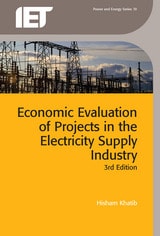
Economic Evaluation of Projects in the Electricity Supply Industry
Hisham Khatib
The Institution of Engineering and Technology, 2003
Economic Evaluation of Projects in the Electricity Supply Industry
Hisham Khatib
The Institution of Engineering and Technology, 2014
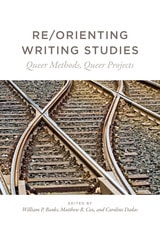
Re/Orienting Writing Studies
Queer Methods, Queer ProjectsWilliam P. Banks
Utah State University Press, 2018
While the humanities have engaged queer theory extensively, research methods have often been hermeneutic or interpretive. At the same time, social science approaches in composition research have foregrounded inquiry on human participants but have often struggled to understand where lesbian, gay, bisexual, transgender, and queer people fit into empirical research projects. Re/Orienting Writing Studies works at the intersections of humanities and social science methodologies to offer new insight into using queer methods for data collection and queer practices for framing research.
Contributors: Chanon Adsanatham, Jean Bessette, Nicole I. Caswell, Michael J. Faris, Hillery Glasby, Deborah Kuzawa, Maria Novotny, G Patterson, Stacey Waite, Stephanie West-Puckett
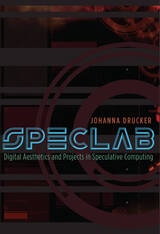
SpecLab
Digital Aesthetics and Projects in Speculative ComputingJohanna Drucker
University of Chicago Press, 2009
Nearly a decade ago, Johanna Drucker cofounded the University of Virginia’s SpecLab, a digital humanities laboratory dedicated to risky projects with serious aims. In SpecLab she explores the implications of these radical efforts to use critical practices and aesthetic principles against the authority of technology based on analytic models of knowledge.
Inspired by the imaginative frontiers of graphic arts and experimental literature and the technical possibilities of computation and information management, the projects Drucker engages range from Subjective Meteorology to Artists’ Books Online to the as yet unrealized ’Patacritical Demon, an interactive tool for exposing the structures that underlie our interpretations of text. Illuminating the kind of future such experiments could enable, SpecLab functions as more than a set of case studies at the intersection of computers and humanistic inquiry. It also exemplifies Drucker’s contention that humanists must play a role in designing models of knowledge for the digital age—models that will determine how our culture will function in years to come.
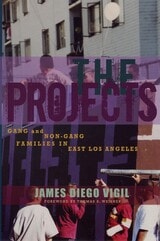
The Projects
Gang and Non-Gang Families in East Los AngelesBy James Diego Vigil
University of Texas Press, 2007
2008 — ALLA Prize for Best Book on Latina/o Anthropology
The Pico Gardens housing development in East Los Angeles has a high percentage of resident families with a history of persistent poverty, gang involvement, and crime. In some families, members of three generations have belonged to gangs. Many other Pico Gardens families, however, have managed to avoid the cycle of gang involvement.
In this work, Vigil adds to the tradition of poverty research and elaborates on the association of family dynamics and gang membership. The main objective of his research was to discover what factors make some families more vulnerable to gang membership, and why gang resistance was evidenced in similarly situated non-gang-involved families. Providing rich, in-depth interviews and observations, Vigil examines the wide variations in income and social capital that exist among the ostensibly poor, mostly Mexican American residents. Vigil documents how families connect and interact with social agencies in greater East Los Angeles to help chart the routines and rhythms of the lives of public housing residents. He presents family life histories to augment and provide texture to the quantitative information.
By studying life in Pico Gardens, Vigil feels we can better understand how human agency interacts with structural factors to produce the reality that families living in all public housing developments must contend with daily.