Results by title
31 books match the query 'Prophecy'
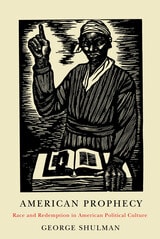
American Prophecy
Race and Redemption in American Political CultureGeorge Shulman
University of Minnesota Press, 2008
The political meaning of prophetic language in America
Prophecy is the fundamental idiom of American politics—a biblical rhetoric about redeeming the crimes, suffering, and promise of a special people. Yet American prophecy and its great practitioners—from Frederick Douglass and Henry Thoreau to Martin Luther King, James Baldwin, and Toni Morrison—are rarely addressed, let alone analyzed, by political theorists. This paradox is at the heart of American Prophecy, a work in which George Shulman unpacks and critiques the political meaning of American prophetic rhetoric.
In the face of religious fundamentalisms that associate prophecy and redemption with dogmatism and domination, American Prophecy finds connections between prophetic language and democratic politics, particularly racial politics. Exploring how American critics of white supremacy have repeatedly reworked biblical prophecy, Shulman demonstrates how these writers and thinkers have transformed prophecy into a political language and given redemption a political meaning. To examine how antiracism is linked to prophecy as a vernacular idiom is to rethink political theology, recast democratic theory, and reassess the bearing of religion on American political culture. Still, prophetic language is not always liberatory, and American Prophecy maintains a critical dispassion about a rhetoric that is both prevalent and problematic.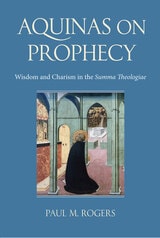
Aquinas on Prophecy
Wisdom and Charism in the <i>Summa Theologiae</i>Paul M. Rogers
Catholic University of America Press, 2023

Born Again
The Christian Right GlobalizedJennifer S. Butler
Pluto Press, 2006
This book reveals how Christian conservative groups are able to shape policy in every corner of the world. Drawing on interviews with religious leaders, it reveals how today's most powerful Christian Right organisations are building interfaith coalitions, connecting Catholic, Mormon and Muslim allies to advance a conservative agenda.
The US under Bush Jr. has given them a significant voice in shaping US policy on issues including women's rights, reproductive health, human cloning, children's rights and AIDS.
In short, the Christian Right is globalising -- a phenomenon that promises to challenge progressive social policy on a world-wide scale - as well as transform the Christian Right itself.
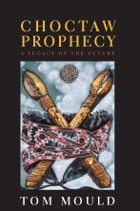
Choctaw Prophecy
A Legacy for the FutureTom Mould
University of Alabama Press, 2002
Explores the power and artistry of prophecy among the Mississippi Band of Choctaw Indians, who use predictions about the future to interpret the world around them
This book challenges the common assumption that American Indian prophecy was an anomaly of the 18th and 19th centuries that resulted from tribes across the continent reacting to the European invasion. Tom Mould’s study of the contemporary prophetic traditions of the Mississippi Band of Choctaw Indians reveals a much larger system of prophecy that continues today as a vibrant part of the oral tradition.
Mould shows that Choctaw prophecy is more than a prediction of the future; it is a way to unite the past, present, and future in a moral dialogue about how one should live. Choctaw prophecy, he argues, is stable and continuous; it is shared in verbal discourse, inviting negotiation on the individual level; and, because it is a tradition of all the people, it manifests itself through myriad visions with many themes. In homes, casinos, restaurants, laundromats, day care centers, and grocery stores, as well as in ceremonial and political situations, people discuss current events and put them into context with traditional stories that govern the culture. In short, recitation is widely used in everyday life as a way to interpret, validate, challenge, and create the world of the Choctaw speaker.
Choctaw Prophecy stands as a sound model for further study into the prophetic traditions of not only other American Indian tribes but also communities throughout the world. Weaving folklore and oral tradition with ethnography, this book will be useful to academic and public libraries as well as to scholars and students of southern Indians and the modern South.

Constructs of Prophecy in the Former and Latter Prophets and Other Texts
Lester L. Grabbe
SBL Press, 2011
Explore the ancient context of prophecy and prophetic figures
This collection of essays examines the construction of prophecy in the Former and Latter Prophets, Chronicles, Daniel, and even in the Quran. This unique anthology recognizes that these texts do not simply describe the prophetic phenomena but rather depict prophets according to various conventional categories or their own individual points of view. Each essay analyzes how these writings portray prophecy or prophets to better understand how the respective authors structured their writings.
Features
- Introduction and twelve essays cover prophecy in the Hebrew Bible and the Quran
- Essays examine the relationship between the prophets and the cult, oral pronouncements and written collections, and divination, prophecy, and apocalypticism
- Additional essays raise questions about the prophetic persona and examine the prophets in hermeneutical perspective

Death Foretold
Prophecy and Prognosis in Medical CareNicholas A. Christakis
University of Chicago Press, 2000
"Highly recommended for everyone from patients wrestling with their personal prognosis to any medical practitioner touched by this bioethical dilemma."—Library Journal, starred review
"[T]he first full general discussion of prognosis ever written. . . . [A] manifesto for a form of prognosis that's equal parts prediction-an assessment of likely outcomes based on statistical averages-and prophecy, an intuition of what lies ahead."—Jeff Sharlet, Chicago Reader
"[S]ophisticated, extraordinarily well supported, and compelling. . . . [Christakis] argues forcefully that the profession must take responsibility for the current widespread avoidance of prognosis and change the present culture. This prophet is one whose advice we would do well to heed."—James Tulsky, M.D., New England Journal of Medicine
Ezekiel 1–24
Introduction and CommentaryDale F. Launderville
SBL Press, 2026
Israelite Prophecy and the Deuteronomistic History
Portrait, Reality, and the Formation of a HistoryMignon R. Jacobs
SBL Press, 2013
James Baldwin and the Heavenly City
Prophecy, Apocalypse, and DoubtChristopher Z. Hobson
Michigan State University Press, 2018

Levinas on the Primacy of the Ethical
Philosophy as ProphecyJeffrey Bloechl
Northwestern University Press, 2023
The philosophy of Emmanuel Levinas affirms both the urgency of peace and the fact that peace is never finally assured. This tension is a question of responsibility and of the ethical relation in which that responsibility is grounded. Jeffrey Bloechl pursues this prophetic dimension of Levinas’s philosophy—his commitment to phenomenology and to a philosophy of religion—to make the case for the mutual reinforcement and intelligibility of these two threads.
Levinas on the Primacy of the Ethical traces the emergence of Levinas’s early thought in relation to modern political philosophy, his revision of Martin Heidegger’s existential phenomenology, the consolidation of his mature position, his important differences with Freudian psychoanalysis, the turn from metaphysics to language in his later philosophy, and his complex relationship with Christian theology. Starting with an exposition of how positive notions of religious transcendence are already present in some of Levinas’s early phenomenological texts, Bloechl then stakes the reverse claim: that Levinas’s conception of God is dependent on his existential phenomenology. Proceeding chronologically, but with frequent nods to later developments, this book builds toward the ultimate assertion that Levinas offers us a phenomenology of event and of relation without appeal to any foundation, ground, or causal principle. Only in this way is Levinas able to generate an argument—and not merely an exhortation—for the primacy of the ethical as he conceives it.
Looking Forward
Prediction and Uncertainty in Modern AmericaJamie L. Pietruska
University of Chicago Press, 2017
Pietruska argues that this late nineteenth-century quest for future certainty had an especially ironic consequence: it led Americans to accept uncertainty as an inescapable part of both forecasting and twentieth-century economic and cultural life. Drawing together histories of science, technology, capitalism, environment, and culture, Looking Forward explores how forecasts functioned as new forms of knowledge and risk management tools that sometimes mitigated, but at other times exacerbated, the very uncertainties they were designed to conquer. Ultimately Pietruska shows how Americans came to understand the future itself as predictable, yet still uncertain.

Poetry and Prophecy
The Anthropology of InspirationJohn Leavitt, Editor
University of Michigan Press, 1997
Based on rich ethnographic work in Western and non-Western cultures, the essays represent distinct approaches to the topic, from one person's account of her interactions with a possessing spirit to another's world-spanning statement on prophetic poetics. Each contributor challenges easy assumptions that poetic texts are crafted works, products of skill rather than inspiration, while prophetic speech and writing are best understood as spontaneous performance rather than formal art.
As a whole the collection aims to reorient the anthropological study of possession and oracular experiences toward an awareness of the word, and to draw the attention of literary critics to "inspired" poetry. It will also appeal to readers in performance studies and comparative religion.
Contributors are Marjorie Mandelstam Balzer, James Fernandez, Paul Friedrich, John Leavitt, Dennis Tedlock, Margaret Trawick.
John Harold Leavitt is Professor of Anthropology, University of Montreal.
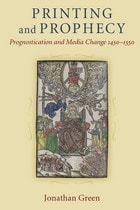
Printing and Prophecy
Prognostication and Media Change 1450-1550Jonathan Green
University of Michigan Press, 2011
Printing and Prophecy: Prognostication and Media Change 1450-1550 examines prognostic traditions and late medieval prophetic texts in the first century of printing and their effect on the new medium of print. The many prophetic and prognostic works that followed Europe's earliest known printed book---not the Gutenberg Bible, but the Sibyl's Prophecy, printed by Gutenberg two years earlier and known today only from a single page---over the next century were perennial best sellers for many printers, and they provide the modern observer with a unique way to study the history and inner workings of the print medium. The very popularity of these works, often published as affordable booklets, raised fears of social unrest. Printers therefore had to meet customer demand while at the same time channeling readers' reactions along approved paths. Authors were packaged---and packaged themselves---in word and image to respond to the tension, while leading figures of early modern culture such as Paracelsus, Martin Luther, and Sebastian Brant used printed prophecies for their own purposes in a rapidly changing society.
Based on a wide reading of many sources, Printing and Prophecy contributes to the study of early modern literature, including how print changed the relationship among authors, readers, and texts. The prophetic and astrological texts the book examines document changes in early modern society that are particularly relevant to German studies and are key texts for understanding the development of science, religion, and popular culture in the early modern period. By combining the methods of cultural studies and book history, this volume brings a new perspective to the study of Gutenberg and later printers.
Professionalism Reborn
Theory, Prophecy, and PolicyEliot Freidson
University of Chicago Press, 1994
In this concise synthesis of the major debates about the professions since World War II, Eliot Freidson explores several broad questions about professionalism today—what it is, what its future is likely to be, and its value to public policy. Freidson argues that because professionalism is based on specialized knowledge, it is distinct from either bureaucratic or market-based forms of work. He predicts a rebirth of the professions during which practitioners lose some of their independence and become more accountable to standards of a professional elite. And, defending professionalism as a desirable method of providing complex, discretionary services to the public, Freidson argues that market-based or bureaucratic methods would impoverish the quality of service to consumers, and suggests ways the virtues of professionalism can be reinforced.
The most accessible survey available of almost fifty years of theory and research by the scholar whose own work helped define the field, this book will appeal to the growing international body of scholars concerned with studying and theorizing about the professions.
Prophecy and Gender in the Hebrew Bible
L. Juliana Claassens
SBL Press, 2021
Multifaceted insights into female life in prophetic contexts
Both prophets and prophetesses shared God’s divine will with the people of Israel, yet the voices of these women were often forgotten due to later prohibitions against women teaching in public. This latest volume of the Bible and Women series focuses on the intersection of gender and prophecy in the Former Prophets (Joshua to 2 Kings) as well as in the Latter Prophets of the Hebrew Bible. Essays examine how women appear in the iconography of the ancient world, the historical background of the phenomenon of prophecy, political and religious resistance by women in the biblical text, and gender symbolism and constructions in prophetic material as well as the metaphorical discourse of God. Contributors Michaela Bauks, Athalya Brenner-Idan, Ora Brison, L. Juliana Claassens, Marta García Fernández, Irmtraud Fischer, Maria Häusl, Rainer Kessler, Nancy C. Lee, Hanne Løland Levinson, Christl M. Maier, Ilse Müllner, Martti Nissinen, Ombretta Pettigiani, Ruth Poser, Benedetta Rossi, Silvia Schroer, and Omer Sergi draw insight into the texts from a range of innovative gender-oriented approaches.
Prophecy in Islam
Philosophy and OrthodoxyFazlur Rahman
University of Chicago Press, 2011
This longstanding and highly regarded volume is the first to explore the doctrine of prophetic revelation, a critical and definitive area of Islamic religious and political thought. In it, the esteemed Islamic scholar Fazlur Rahman traces the inception of this doctrine from ancient Greek texts, its interpretation and elaboration by Muslim philosophers in order to suit their vision of the Prophet, and, finally, the varying degrees of acceptance of these convergent ideas by the Muslim orthodoxy.
The latest edition of this classic text includes a new foreword by Islamic studies expert Michael Sells, confirming Prophecy in Islam as the best source on its subject after more than half a century. This longstanding and highly regarded volume is the first to explore the doctrine of prophetic revelation, a critical and definitive area of Islamic religious and political thought. In it, the esteemed Islamic scholar Fazlur Rahman traces the inception of this doctrine from ancient Greek texts, its interpretation and elaboration by Muslim philosophers in order to suit their vision of the Prophet, and, finally, the varying degrees of acceptance of these convergent ideas by the Muslim orthodoxy.
The latest edition of this classic text includes a new foreword by Islamic studies expert Michael Sells, confirming Prophecy in Islam as the best source on its subject after more than half a century.
Prophecy in Politics
Or, the Wigram AspectKenneth Weisbrode
Haus Publishing, 2026
Ralph Wigram was a minor British bureaucrat who is known to a small part of posterity only because Winston Churchill paid tribute to him as the man who warned of the Nazi threat with such persistence, conviction, and hard evidence that Churchill had the wherewithal to make the case to the British people. Wigram died at the end of 1936, just before the war he warned against had begun. He might have changed the course of history—if only people had believed him.
Prophets like Wigram are a permanent fixture of a world without certainty. Oracles, shamans, wiseacres, astrologers, and swamis of all shades populate our myths, legends, and Bibles. Today, our lives are inundated with the wisdom of professional forecasters, intelligence analysts, and threat mongers. Why do many of us, and especially our leaders, find it so difficult to heed warnings? We tend to underreact to some, overreact to others, and then point fingers when what “nobody ever anticipated” comes to pass. Why is prophecy so dogged?
Prophecy in Politics takes up a vast, complex, and well-worn subject—the future—and reduces it to its most essential aspects, especially belief. It revisits a half-dozen familiar and not-so-familiar incidents of prophecy, from the warnings given to Stalin about Operation Barbarossa to those given to Bill Clinton and George W. Bush about “terrorism,” to the Cassandras periodically promising collapse in the financial markets, to uncover a pattern of complacency and neglect. Finally, Ken Weisbrode proposes what all of us might do to overcome complacency and make prophecy work better for us. This is not a handbook or an attempt to stand in the vanguard of political or strategic thought on futurism, futures studies, or futurology; rather, it is a concise overview and an idiosyncratic but nevertheless useful guide to thinking about the past and present condition of prophecy.
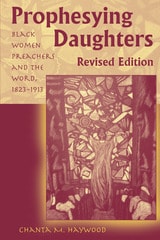
Prophesying Daughters
Black Women Preachers and the Word, 1823-1913Chanta M. Haywood
University of Missouri Press, 2003
In nineteenth-century America, many black women left their homes, their husbands, and their children to spread the Word of God. Descendants of slaves or former “slave girls” themselves, they traveled all over the country, even abroad, preaching to audiences composed of various races, denominations, sexes, and classes, offering their own interpretations of the Bible. When they were denied the pulpit because of their sex, they preached in tents, bush clearings, meeting halls, private homes, and other spaces. They dealt with domestic ideologies that positioned them as subservient in the home, and with racist ideologies that positioned them as naturally inferior to whites. They also faced legalities restricting blacks socially and physically and the socioeconomic reality of often being part of a large body of unskilled laborers.
Jarena Lee, Julia Foote, Maria Stewart, and Frances Gaudet were four women preachers who endured such hardships because of their religious convictions. Often quoting from the scripture, they insisted that they were indeed prophesying daughters whom God called upon to preach. Significantly, many of these women preachers wrote autobiographies in which they present images of assertive, progressive, pious women—steadfast and unmovable in their religious beliefs and bold in voicing their concerns about the moral standing of their race and society at large.
Chanta M. Haywood examines these autobiographies to provide new insight into the nature of prophesying, offering an alternative approach to literature with strong religious imagery. She analyzes how these four women employed rhetorical and political devices in their narratives, using religious discourse to deconstruct race, class, and gender issues of the nineteenth century.
By exploring how religious beliefs become an avenue for creating alternative ideologies, Prophesying Daughters will appeal to students and scholars of African American literature, women’s studies, and religious studies.
Prophets Male and Female
Gender and Prophecy in the Hebrew Bible, the Eastern Mediterranean, and theJonathan Stökl
SBL Press, 2013
Prophets and Prophecy in the Ancient Near East
Martti Nissinen
SBL Press, 2019
A new, expanded edition of a classic reference tool
This volume of more than 170 documents of prophecy from the ancient Near East brings together a representative sample of written documents from Mesopotamia, the Levant, and Egypt dating to the second and first millennia BCE. Nissinen's collection provides nonspecialist readers clear translations, transliterations, and discussions of oracles reports and collections, quotations of prophetic messages in letters and literature, and texts that reference persons with prophetic titles. This second edition includes thirty-four new texts.
Features:
- Modern, idiomatic, and readable English translations
- Thirty-four new translations
- Contributions of West Semitic, Egyptian, and Luwian sources from C. L. Seow, Robert K. Ritner, and H. Craig Melchert
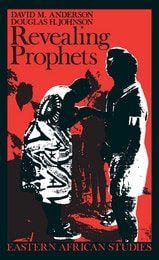
Revealing Prophets
Prophecy In Eastern African HistoryDavid M. Anderson
Ohio University Press, 1994
This book examines the richly textured histories of prophets and prophecies within East Africa. It gives an analytical account of the significantly different forms prophecy has taken over the past century across the country.
Each of the chapters takes a new look at the active dialogue between prophets and the communities whom they addressed. This dialogue continues today as the politicians and activists throughout the region still look to prophetic traditions, garnering interpretations of the past in order to provide the validation of prophetic wisdom and heroes for the present.
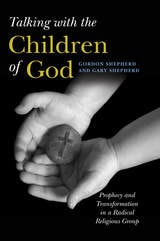
Talking with the Children of God
Prophecy and Transformation in a Radical Religious GroupGordon Shepherd and Gary Shepherd
University of Illinois Press, 2010
Grounded in direct, systematic observation by neutral observers, Talking with the Children of God is a unique study of the radical religious movement now known as The Family International. The book draws on extraordinarily candid interviews with the group's leaders and administrative staff. In revealing new information about the organization's history, beliefs, and use of prophecy, Gordon Shepherd and Gary Shepherd offer a highly detailed case study that is both an antidote to sensationalized coverage of the group and a means for understanding the transformational practices of new religious movements in general.
One of the most controversial groups emerging from the Jesus People movement of the 1960s, the Family originally was known as The Children of God. Under leader David Berg, members proclaimed an apocalyptic "Endtime," shunned secular occupations, lived communally, and adopted unusual sexual practices that led to abuse scandals in the 1970s and 1980s. Following Berg's death in 1994, the organization began to dramatically alter its evangelization efforts and decision-making processes.
Talking with the Children of God builds a picture of a complex organization with ten thousand core members worldwide, including details on the lives, careers, and responsibilities of the second generation and their efforts to defend their faith. The authors summarize the Family's history and beliefs as well as its controversial past. In particular, they analyze the organization's use of prophecy--or channeled revelations from Jesus and other spiritual beings--for making decisions and setting policy, revealing how this essentially democratic process works and how it shapes Family life and culture.
These remarkable insights are the result of sixteen years of surveys and field observations conducted in Family member homes in sixteen countries, plus four days of face-to-face interviews with Family leaders and organizational staff. The volume also includes condensed transcripts of the interviews with analysis by Shepherd and Shepherd.
The Politics of Revelation in the English Renaissance
Ester Gilman Richey
University of Missouri Press, 1998
Recognizing that the seventeenth century's volatile debate over apocalyptic interpretation has since become a one-sided discussion, Esther Gilman Richey develops a context that recovers the dynamism so inherent in the writings of the period and provides illuminating details that enhance the prophetic continuum. The Politics of Revelation in the English Renaissance does not ignore the familiar prophetic verse of Spenser and Milton, but it significantly expands the scope of study by examining the interpretations of both men and women who represent a range of ecclesiastical and political perspectives.
Richey rejects Barbara Lewalski's claim that the radical, prophetic writers and metaphysical poets of the seventeenth century drew inspiration from distinct biblical models, the former from the Apocalypse and the latter from the Psalms. Instead she contends that even writers such as Donne and Herbert, whom we have long considered "literary," were in reality using their poetry to participate in the hottest debates of the time.
While the radical writers, such as Spenser and Milton, were immediately responsive to ecclesiastical and political controversies, the conservative, metaphysical poets—Donne, Herbert, and Vaughan—were posing equally politically charged questions: Is the pope Antichrist? Is the Bride of Christ pure? Is the Temple a model of ecclesiastical reform? The writers of the period did not move in divided and distinguished worlds, but in fact constantly responded to one another through poetic and politically charged dialogue.
By drawing from the writings of various individuals, both radical and conformist, male and female, Richey traces the shifting representations of the apocalyptic Bride and Temple over time. Organized chronologically, the chapters of The Politics of Revelation in the English Renaissance reveal the escalating debate among the pacifists, conformists, militants, and feminists. Not only does Richey uncover the prophetic dimension of conformist writers usually described as apolitical and devotional, but she also explores the writings of lesser-known women prophets: Aemilia Lanyer, Mary Cary, Anna Trapnel, and Margaret Fell. In such biblical passages as the apocalyptic "woman clothed with the sun," these early feminists find the authority for their own prophetic speech.
This provocative analysis—at once far-reaching and tightly focused—reveals the complexity of the apocalyptic discourse that transpired among Renaissance writers and poets.
The Prophecy and Other Stories
Drago Jancar
Northwestern University Press, 2009
These newly collected short stories reveal a master at the top of his game. Drago Jancar possesses an acute understanding of the human psyche, enabling his stories to resonate beyond their particular milieu. This collection features seven pieces, drawn from four different collections, that together present the struggle of individuals against powerful forces. The characters try to make sense of a world of shifting borders and changing names that make the idea of a "homeland"—either literal or figurative—a dream rather than a reality.
The Prophecy of Enoch as Restoration Blueprint
Terryl Givens
Utah State University Press, 2013
Volume 18, The Leonard J. Arrington Lecture Series
The Special Collections and Archives of Utah State University's Merrill-Cazier Library houses the personal and historical collection of Leonard J. Arrington, renowned scholar of the American West.
The Leonard J. Arrington Mormon History Lecture annually hosts the presentation of current research by a leading scholar. Among the lecturers have been such notable historians as Thomas G. Alexander, Richard L. Bushman, Sarah Barringer Gordon, Howard Lamar, Jan Shipps, Donald Worster, and Pulitzer Prize-winner Laurel Thatcher Ulrich.
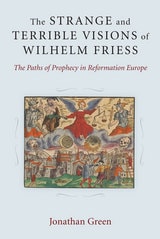
The Strange and Terrible Visions of Wilhelm Friess
The Paths of Prophecy in Reformation EuropeJonathan Green
University of Michigan Press, 2014
Dutch scholars have recognized that Frans Fraet was executed for printing a prognostication by Willem de Vriese, but this prognostication was thought to be lost. A few scholars of sixteenth-century German apocalypticism have briefly noted the prophecies of Wilhelm Friess but have not studied them in depth. The Strange and Terrible Visions of Wilhelm Friess is the first to connect de Vriese and Friess, as well as recognize the prophecy of Wilhelm Friess as an adaptation of a French version of theVademecum of Johannes de Rupescissa, making these pamphlets by far the most widespread source for Rupescissa’s apocalyptic thought in Reformation Germany. The book explains the connection between the first and second prophecies of Wilhelm Friess and discovers the Calvinist context of the second prophecy and its connection to Johann Fischart, one of the most important German writers of the time.
Jonathan Green provides a study of how textual history interacts with print history in early modern pamphlets and proposes a model of how early modern prophecies were created and transmitted. The Strange and Terrible Visions of Wilhelm Friess makes important contributions to the study of early modern German and Dutch literature, apocalypticism and confessionalization during the Reformation, and the history of printing in the sixteenth century.
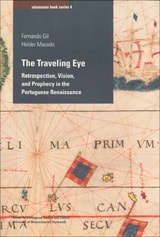
The Traveling Eye
Retrospection, Vision, and Prophecy in the Portuguese RenaissanceFernando Gil
Tagus Press, 2009
The idea for The Traveling Eye came as a new departure in an old dialogue between the two authors, one a literary scholar, the other a philosopher. Our focus was initially centered on a philosophical hypothesis concerning evidence, with specific reference to the prophetic writings of Father António Vieira, but it occurred to us that this perspective could be applied to literary works, particularly those of the Portuguese Renaissance. The studies that one of us had dedicated to the initiatory aspects of The Lusiads and to the codification of esoteric meanings in the work of Bernardim Ribeiro suggested a possible convergence of our two lines of research. But there are other issues raised by the Portuguese Renaissance: voyages, the new, the encounter with difference and how to understand it. The most obvious and direct expression of these issues is found in the chronicles of voyage and empire, whose importance is duly noted in the study by Luís de Sousa Rebelo included in Chapter III of this book. The literary treatment of this material seems to us no less revealing. Seeing ("seeing clearly seen" as Camões says in The Lusiads) poses the problem of simultaneously seeing "what is there" and of how what is there could be seen. This questioning from the outside by "the traveling eye" went hand in hand with new ways of relating to oneself and to others. Three key Renaissance authors, Luís de Camões (1525?-1580), Francisco de Sá de Miranda (1481?-1558?) and Bernardim Ribeiro (b.1480s?), address the human subject's relationship as a perplexing issue. Their works transform the feeling of love into a multifaceted investigation that questions the identity of the individual. A recurring theme in this book is the metamorphoses of the self brought about by love.
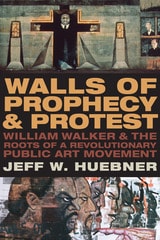
Walls of Prophecy and Protest
William Walker and the Roots of a Revolutionary Public Art MovementJeff W. Huebner
Northwestern University Press, 2019
Though his art could not have been more public, Walker maintained a low profile during his working life and virtually withdrew from the public eye after his retirement in 1989. Author Jeff W. Huebner met Walker in 1990 and embarked on a series of insightful interviews that stretched over the next two decades. Those meetings and years of research form the basis of Walls of Prophecy and Protest, the story of Walker’s remarkable life and the movement that he inspired.
Featuring forty-three color images of Walker’s work, most long since destroyed or painted over, this handsome edition reveals the artist who was the primary figure behind Chicago’s famed Wall of Respect and who created numerous murals that depicted African American historical figures, protested social injustice, and promoted love, respect, racial unity, and community change.
When I Came to Die
Process and Prophecy in Thoreau's Vision of DyingAudrey Raden
University of Massachusetts Press, 2017
When I Came to Die suggests that throughout his writings, Thoreau communicated that knowing how to die properly is an art and a lifelong study, a perspective that informed his ideas about politics, nature, and individualism. With this insight, Raden opens a dialogue that will engage both Thoreauvians and those interested in American literature and thought.
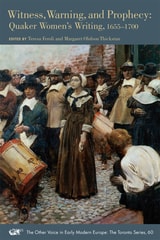
Witness, Warning, and Prophecy
Quaker Women's Writing, 1655-1700Edited by Teresa Feroli and Margaret Olofson Thickstun
Iter Press, 2018
The Other Voice in Early Modern Europe - The Toronto Series: Volume 60
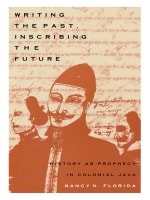
Writing the Past, Inscribing the Future
History as Prophecy in Colonial JavaNancy K. Florida
Duke University Press, 1995
Babad Jaka Tingkir, the historical prophecy that Writing the Past, Inscribing the Future translates and reads, is uniquely suited for such a study. Composing an engaging history of the emergence of Islamic power in central Java around the turn of the sixteenth century, Babad Jaka Tingkir was written from the vantage of colonial exile to contest the more dominant dynastic historical traditions of nineteenth-century court literature. Florida reveals how this history’s episodic form and focus on characters at the margins of the social order work to disrupt the genealogical claims of conventional royal historiography—thus prophetically to open the possibility of an alternative future.