Results by title
4 books match the query 'Props'

Books in Motion
Connecting Preschoolers with Books through Art, Games, Movement, Music, Playacting, and PropsJulie Dietzel-Glair
American Library Association, 2013
[more]
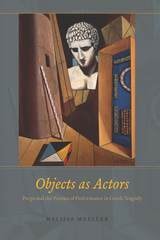
Objects as Actors
Props and the Poetics of Performance in Greek TragedyMelissa Mueller
University of Chicago Press, 2015
Objects as Actors charts a new approach to Greek tragedy based on an obvious, yet often overlooked, fact: Greek tragedy was meant to be performed. As plays, the works were incomplete without physical items—theatrical props. In this book, Melissa Mueller ingeniously demonstrates the importance of objects in the staging and reception of Athenian tragedy.
As Mueller shows, props such as weapons, textiles, and even letters were often fully integrated into a play’s action. They could provoke surprising plot turns, elicit bold viewer reactions, and provide some of tragedy’s most thrilling moments. Whether the sword of Sophocles’s Ajax, the tapestry in Aeschylus’s Agamemnon, or the tablet of Euripides’s Hippolytus, props demanded attention as a means of uniting—or disrupting—time, space, and genre.
Insightful and original, Objects as Actors offers a fresh perspective on the central tragic texts—and encourages us to rethink ancient theater as a whole.
[more]
Storytimes with Puppets and Props
Kimberly Faurot
American Library Association, 2008
[more]
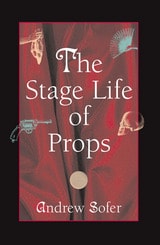
The Stage Life of Props
Andrew Sofer
University of Michigan Press, 2003
In The Stage Life of Props, Andrew Sofer aims to restore to certain props the performance dimensions that literary critics are trained not to see, then to show that these props are not just accessories, but time machines of the theater.
Using case studies that explore the Eucharistic wafer on the medieval stage, the bloody handkerchief on the Elizabethan stage, the skull on the Jacobean stage, the fan on the Restoration and early eighteenth-century stage, and the gun on the modern stage, Andrew Sofer reveals how stage props repeatedly thwart dramatic convention and reinvigorate theatrical practice.
While the focus is on specific objects, Sofer also gives us a sweeping history of half a millennium of stage history as seen through the device of the prop, revealing that as material ghosts, stage props are a way for playwrights to animate stage action, question theatrical practice, and revitalize dramatic form.
Andrew Sofer is Assistant Professor of English, Boston College. He was previously a stage director.
[more]