Results by title
27 books match the query 'Prostitutes'
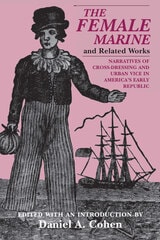
"The Female Marine" and Related Works
Narratives of Cross-Dressing and Urban Vice in America's Early RepublicDaniel A. Cohen
University of Massachusetts Press, 1997
The alternately racy and moralistic narrative recounts the adventures of a young woman from rural Massachusetts who is seduced by a false-hearted lover, flees to Boston, and is entrapped in a brothel. She eventually escapes by disguising herself as a man and serves with distinction on board the U.S. frigate Constitution during the War of 1812. After subsequent onshore adventures in and out of male dress, she is happily married to a wealthy New York gentleman.
In his introduction, Daniel A. Cohen situates the story in both its literary and historical contexts. He explains how the tale draws upon a number of popular Anglo-American literary genres, including the female warrior narrative, the sentimental novel, and the urban exposé. He then explores how The Female Marine reflects early-nineteenth-century anxieties concerning changing gender norms, the expansion of urban prostitution, the growth of Boston's African American community, and feelings of guilt aroused by New England's notoriously unpatriotic activities during the War of 1812.
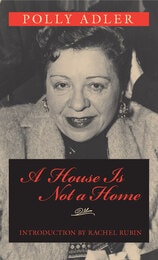
A House Is Not a Home
Polly Adler
University of Massachusetts Press, 2006
Polly Adler's “house”—the brothel that gave this best-selling 1953 autobiography its title—was a major site of New York City underworld activity from the 1920s through the 1940s. Adler's notorious Lexington Avenue house of prostitution functioned as a sort of social club for New York's gangsters and a variety of other celebrities, including Robert Benchley and his friend Dorothy Parker. According to one New York tabloid, it made Adler's name “synonymous with sin.”
This new edition of Adler's autobiography brings back into print a book that was a mass phenomenon, in both hardback and paperback, when it was first published. A self-consciously literary work, A House Is Not a Home provides an informal social history of immigrant mobility, prostitution, Jewish life in New York, police dishonesty, the “white slavery” scare of the early twentieth century, and political corruption.
Adler's story fills an important gap in the history of immigrant life, urban experience, and organized crime in New York City. While most other accounts of the New York underworld focus on the lives of men, from Herbert Asbury's Gangs of New York through more recent works on Jewish and Italian gangsters, this book brings women's lives and problems to the forefront.
A House Is Not a Home is compellingly readable and was popular enough to draw Hollywood's attention in the early 1960s—leading to a film starring Shelley Winters as Adler. The book has been largely forgotten in the ensuing decades, lost both to its initial audience of general readers and to scholars in women's studies, immigration history, and autobiography who are likely to find it a treasure trove. Now, with a new introduction by Rachel Rubin that contextualizes Adler's life and literary achievement, A House Is Not a Home is again available to the many readers who have come to understand such “marginal” life stories as a special refraction of the more typical American success narrative.
A Prescription for Murder
The Victorian Serial Killings of Dr. Thomas Neill CreamAngus McLaren
University of Chicago Press, 1993

Baltimore Portraits
Amos Badertscher
Duke University Press, 1999
The photographer’s focus on content rather than on elaborate technique reveals the intensely personal—and, indeed, autobiographical—nature of his portraits. Their simplicity along with the text’s intimacy affects the viewer in ways not easily forgotten. An introduction by Tyler Curtain contextualizes the photographs both within the history of Baltimore and its queer subculture and in relationship to contemporaneous work by photographers Nan Goldin, Robert Mapplethorpe, Cindy Sherman, Duane Michaels, and others. Curtain also positions the underlying concerns of Bardertscher’s art in relation to gay and lesbian cultural politics.
This striking collection of portraits, along with the photographer’s moving text, will impact not only a general audience of photographers and enthusiasts of the art but also those engaged with gay and lesbian studies, queer theory, and cultural studies in general. It is published in association with the Duke University Museum of Art.
CONTROLLING VICE
REGULATING BROTHEL PROSTITUTION IN ST. PAUL, 1865–1883JOEL BEST
The Ohio State University Press, 1998
For eighteen years following the Civil War, the police in St. Paul, Minnesota, informally regulated brothel prostitution. Each month, the madams who ran the brothels were charged with keeping houses of ill fame and fined in the city’s municipal court. In effect, they were paying licensing fees in order to operate illegal enterprises. This arrangement was open; during this period, the city’s newspapers published hundreds of articles about vice and its regulation.
Joel Best claims that the sort of informal regulation in St. Paul was common in the late nineteenth century and was far more typical than the better known but brief experiment with legalization tried in St. Louis. With few exceptions, the usual approach to these issues of social control has been to treat informal regulation as a form of corruption, but Best’s view is that St. Paul’s arrangement exposes the assumption that the criminal justice system must seek to eradicate crime. He maintains that other policies are possible.
In a book that integrates history and sociology, the author has reconstructed the municipal court records for most of 1865–83, using newspaper articles, an arrest ledger kept by the St. Paul police, and municipal court dockets. He has been able to trace which madams operated brothels and the identities of many of the prostitutes who lived and worked in them.
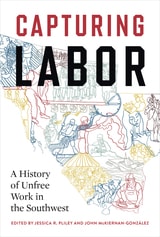
Capturing Labor
A History of Unfree Work in the SouthwestEdited by Jessica R. Pliley and John Mckiernan-González
University of Texas Press, 2026
A collection of essays grappling with the many, often overlooked, forms of unfree labor in the West.
When Americans think of unfree labor—coerced, extracted from workers unable to freely enter and exit contracts—what comes to mind is Black slavery and peonage in the South. But other forms of unfree labor also built the United States. Collecting a diverse range of sharply argued historical essays, Capturing Labor shares the story of unfree labor in the Southwest, affecting mainly Indigenous people, Mexican Americans, and people of color.
In Texas and elsewhere, state agents developed various methods for directing the movement of workers, seizing their time, and controlling the products of their efforts. Case studies highlight the detention during World War I of Indigenous children and unaccompanied women, who were placed in boarding schools, fined, and obligated to work off the resulting debt. Other essays expose authorities forcing workers to break strikes and jailing Americans who supported labor uprisings in rural Mexico and the United States. Prisons and asylums supplied coerced agricultural workers and musicians who were never compensated for their labor or by the labels that took their recordings.
Editors Jessica Pliley and John Mckiernan-González contend that unfree labor continues to shape American life, and is all around us today. Understanding its history aids us in recognizing and bringing attention to the grim realities of the present.
Challenging Perspectives on Street-Based Sex Work
Katie Hail-Jares
Temple University Press, 2017
Are sex workers victims, criminals, or just trying to make a living? Over the last five years, public policy and academic discourse have moved from criminalization of sex workers to victim-based understanding, shaped by human trafficking. While most research focuses on macro-level policies and theories, less is known about the on-the-ground perspectives of people whose lives are impacted by sex work, including attorneys, social workers, police officers, probation officers, and sex workers themselves.
Challenging Perspectives on Street-Based Sex Work brings the voices of lower-echelon sex workers and those individuals charged with policy development and enforcement into conversation with one another. Chapters highlight some of the current approaches to sex work, such as diversion courts, trafficking task forces, law enforcement assisted diversion and decriminalization. It also examines how sex workers navigate seldom-discussed social phenomenon like gentrification, pregnancy, imperialism, and being subjects of research. Through dialogue, our authors reveal the complex reality of engaging in and regulating sex work in the United States and through American aid abroad.
Contributors include: Aneesa A. Baboolal, Marie Bailey-Kloch, Mira Baylson, Nachale “Hua” Boonyapisomparn, Belinda Carter, Jennifer Cobbina, Ruby Corado, Eileen Corcoran, Kate D’Adamo, Edith Kinney, Margot Le Neveu, Martin A. Monto, Linda Muraresku, Erin O’Brien, Sharon Oselin. Catherine Paquette, Dan Steele, Chase Strangio, Signy Toquinto, and the editors.
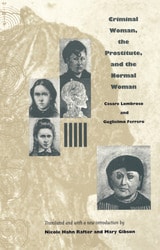
Criminal Woman, the Prostitute, and the Normal Woman
Cesare Lombroso and Guglielmo Ferrero
Duke University Press, 2004
Lombroso’s research took him to police stations, prisons, and madhouses where he studied the tattoos, cranial capacities, and sexual behavior of criminals and prostitutes to establish a female criminal type. Criminal Woman, the Prostitute, and the Normal Woman anticipated today’s theories of genetic criminal behavior. Lombroso used Darwinian evolutionary science to argue that criminal women are far more cunning and dangerous than criminal men. Designed to make his original text accessible to students and scholars alike, this volume includes extensive notes, appendices, a glossary, and more than thirty of Lombroso’s own illustrations. Nicole Hahn Rafter and Mary Gibson’s introduction, locating his theory in social context, offers a significant new interpretation of Lombroso’s place in criminology.
Daughter, Mother, Grandmother, and Whore
The Story of a Woman Who Decided to be a PutaGabriela Leite
Duke University Press, 2024
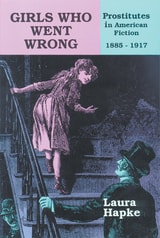
Girls Who Went Wrong
Prostitutes in American Fiction, 1885–1917Laura Hapke
University of Wisconsin Press, 1989
The period 1885 to 1917 saw thousands of American crusaders working hard to “save the fallen women,” but little on the part of American social protest writers. In this first work on the subject, Laura Hapke examines how writers attempted to turn an outcast into a heroine in a literature otherwise known for its puritanical attitude toward the fallen woman. She focuses on how these authors (all male) expressed late-Victorian conflicts about female sexuality. If, as they all maintained, women have an innate preference for chastity, how could they account for the prostitute? Was she a sinner, suggesting the potential waywardness of all women? Or, if she was a victim, what of her “depravity”?
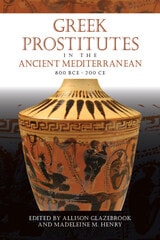
Greek Prostitutes in the Ancient Mediterranean, 800 BCE–200 CE
Allison Glazebrook
University of Wisconsin Press, 2011
Greek Prostitutes in the Ancient Mediterranean, 800 BCE–200 CE challenges the often-romanticized view of the prostitute as an urbane and liberated courtesan by examining the social and economic realities of the sex industry in Greco-Roman culture. Departing from the conventional focus on elite society, these essays consider the Greek prostitute as displaced foreigner, slave, and member of an urban underclass.
The contributors draw on a wide range of material and textual evidence to discuss portrayals of prostitutes on painted vases and in the literary tradition, their roles at symposia (Greek drinking parties), and their place in the everyday life of the polis. Reassessing many assumptions about the people who provided and purchased sexual services, this volume yields a new look at gender, sexuality, urbanism, and economy in the ancient Mediterranean world.
Gringo Gulch
Sex, Tourism, and Social Mobility in Costa RicaMegan Rivers-Moore
University of Chicago Press, 2016
Rivers-Moore situates her ethnography at the intersections of gender, race, class, and national dimensions in the sex industry. Instead of casting sex workers as hapless victims and sex tourists as neoimperialist racists, she reveals each group as involved in a complicated process of class mobility that must be situated within the sale and purchase of leisure and sex. These interactions operate within an almost entirely unregulated but highly competitive market beyond the reach of the state—bringing a distinctly neoliberal cast to the market. Throughout the book, Rivers-Moore introduces us to remarkable characters—Susan, a mother of two who doesn’t regret her career of sex work; Barry, a teacher and father of two from Virginia who travels to Costa Rica to escape his loveless, sexless marriage; Nancy, a legal assistant in the Department of Labor who is shocked to find out that prostitution is legal and still unregulated. Gringo Gulch is a fascinating and groundbreaking look at sex tourism, Latin America, and the neoliberal state.
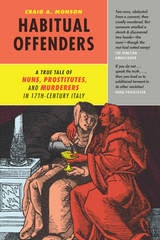
Habitual Offenders
A True Tale of Nuns, Prostitutes, and Murderers in Seventeenth-Century ItalyCraig A. Monson
University of Chicago Press, 2016
Drawing on over four thousand pages of primary sources, the intrepid Craig A. Monson reconstructs this fascinating history of crime and punishment in seventeenth-century Italy. Along the way, he explores Italy’s back streets and back stairs, giving us access to voices we rarely encounter in conventional histories: prostitutes and maidservants, mercenaries and bandits, along with other “dubious” figures negotiating the boundaries of polite society. Painstakingly researched and breathlessly told, Habitual Offenders will delight historians and true-crime fans alike.
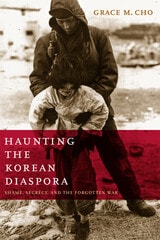
Haunting the Korean Diaspora
Shame, Secrecy, and the Forgotten WarGrace M. Cho
University of Minnesota Press, 2008
Grace M. Cho exposes how Koreans in the United States have been profoundly affected by the forgotten war and uncovers the silences and secrets that still surround it, arguing that trauma memories have been passed unconsciously through a process psychoanalysts call “transgenerational haunting.” Tracing how such secrets have turned into “ghosts,” Cho investigates the mythic figure of the yanggongju, literally the “Western princess,” who provides sexual favors to American military personnel. She reveals how this figure haunts both the intimate realm of memory and public discourse, in which narratives of U.S. benevolence abroad and assimilation of immigrants at home go unchallenged. Memories of U.S. violence, Cho writes, threaten to undo these narratives—and so they have been rendered unspeakable.
At once political and deeply personal, Cho’s wide-ranging and innovative analysis of U.S. neocolonialism and militarism under contemporary globalization brings forth a new way of understanding—and remembering—the impact of the Korean War.
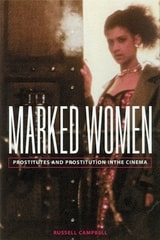
Marked Women
Prostitutes and Prostitution in the CinemaRussell Campbell
University of Wisconsin Press, 2006
Julia Roberts played a prostitute, famously, in Pretty Woman. So did Jodie Foster in Taxi Driver, Jane Fonda in Klute, Anna Karina in Vivre sa vie, Greta Garbo in Anna Christie, and Charlize Theron, who won an Academy Award for Monster. This engaging and generously illustrated study explores the depiction of female prostitute characters and prostitution in world cinema, from the silent era to the present-day industry. From the woman with control over her own destiny to the woman who cannot get away from her pimp, Russell Campbell shows the diverse representations of prostitutes in film.
Marked Women classifies fifteen recurrent character types and three common narratives, many of them with their roots in male fantasy. The “Happy Hooker,” for example, is the liberated woman whose only goal is to give as much pleasure as she receives, while the “Avenger,” a nightmare of the male imagination, represents the threat of women taking retribution for all the oppression they have suffered at the hands of men. The “Love Story,” a common narrative, represents the prostitute as both heroine and anti-heroine, while “Condemned to Death” allows men to manifest, in imagination only, their hostility toward women by killing off the troubled prostitute in an act of cathartic violence.
The figure of the woman whose body is available at a price has fascinated and intrigued filmmakers and filmgoers since the very beginning of cinema, but the manner of representation has also been highly conflicted and fiercely contested. Campbell explores the cinematic prostitute as a figure shaped by both reactionary thought and feminist challenges to the norm, demonstrating how the film industry itself is split by fascinating contradictions.
On Black Sisters Street
A NovelChika Unigwe
Ohio University Press, 2012

On the Game
Women and Sex WorkSophie Day
Pluto Press, 2007
Through the lens of public health, economics, will, and human rights, Day explores the public and private lives of individual sex workers. She offers a unique perspective on contemporary capitalist society, one that iwll be of interest to a broad range of social scientist.
The author brings a unique perspective to her work. She is both an anthropologist and the founder of the renowned Praed Street Project, established in 1986 as a referral and support center for London prostitutes.
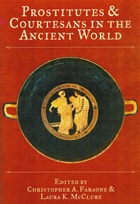
Prostitutes and Courtesans in the Ancient World
Edited by Christopher A. Faraone and Laura K. McClure
University of Wisconsin Press, 2006
Prostitutes and Courtesans in the Ancient World explores the implications of sex-for-pay across a broad span of time, from ancient Mesopotamia to the early Christian period. In ancient times, although they were socially marginal, prostitutes connected with almost every aspect of daily life. They sat in brothels and walked the streets; they paid taxes and set up dedications in religious sanctuaries; they appeared as characters—sometimes admirable, sometimes despicable—on the comic stage and in the law courts; they lived lavishly, consorting with famous poets and politicians; and they participated in otherwise all-male banquets and drinking parties, where they aroused jealousy among their anxious lovers.
The chapters in this volume examine a wide variety of genres and sources, from legal and religious tracts to the genres of lyric poetry, love elegy, and comic drama to the graffiti scrawled on the walls of ancient Pompeii. These essays reflect the variety and vitality of the debates engendered by the last three decades of research by confronting the ambiguous terms for prostitution in ancient languages, the difficulty of distinguishing the prostitute from the woman who is merely promiscuous or adulterous, the question of whether sacred or temple prostitution actually existed in the ancient Near East and Greece, and the political and social implications of literary representations of prostitutes and courtesans.
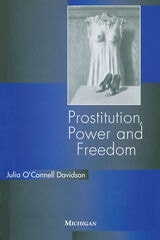
Prostitution, Power and Freedom
Julia O'Connell Davidson
University of Michigan Press, 1998
The author has conducted an impressive amount of research in nine countries, including conversations with male and female sex tourists, adult and child prostitutes, procurers, and clients. Through her research, O'Connell Davidson demonstrates the complexity of prostitution, arguing that it is not simply an effect of male oppression and violence or insatiable sexual needs, nor is it an unproblematic economic encounter. The book provides a sophisticated explanation of the economic and political inequalities underlying prostitution, but also shows that while prostitution necessarily implies certain freedoms for the clients, the amount of freedom experienced by individual prostititutes varies greatly.
This highly accessible book will be of great interest to those in gender and women's studies, sexuality and cultural studies, the sociology of work and organizations, and social policy. General readers will also appreciate having new ways of thinking about this age-old social phenomenon.
Julia O'Connell Davidson is Lecturer in Sociology, University of Leicester.
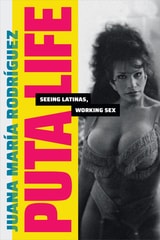
Puta Life
Seeing Latinas, Working SexJuana María Rodríguez
Duke University Press, 2023
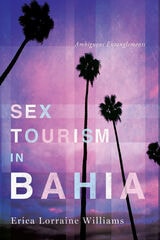
Sex Tourism in Bahia
Ambiguous EntanglementsErica Lorraine Williams
University of Illinois Press, 2013
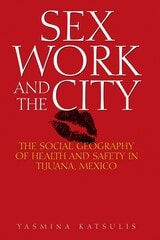
Sex Work and the City
The Social Geography of Health and Safety in Tijuana, MexicoBy Yasmina Katsulis
University of Texas Press, 2009
A gateway at the U.S.-Mexico border, Tijuana is a complex urban center with a sizeable population of sex workers. An in-depth case study of the trade, Sex Work and the City is the first major ethnographic publication on contemporary prostitution in this locale, providing a detailed analysis of how sex workers' experiences and practices are shaped by policing and regulation.
Contextualizing her research within the realm of occupational risk, Yasmina Katsulis examines the experiences of a diverse range of sex workers in the region and explores the implications of prostitution, particularly regarding the spheres of class hierarchies, public health, and other broad social effects. Based on eighteen months of intensive fieldwork and nearly 400 interviews with sex workers, customers, city officials, police, local health providers, and advocates, Sex Work and the City describes the arenas of power and the potential for disenfranchisement created by municipal laws designed to regulate the trade. Providing a detailed analysis of this subculture's significance within Tijuana and its implications for debates over legalization of "vice" elsewhere in the world, Katsulis draws on powerful narratives as workers describe the risks of their world, ranging from HIV/AIDS and rape (by police or customers) to depression, work-related stress, drug and alcohol addiction, and social stigma. Insightful and compelling, Sex Work and the City captures the lives (and deaths) of a population whose industry has broad implications for contemporary society at large.
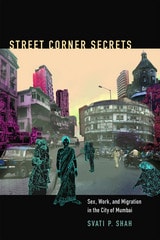
Street Corner Secrets
Sex, Work, and Migration in the City of MumbaiSvati P. Shah
Duke University Press, 2014
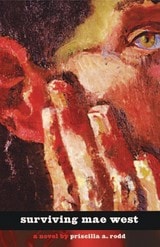
Surviving Mae West
A Novel by Priscilla A. Rodd
West Virginia University Press, 2006
Tess, a West Virginian in New York City, finds herself among seedy brothels facing life as a prostitute. A number of trials test her in every way, leading to both understanding and misunderstanding among her friends and her family. Tess tells these stories of pain, joy, depression, loneliness, and endurance in her journal, and they will shock some readers and charm others. With the shadow of the Appalachians calling her back home, she desperately struggles to claim her individuality in a world of debauchery without the painful remnants of her past and fear of a fragmented future overwhelming her.
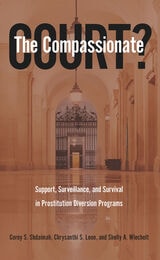
The Compassionate Court?
Support, Surveillance, and Survival in Prostitution Diversion ProgramsCorey S. Shdaimah, Chrysanthi S. Leon, and Shelly A. Wiechelt
Temple University Press, 2023
The authors of The Compassionate Court? provide case studies of such programs and draw upon interviews and observations conducted over a decade to reveal how participants and professionals perceive court-affiliated PDPs, clients, and staff. Considering the motivations, vision, and goals of these programs as well as their limitations—the inequity and disempowerment of their participants—the authors also present their own changing perspectives on prostitution courts, diversion programs, and criminalization of sex work.
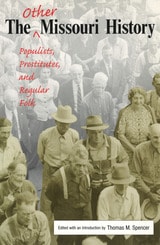
The Other Missouri History
Populists, Prostitutes, and Regular FolkEdited & Intro by Thomas M. Spencer
University of Missouri Press, 2005

Workin' It
Women Living Through Drugs and CrimeLeon Pettiway
Temple University Press, 1997
These are the words with which Margaret, a thirty-three-year-old cocaine-using prostitute, begins her story. In this book, she and four other women, all inner-city hustlers, describe their lives, how they came to be where they are, and where they hope to go.
Margaret, Charlie, Virginia, Tracy, and Laquita are all drug users who are involved in regular criminal activity: prostitution, burglary, shoplifting, robbery, drug selling, petty theft, and various kinds of fraud. Four of the women are black; one is white and Puerto Rican. While all five have been involved in same-sex relationships, three are primarily straight and two are primarily lesbian. They come from working-class or welfare families; some women characterize their mothers as strict, abusive, intolerant, and distant while other mothers are characterized as being concerned, religious, and loving. The women talk frankly about their drug use, their sexual and criminal activities, their childhoods, their personal relationships with their families of origin, children, partners, their fears and future goals, and the ordinary trappings of their lives.
While these accounts describe lives lived at the margins of society, they also reveal women who practice self-evaluation. These are women who have a deep understanding of individual accountability and responsibility. These accounts are connected by themes of violence and poverty, but they are also connected by the variety and richness of these women's lives. The women also assert a control over their activities and talk of independent judgment in terms that we imagine are reserved for men. There is a tendency in criminology to treat the data generated by research on men as fundamentally true for women as well. By allowing female law-breakers to describe their lives in their own way, Pettiway underlines not only their differences from men but also their differences from each other.
However, their stories also reveal their common humanity and their profound will to survive despite all obstacles. These women manage to live self-defined and self-validated lives in a world even more turbulent than that of their mainstream sisters. They share a web of experiences created out of race and ethnicity, sexual orientation, drug use, and urbanization that provides them with meaning and courage. They speak movingly about guilt and responsibility, about rape and intimacy, and about ambition and despair. Through their stories we can grasp the traumas and turning points that lead us all to make bad decisions as well as those ideals and inspirations that can help to redeem us.