Results by title
10 books match the query 'Protectionism'

Antidumping
How It Works and Who Gets HurtJ. Michael Finger
University of Michigan Press, 1993
Antidumping is a threat to the liberal trading system that post-World War II Western leadership struggled courageously and effectively to create. It offers a GATT-legal means to destroy the GATT system, leading to restrictions on more U.S. imports than even the Multi-Fibre Arrangement. This book presents studies of five industries whose exports have been hard hit by antidumping actions. Each of these studies avoids the legalisms and the jargon of antidumping and answers a straightforward question: was the national economic interest of either the exporting or the importing country improved by the antidumping actions that were taken? The contributors not only ask questions and present viable answers, but also provide a proposal that offers both consistence with GATT and good economics.This book will be of interest to lawyers, political scientists, economists, and business people. It has intentionally avoided the specialized language of trade regulation so that it may be more readily accessible to anyone interested in international commercial policy.
[more]
Democracy and Trade Policy in Developing Countries
Bumba Mukherjee
University of Chicago Press, 2016
Since the 1970s, two major trends have emerged among developing countries: the rise of new democracies and the rush to free trade. For some, the confluence of these events suggests that a free-market economy complements a fledgling democracy. Others argue that the two are inherently incompatible and that exposure to economic globalization actually jeopardizes new democracies. Which view is correct? Bumba Mukherjee argues that the reality of how democracy and trade policy unravel in developing countries is more nuanced than either account.
Mukherjee offers the first comprehensive cross-national framework for identifying the specific economic conditions that influence trade policy in developing countries. Laying out the causes of variation in trade policy in four developing or recently developed countries—Brazil, India, Indonesia, and South Africa—he argues persuasively that changing political interactions among parties, party leaders, and the labor market are often key to trade policy outcome. For instance, if workers are in a position to benefit from opening up to trade, party leaders in turn support trade reforms by decreasing tariffs and other trade barriers.
At a time when discussions about the stability of new democracies are at the forefront, Democracy and Trade Policy in Developing Countries provides invaluable insight into the conditions needed for a democracy to survive in the developing world in the context of globalization.
[more]
Growth, Trade, and Systemic Leadership
Rafael Reuveny and William R. Thompson
University of Michigan Press, 2004
Using a "lead economy" approach, Reuveny and Thompson link question about the global trade system to debates about hegemonic stability and the balance of power in world politics. By focusing on economic growth, protectionism, and trade, they surpass hegemonic stability interpretations of international politics to explain not only how hegemons maintain political order, but also the source of hegemonic/systemic leadership, the rise and decline of leadership over time, and the role of system leaders in generating worldwide economic growth and international political economic order.
Rafael Reuveny is Associate Professor in the School of Public and Environmental Affairs at Indiana University. William R. Thompson is Professor of Political Science at Indiana University.
[more]
International Trade in East Asia
Edited by Takatoshi Ito and Andrew K. Rose
University of Chicago Press, 2005
The practice of trading across international borders has undergone a series of changes with great consequences for the world trading community, the result of new trade agreements, a number of financial crises, the emergence of the World Trade Organization, and countless other less obvious developments. In International Trade in East Asia, a group of esteemed contributors provides a summary of empirical factors of international trade specifically as they pertain to East Asian countries such as China, Japan, Korea, and Taiwan.
Comprised of twelve fascinating studies, International Trade in East Asia highlights many of the trading practices between countries within the region as well as outside of it. The contributors bring into focus some of the region's endemic and external barriers to international trade and discuss strategies for improving productivity and fostering trade relationships. Studies on some of the factors that drive exports, the influence of research and development, the effects of foreign investment, and the ramifications of different types of protectionism will particularly resonate with the financial and economic communities who are trying to keep pace with this dramatically altered landscape.
Comprised of twelve fascinating studies, International Trade in East Asia highlights many of the trading practices between countries within the region as well as outside of it. The contributors bring into focus some of the region's endemic and external barriers to international trade and discuss strategies for improving productivity and fostering trade relationships. Studies on some of the factors that drive exports, the influence of research and development, the effects of foreign investment, and the ramifications of different types of protectionism will particularly resonate with the financial and economic communities who are trying to keep pace with this dramatically altered landscape.
[more]
Narrowing the Channel
The Politics of Regulatory Protection in International TradeRobert Gulotty
University of Chicago Press, 2020
While large, multinational corporations have supported the removal of tariffs, behind the scenes these firms have fought for protection in the form of product regulations, including testing, labeling, and registration requirements. Unlike tariffs, these regulations can raise fixed costs, excluding smaller firms from the market and shifting profits toward global giants.
Narrowing the Channel demonstrates that globalization and globalized firms can paradoxically hinder rather than foster economic cooperation as larger firms seek to protect their markets through often unnecessarily strict product regulations. To illustrate the problem of regulatory protectionism, Robert Gulotty offers an in-depth analysis of contemporary rulemaking in the United States and the European Union in the areas of health, safety, and environmental standards. He shows how large firms seek regulatory schemes that disproportionately disadvantage small firms. When multinationals are embedded in the local economy, governments too have an incentive to use these regulations to shift profits back home. Today, the key challenge to governing global trade is not how much trade occurs but who is allowed to participate, and this book shows that new rules will be needed to allow governments to widen the benefits of global commerce and avoid further inequality and market concentration.
Narrowing the Channel demonstrates that globalization and globalized firms can paradoxically hinder rather than foster economic cooperation as larger firms seek to protect their markets through often unnecessarily strict product regulations. To illustrate the problem of regulatory protectionism, Robert Gulotty offers an in-depth analysis of contemporary rulemaking in the United States and the European Union in the areas of health, safety, and environmental standards. He shows how large firms seek regulatory schemes that disproportionately disadvantage small firms. When multinationals are embedded in the local economy, governments too have an incentive to use these regulations to shift profits back home. Today, the key challenge to governing global trade is not how much trade occurs but who is allowed to participate, and this book shows that new rules will be needed to allow governments to widen the benefits of global commerce and avoid further inequality and market concentration.
[more]
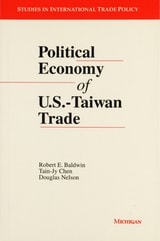
Political Economy of U.S. - Taiwan Trade
Robert Baldwin, Tain-Jy Chen, and Douglas Nelson, Editors
University of Michigan Press, 1995
Two key features of the remarkable economic growth in the newly industrializing countries of East Asia over the last quarter of a century are the role of exports of manufactured goods as the engine of this growth and the importance of the United States as a market for these exports. Political Economy of U.S.-Taiwan Trade analyzes the nature of the political and economic interactions, both domestic and international, which evolved between Taiwan and the United States in a manner that has enabled this growth to occur. In analyzing the various cooperative and conflicting trade policies pursued by the two countries over the last fifty years, the authors utilize a broad political economy framework. They first describe the nature and evolution of trade between Taiwan and the United States and discuss the major economic and political groups and institutions that shape trade policies in the two countries. In doing so, the role that trade has played both in Taiwan's development policies and in the international economic and political policies of the United States in the post-World War II period is analyzed. The various restrictions imposed by each country on the other's exports are examined, and the efforts to reduce these trade barriers are then discussed in detail. Particular attention is given to the series of bilateral negotiations in which the United States has used its dominant economic and political power to force Taiwan to open a number of its internal markets. The book will be of interest to both economists and political scientists specializing in international economics and international political relations. Area specialists focusing on the Far East will also find the book helpful. Robert E. Baldwin is Hilldale Professor of Economics, University of Wisconsin. Tain-Jy Chen is Research Fellow, Chung-Hua Institution for Economic Research. Douglas Nelson is Associate Professor of Economics, Tulane University. This title was formally part of the Studies in International Trade Policy Series, now called Studies in International Economics.
[more]
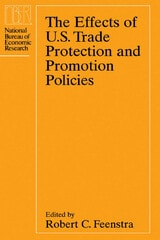
The Effects of U.S. Trade Protection and Promotion Policies
Edited by Robert C. Feenstra
University of Chicago Press, 1997
Economists disagree on whether recent U.S. trade policies are harmful or helpful, but they all agree that there is a new trend toward focusing on results-oriented policies in specific markets and with particular trading partners. These twelve essays by leading international economists explore crucial issues in U.S. trade policy today. Topics examined include the markets for automobile and automobile parts in the United States and Japan, the U.S. response to "unfair" trading practices such as dumping, and the effects of industry- and country-specific policies. Examples include high-technology and agricultural industries and off-shore assembly in U.S. border cities.
The volume concludes that some policies can act to both protect imports and promote exports, that the threat of protectionist policies can often have effects that are as pronounced as their implementation, and that regulatory policy has as great an impact on trade and investment patterns as does trade policy itself. It will be of crucial interest to international trade economists, policy specialists, and political scientists.
The volume concludes that some policies can act to both protect imports and promote exports, that the threat of protectionist policies can often have effects that are as pronounced as their implementation, and that regulatory policy has as great an impact on trade and investment patterns as does trade policy itself. It will be of crucial interest to international trade economists, policy specialists, and political scientists.
[more]
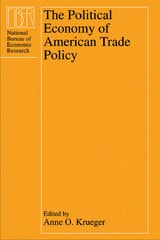
The Political Economy of American Trade Policy
Edited by Anne O. Krueger
University of Chicago Press, 1995
Exploring the political and economic determinants of trade protection, this study provides a wealth of information on key American industries and documents the process of seeking and conferring protection.
Eight analytical histories of the automobile, steel, semiconductor, lumber, wheat, and textile and apparel industries demonstrate that trade barriers rarely have unequivocal benefits and may be counterproductive. They show that criteria for awarding protection do not take into account the interests of consumers or other industries and that political influence and an organized lobby are major sources of protection.
Based on these findings, a final essay suggests that current policy fails to consider adequately economic efficiency, the public good, and indirect negative effects. This volume will interest scholars in economics, business, and public policy who deal with trade issues.
[more]
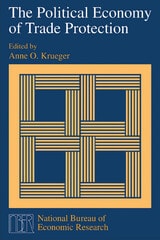
The Political Economy of Trade Protection
Edited by Anne O. Krueger
University of Chicago Press, 1995
This clear, concise summary of the in-depth analyses presented in The Political Economy of American Trade Policy examines the level, form, and evolution of American trade protection.
In case studies of trade barriers imposed during the 1980s to help the steel, semiconductor, automobile, lumber, wheat, and textile and apparel industries, the contributors trace the evolution of efforts to obtain protection, protectionist measures, and their results. A chapter assessing the common themes that emerge from the studies concludes that the focus of current trade law is exclusively on the individual protection-seeking industries, with little regard for indirect effects on using industries or for consumers. Reform could usefully take these effects into account.
This volume will interest policymakers, business executives, and anyone interested in trade policy formulation and practice.
[more]
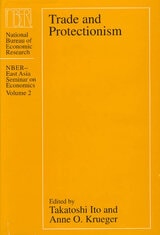
Trade and Protectionism
Edited by Takatoshi Ito and Anne O. Krueger
University of Chicago Press, 1993
During the first three decades following the Second World War, an increasingly open international trading system led to unprecedented economic growth throughout the world. But in recent years, that openness has been threatened by increased protectionism, regional trading arrangements—Europe 1992 and the U.S.-Canada Free Trade Agreement—and setbacks in negotiations on the General Agreement on Tariffs and Trade. In Trade and Protectionism, American and East Asian scholars consider the dangers of this trend for the world economy and especially for East Asian countries.
The authors look at the current global trading system and at the potential threats to East Asian economies from possible regional arrangements, such as separate trading blocks in the Western Hemisphere and Europe. They cover trade between the United States and Japan, Korea and Japan, and Japanese-East Asian trade policies; trade in agriculture and semiconductors and the frictions that have jeopardized this trade; and direct foreign investment. The contributors round out the work with discussions of the political economy of protection in Korea and Taiwan and political economy considerations as they affect trade policy in general.
This is the second volume of the National Bureau of Economic Research-East Asia Seminar on Economics. The first volume, The Political Economy of Tax Reform, also edited by Takatoshi Ito and Anne O. Krueger, addresses tax reform in the global economy.
[more]