Results by title
54 books match the query 'Psychiatry' and 6 start with a

A Desire for Women
Relational Psychoanalysis, Writing, and Relationships between WomenJuhasz, Suzanne
Rutgers University Press, 2003
Uniquely weaving together psychoanalytic, feminist, queer, and literary theory as well as memoir to examine the value and meaning of relationships between women, Juhasz explores the writings of adult daughters, mothers, and lovers to consider how language both traces and shapes the contours of experience. She emphasizes the initial bond between mother and infant as the bedrock of identity formation, a process involving love, recognition, desire, and language, and shows how that relationship serves as source and model for all future loves.
Juhasz's lucid prose unravels the meaningful yet overlooked intricacies of the relationships that inflect much of women's writing in the twentieth century.
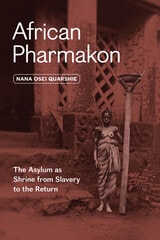
African Pharmakon
The Asylum as Shrine from Slavery to the ReturnNana Osei Quarshie
University of Chicago Press, 2025
For centuries, mental distress in West Africa has been subject to a mix of healing, harming, ritual, and regulation. In African Pharmakon, Nana Osei Quarshie questions conventional narratives about colonial psychiatry. Instead of displacing African therapeutic traditions, he argues, European psychiatric institutions in fact built upon them, adapting long-standing techniques of social control and healing.
With a focus on Ghana, Quarshie explores the shifting landscape of West African mental health practices, tracking their transformation from shrine-based rituals to colonial asylums and modern psychiatric institutions. Combining extensive archival research and ethnographic fieldwork, including the first scholarly examination of patient records from the Accra Psychiatric Hospital, Quarshie identifies five enduring techniques that have shaped the treatment of mental distress: spiritual pawning, logging, manhunting, mass expulsion, and pharmacotherapy.
Rejecting the simplistic opposition of Indigenous healing versus colonial oppression, African Pharmakon provides a nuanced account of how psychiatric care in Ghana became a tool of empowerment as well as exclusion. This pioneering study reframes our understanding of psychiatry and mental health governance in West Africa, past and present.

After Freud Left
A Century of Psychoanalysis in AmericaEdited by John Burnham
University of Chicago Press, 2012
From August 29 to September 21, 1909, Sigmund Freud visited the United States, where he gave five lectures at Clark University in Worcester, Massachusetts. This volume brings together a stunning gallery of leading historians of psychoanalysis and of American culture to consider the broad history of psychoanalysis in America and to reflect on what has happened to Freud’s legacy in the United States in the century since his visit.
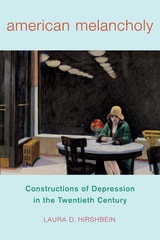
American Melancholy
Constructions of Depression in the Twentieth CenturyHirshbein, Laura D
Rutgers University Press, 2009
American Melancholy traces the growth of depression as an object of medical study and as a consumer commodity and illustrates how and why depression came to be such a huge medical, social, and cultural phenomenon. It is the first book to address gender issues in the construction of depression, explores key questions of how its diagnosis was developed, how it has been used, and how we should question its application in American society.

An Insight into an Insane Asylum
Joseph Camp
University of Alabama Press, 2011
A rare 19th‑century voice revealing what asylum life felt like from the inside.
In 1881, Joseph Camp, an elderly and self-trained Methodist minister from Talladega County in eastern Alabama, was brought by his family to Bryce Hospital, an insane asylum in Tuscaloosa, where he remained for over five months. Camp, misled by relatives concerning the purpose of the trip, was shocked and angered at his loss of freedom and his treatment in the hospital. After his release, he composed an account of his stay and published it at his own expense, providing a rare glimpse of 19th century mental health care from a patient’s viewpoint. Camp’s account reveals his naive trust in others, but also a sharp and retentive memory. Camp is remarkably accurate in his account of the details of his treatment and the operation and staff of the hospital, although his emotional assessments reflect his unhappiness with his situation. Adding to the importance of Camp’s account is the fact that in the 19th century Bryce was considered a remarkably humane institution focused on recovery. Camp provides a glimpse into how treatment for the insane felt to the recipient.
Aquamarine Blue 5
Personal Stories of College Students with AutismDawn Prince-Hughes
Ohio University Press, 2002
Rated Outstanding by the American Association of School Libraries
This is the first book to be written by autistic college students about the challenges they face. Aquamarine Blue 5 details the struggle of these highly sensitive students and shows that there are gifts specific to autistic students that enrich the university system, scholarship, and the world as a whole.
Dawn Prince-Hughes presents an array of writings by students who have been diagnosed with Asperger’s Syndrome or High-Functioning Autism, showing their unique ways of looking at and solving problems. In their own words, they portray how their divergent thinking skills could be put to great use if they were given an opportunity. Many such students never get the chance because the same sensitivity that gives them these insights makes the flicker of fluorescent lights and the sound of chalk on the board unbearable For simple—and easily remedied—reasons, we lose these students, who are as gifted as they are challenged.
Aquamarine Blue 5 is a showcase of the strength and resilient character of individuals with Asperger’s Syndrome. It will be an invaluable resource for those touched by this syndrome, their friends and families, and school administrators.