Results by title
8 books match the query 'Psychoanalysts'
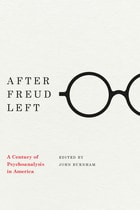
After Freud Left
A Century of Psychoanalysis in AmericaEdited by John Burnham
University of Chicago Press, 2012
From August 29 to September 21, 1909, Sigmund Freud visited the United States, where he gave five lectures at Clark University in Worcester, Massachusetts. This volume brings together a stunning gallery of leading historians of psychoanalysis and of American culture to consider the broad history of psychoanalysis in America and to reflect on what has happened to Freud’s legacy in the United States in the century since his visit.

Illusions of a Future
Psychoanalysis and the Biopolitics of DesireKate Schechter
Duke University Press, 2014
In the process, Schechter shows how deeply imbricated the analyst-patient relationship is in this effort. Since the mid-twentieth century, the "real" relationship between analyst and patient is no longer the unremarked background of analysis but its very site. Psychoanalysts seek to validate the centrality of this relationship with theory and, through codified "standards," to claim it as a privileged technique. It has become the means by which psychoanalysts, in seeking to protect their disciplinary autonomy, have unwittingly bound themselves to a neoliberal discourse of regulation.

Jelliffe
American Psychoanalyst and Physician and His Correspondence with Sigmund Freud and C. G. JungJohn C. Burnham
University of Chicago Press, 1983
Jelliffe's colorful and versatile career led him from botany and neurology (he was coauthor of a neurology text that remained standard for some forty years) to psychiatry, psychoanalysis (of which he was a founding father in the United States), and psychosomatic medicine (in which he also pioneered). Jelliffe also made outstanding contributions to medical journalism. With William Alanson White he founded the Psychoanalytic Review, and his work as editor of the Journal of Nervous and Mental Disease from 1902 to 1944 may have set a record for editorial longevity. Jelliffe was a charismatic speaker and teacher who in all his roles induced physicians and other thinkers to explore new ideas and ways of thinking.
Jelliffe's correspondence with Jung and Freud illuminates the personal and professional lives of the three men. The letters help to clarify concepts in both the Jungian and Freudian schools. The shifting emphasis of Jelliffe's relationships with the two masters of psychoanalysis—first when the two were colleagues, then for the greater span of time when they were rivals and adversaries—is revealing of Jenlliffe's own flexible views.
Jelliffe, furthermore, provides insights into the history of medicine and medical institutions and customs through Jelliffe's frank accounts of the developing medical profession in America. Jelliffe describes, for example, what it was like for a young M.D. to set up an economically viable practice in the 1890s. In addition, Burnham explores the problem of measuring the influence of a man like Jelliffe upon the history of ideas and institutions.

Love In A Time Of Hate
Hollander, Nancy Caro
Rutgers University Press, 1997
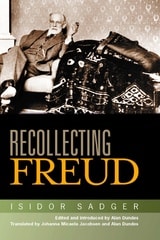
Recollecting Freud
Isidor Sadger; Edited and introduced by Alan Dundes; Translated by Johanna Micaela Jacobsen and Alan Dundes
University of Wisconsin Press, 2005
As a student, Sadger attended Freud's lectures from 1895 through 1904. Two years later Freud nominated Sadger to his Wednesday Psychological Society (later called the Viennese Psychoanalytic Society). Sadger, however, was not part of Freud's inner circle, but more a participant observer of the early years of the psychoanalytic movement and of Freud as teacher, therapist, and clinician.
Sadger was considered one of the most devoted followers of Freud and hoped to become one of Freud's "favorite sons." At the First Psychoanalytic Congress held in Salzburg in 1908, Sadger was chosen to be one of the principal speakers along with Freud, Jones, Alder, Jung, Prince, Rifkin, Abraham, and Stekel, an honor that bespeaks Sadger's early role in the movement. But Freud and many of his disciples were also openly critical of Sadger's work, calling it at various times overly simplistic, unimaginative, reductionist, orthodox, and rigid.
In 1930 Sadger published his memoir, Sigmund Freud: Persönliche Erinnerungen. With the rise of Nazism and World War II, the book became lost to the world of psychoanalytic history. Recently, Alan Dundes learned of its existence and mounted a search that led him around the world to one of the few extant copies—in a research library in Japan. The result of his fascinating quest is Recollecting Freud, a long-lost personal account that provides invaluable insights into Freud and his social, cultural, and intellectual context.
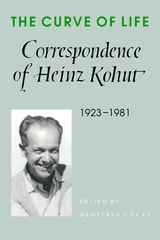
The Curve of Life
Correspondence of Heinz Kohut, 1923-1981Heinz Kohut
University of Chicago Press, 1994
The Curve of Life reveals Kohut's private and public life through a unique collection of lively and thoughtful correspondence with colleagues, public figures, family, and close friends. Over 300 never-before-published letters, drawn from Kohut's private files and from colleagues, cover Kohut's life from his native Austria in the 1930s until his death in 1981. Because many of his letters were so substantive, this rich collection clarifies Kohut's landmark published works. In letters to such diverse personalities as Anna Freud and Bruno Walter, Kohut meditated on some of the most intriguing psychoanalytic questions of the day—the nature of psychological cure, the relationship between doctor and patient, and the role of the Oedipus complex in psychoanalysis. The correspondence also reveals Kohut's lively interest in literature, music, history, and culture, as well as his deep and often contentious involvement in the politics of the psychoanalytic movement.
Kohut discussed his theories in letters to August Aichhorn, Heinz Hartmann, the Surgeon General, and even Jacqueline Kennedy, and the responses, some published here for the first time, prompted him to explore his ideas from a variety of perspectives. A letter from Anna Freud provoked Kohut to respond this way:
"What you had to say gave me great pleasure, and your approval was a welcome support amidst the inescapable insecurities under pressure to which we are all exposed. Strangely enough, it was not the discussion of scientific contributions and other statements that I had sent to you but the very last, parting sentence of your letter which gave me the most food for thought. You sent me your best wishes for the presidency of the American Psychoanalytic Association, and expressed the hope that '...this office permits opportunity for some revolutionary moves.'"
The Curve of Life illuminates the evolution of Kohut's theory of the psychology of the self, and provides a rare glimpse into the institutional and intellectual history of psychoanalysis in the last half of this century. These letters will fascinate not only scholars in psychoanalysis, but also those in the humanities, social sciences, and even theology, as well as general readers curious about the private thoughts of a towering figure in intellectual life.
The Repression of Psychoanalysis
Otto Fenichel and the Political FreudiansRussell Jacoby
University of Chicago Press, 1986

The Wounded Jung
Effects of Jung's Relationships on His Life and WorkRobert C. Smith
Northwestern University Press, 1997
Smith begins by exploring Jung's formative and transformative life experience, including his relationships with a deeply troubled mother and despairing father, with Sigmund Freud, and with the various women in his life. The relationships to his parents, in particular, have been remarkably unexplored by scholars. Smith then shows how these experiences shaped Jung's thoughts and writing -including his reassessment of religion as inner process - as well as his fascination with gnosticism and alchemy; the attention Jung gives to psychology as myth and the realization of selfhood; and his reinterpretation of evil as a process to be integrated into the proper sphere of human existence.
Smith's findings are based on the unprecedented number of primary sources to which he had access, including archival research, his own interviews with many of Jung's intimates, and personal correspondence with Jung himself, as well as on the synthesis of a wide range of recent scholarship on Jung. The culmination of many years of scholarship and reflection, this book should be read by anyone interested in spiritual healing or the connection between psychology and religion.