Results by title
7 books match the query 'Psychology and philosophy'
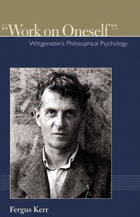
"Work on Oneself"
Wittgenstein's Philosophical Psychology (Institute for the Psychological Sciences Monograph Series, Volume 1)Fergus Kerr
Catholic University of America Press, 2008
[more]
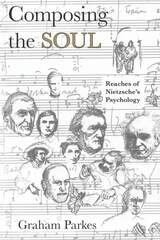
Composing the Soul
Reaches of Nietzsche's PsychologyGraham Parkes
University of Chicago Press, 1994
Nietzsche wrote in Ecce Homo (1888), "That a psychologist without equal speaks from my writings—this is perhaps the first insight gained by a good reader. . . . Who among the philosophers before me was in any way a psychologist? Before me there simply was no psychology."
Composing the Soul is the first study to pay sustained attention to this pronouncement and to examine the contours of Nietzsche's psychology in the context of his life and psychological makeup. Beginning with essays from Nietzsche's youth, Graham Parkes shows the influence of such figures as Goethe, Byron, and Emerson on Nietzsche's formidable and multiple talents. Parkes goes on to chart the development of Nietzsche's psychological ideas in terms of the imagery, drawn from the dialogues of Plato as well as from Nietzsche's own quasi-mystical experiences of nature, in which he spoke of the soul. Finally, Parkes analyzes Nietzsche's most revolutionary idea—that the soul is composed of multiple "drives," or "persons," within the psyche. The task for Nietzsche's psychology, then, was to identify and order these multiple persons within the individual—to compose the soul.
Featuring all new translations of quotations from Nietzsche's writings, Composing the Soul reveals the profundity of Nietzsche's lifelong personal and intellectual struggles to come to grips with the soul. Extremely well-written, this landmark work makes Nietzsche's life and ideas accessible to any reader interested in this much misunderstood thinker.
[more]
On the Psychotheology of Everyday Life
Reflections on Freud and RosenzweigEric L. Santner
University of Chicago Press, 2001
In On the Psychotheology of Everyday Life, Eric Santner puts Sigmund Freud in dialogue with his contemporary Franz Rosenzweig in the service of reimagining ethical and political life. By exploring the theological dimensions of Freud's writings and revealing unexpected psychoanalytic implications in the religious philosophy of Rosenzweig's masterwork, The Star of Redemption, Santner makes an original argument for understanding religions of revelation in therapeutic terms, and offers a penetrating look at how this understanding suggests fruitful ways of reconceiving political community.
Santner's crucial innovation in this new study is to bring the theological notion of revelation into a broadly psychoanalytic field, where it can be understood as a force that opens the self to everyday life and encourages accountability within the larger world. Revelation itself becomes redefined as an openness toward what is singular, enigmatic, even uncanny about the Other, whether neighbor or stranger, thereby linking a theory of drives and desire to a critical account of sociality. Santner illuminates what it means to be genuinely open to another human being or culture and to share and take responsibility for one's implication in the dilemmas of difference.
By bringing Freud and Rosenzweig together, Santner not only clarifies in new and surprising ways the profound connections between psychoanalysis and the Judeo-Christian tradition, he makes the resources of both available to contemporary efforts to rethink concepts of community and cross-cultural communication.
[more]
Pain, Pleasure, and the Greater Good
From the Panopticon to the Skinner Box and BeyondCathy Gere
University of Chicago Press, 2017
How should we weigh the costs and benefits of scientific research on humans? Is it right that a small group of people should suffer in order that a larger number can live better, healthier lives? Or is an individual truly sovereign, unable to be plotted as part of such a calculation?
These are questions that have bedeviled scientists, doctors, and ethicists for decades, and in Pain, Pleasure, and the Greater Good, Cathy Gere presents the gripping story of how we have addressed them over time. Today, we are horrified at the idea that a medical experiment could be performed on someone without consent. But, as Gere shows, that represents a relatively recent shift: for more than two centuries, from the birth of utilitarianism in the eighteenth century, the doctrine of the greater good held sway. If a researcher believed his work would benefit humanity, then inflicting pain, or even death, on unwitting or captive subjects was considered ethically acceptable. It was only in the wake of World War II, and the revelations of Nazi medical atrocities, that public and medical opinion began to change, culminating in the National Research Act of 1974, which mandated informed consent. Showing that utilitarianism is based in the idea that humans are motivated only by pain and pleasure, Gere cautions that that greater good thinking is on the upswing again today and that the lesson of history is in imminent danger of being lost.
Rooted in the experiences of real people, and with major consequences for how we think about ourselves and our rights, Pain, Pleasure, and the Greater Good is a dazzling, ambitious history.
[more]

Person and Psyche
Kenneth L. Schmitz
Catholic University of America Press, 2009
[more]
Philosophical psychology
psychology, emotions, and freedomCraig Steven Titus
Catholic University of America Press, 2009
[more]
Worldview and Mind
Religious Thought and Psychological DevelopmentEugene Webb
University of Missouri Press, 2009
When worldviews clash, the world reverberates. Now a distinguished scholar who has written widely on thinkers ranging from Samuel Beckett to Eric Voegelin inquires into the sources of religious conflict—and into ways of being religious that might diminish that conflict.
Worldview and Mind covers a wide range of thinkers and movements to explore the relation between religion and modernity in all its complexity. Eugene Webb invokes a number of topical issues, including religious terrorism, as he unfolds the phenomenon of religion in all its complications, from the difference between faith and belief to the diversities among—and within—religions.
Building on Karl Jaspers’s psychology of worldviews and Jean Piaget’s developmental psychology, Webb looks at a broad spectrum of religions—especially the history of Christianity, Judaism, and Islam in their various forms—to explore the subjective factors that sometimes render religions conflictual and aggressive and to consider conditions that might foster more helpful and reconciling forms of religiousness. He explores what psychological analysis reveals about the relationship between stages of psychological development and ways of being religious—ways that range from closed-minded literalism to open-minded tolerance. He also identifies unconscious and developmental obstacles to religious maturity and depicts the mature person as one who participates in the mystery of self-transcending love.
Webb argues that authentic religion need not succumb to dogmatism, or support fanaticism, or be consigned to the stages of immature culture. Responding to critics of religion, from Sigmund Freud to Daniel Dennett, he demonstrates that religious traditions have more spiritual depth than these critics have granted and a greater potential for development than they believe, along lines they might even favor. His insightful book proposes that, if religious people can step back from their traditions and consider them as partial ways of relating to transcendent ultimacy, the world’s religions might manage to develop a way of living together with mutual appreciation and respect.
[more]