Results by title
7 books match the query 'Psychology and religion'
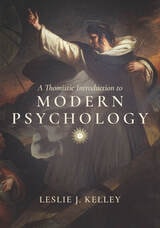
A Thomistic Introduction to Modern Psychology
Leslie Kelley
Catholic University of America Press, 2026

Armageddon in Waco
Critical Perspectives on the Branch Davidian ConflictEdited by Stuart A. Wright
University of Chicago Press, 1996
Could the tragedy have been prevented? Was it necesary for the BATF agents to do what they did? What could have been done differently? Armageddon in Waco offers the most detailed, wide-ranging analysis of events surrounding Waco. Leading scholars in sociology, history, law, and religion explore all facets of the confrontation in an attempt to understand one of the most confusing government actions in American history.
The book begins with the history of the Branch Davidians and the story of its leader, David Koresh. Chapters show how the Davidians came to trouble authorities, why the group was labeled a "cult," and how authorities used unsubstantiated allegations of child abuse to strengthen their case against the sect.
The media's role is examined next in essays that considering the effect on coverage of lack of time and resources, the orchestration of public relations by government officials, the restricted access to the site or to countervailing evidence, and the ideologies of the journalists themselves. Several contributors then explore the relation of violence to religion, comparing Waco to Jonestown.
Finally, the role played by "experts" and "consultants" in defining such conflicts is explored by two contributors who had active roles as scholarly experts during and after the siege The legal and consitutional implications of the government's actions are also analyzed in balanced, clearly written detail.
Neuroscience, Psychology, and Religion
Illusions, Delusions, and Realities about Human NatureMalcolm Jeeves
Templeton Press, 2009
Neuroscience, Psychology, and Religion is the second title published in the new Templeton Science and Religion Series. In this volume, Malcolm Jeeves and Warren S. Brown provide an overview of the relationship between neuroscience, psychology, and religion that is academically sophisticated, yet accessible to the general reader.
The authors introduce key terms; thoroughly chart the histories of both neuroscience and psychology, with a particular focus on how these disciplines have interfaced religion through the ages; and explore contemporary approaches to both fields, reviewing how current science/religion controversies are playing out today. Throughout, they cover issues like consciousness, morality, concepts of the soul, and theories of mind. Their examination of topics like brain imaging research, evolutionary psychology, and primate studies show how recent advances in these areas can blend harmoniously with religious belief, since they offer much to our understanding of humanity's place in the world. Jeeves and Brown conclude their comprehensive and inclusive survey by providing an interdisciplinary model for shaping the ongoing dialogue.
Sure to be of interest to both academics and curious intellectuals, Neuroscience, Psychology, and Religion addresses important age-old questions and demonstrates how modern scientific techniques can provide a much more nuanced range of potential answers to those questions.
On the Psychotheology of Everyday Life
Reflections on Freud and RosenzweigEric L. Santner
University of Chicago Press, 2001
Santner's crucial innovation in this new study is to bring the theological notion of revelation into a broadly psychoanalytic field, where it can be understood as a force that opens the self to everyday life and encourages accountability within the larger world. Revelation itself becomes redefined as an openness toward what is singular, enigmatic, even uncanny about the Other, whether neighbor or stranger, thereby linking a theory of drives and desire to a critical account of sociality. Santner illuminates what it means to be genuinely open to another human being or culture and to share and take responsibility for one's implication in the dilemmas of difference.
By bringing Freud and Rosenzweig together, Santner not only clarifies in new and surprising ways the profound connections between psychoanalysis and the Judeo-Christian tradition, he makes the resources of both available to contemporary efforts to rethink concepts of community and cross-cultural communication.
Psychological Science and Christian Faith
Insights and Enrichments from Constructive DialogueMalcolm A. Jeeves
Templeton Press, 2018
Because Christianity and psychology deal with different levels of truth and speak vastly different languages, efforts to unify them often create more problems than they solve. What is needed is a better way to think about the relationship—an approach that does justice to the emerging insights from psychological science and biblical scholarship and that can enrich our understanding of both. In this volume, two accomplished psychologists show how this complementary dialogue can unfold, giving us a broader, deeper understanding of ourselves, our relationships, and our place in the cosmos.
.
Spirit in Session
Working with Your Client’s Spirituality (and Your Own) in PsychotherapyRussell Siler Jones
Templeton Press, 2019
Spirituality is an important part of many clients’ lives. It can be a resource for stabilization, healing, and growth. It can also be the cause of struggle and even harm. More and more therapists—those who consider themselves spiritual and those who do not—recognize the value of addressing spirituality in therapy and increasing their skill for engaging it ethically and effectively.
In this immensely practical book, Russell Siler Jones helps therapists feel more competent and confident about having spiritual conversations with clients. With a refreshing, down-to-earth style, he describes how to recognize the diverse explicit and implicit ways spirituality can appear in psychotherapy, how to assess the impact spirituality is having on clients, how to make interventions to maximize its healthy impact and lessen its unhealthy impact, and how therapists can draw upon their own spirituality in ethical and skillful ways. He includes extended case studies and clinical dialogue so readers can hear how spirituality becomes part of case conceptualization and what spiritual conversation actually sounds like in psychotherapy.
Jones has been a therapist for nearly 30 years and has trained therapists in the use of spirituality for over a decade. He writes about a complex topic with an elegant simplicity and provides how-to advice in a way that encourages therapists to find their own way to apply it.
Spirit in Session is a pragmatic guide that therapists will turn to again and again as they engage their clients in one of the most meaningful and consequential dimensions of human experience.
Worldview and Mind
Religious Thought and Psychological DevelopmentEugene Webb
University of Missouri Press, 2009