Results by title
7 books match the query 'Public Discourse'
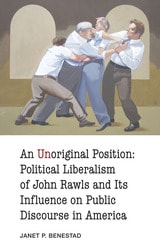
An Unoriginal Position
Political Liberalism of John Rawls and Its Influence on Public Discourse in AmericaJanet P. Benestad
St. Augustine's Press, 2026
Contesting Cultural Rhetorics
Public Discourse and Education, 1890-1900Margaret J. Marshall
University of Michigan Press, 1995
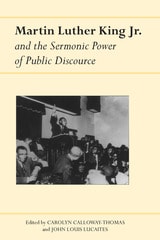
Martin Luther King Jr. and the Sermonic Power of Public Discourse
Carolyn Calloway-Thomas
University of Alabama Press, 1993
Critical studies of the prophetic voice that reshaped a nation.
Martin Luther King Jr. and the Sermonic Power of Public Discourse presents a rich and illuminating examination of Dr. King’s rhetorical mastery, revealing how his most iconic speeches and writings drew deeply from African American sermonic traditions to articulate a moral vision capable of transforming public consciousness. Through nine incisive essays, the volume explores how King’s oratory fused theology, ethics, metaphor, and call‑and‑response patterns to mobilize audiences and frame the civil rights movement as a universal moral struggle.
The collection focuses on five pivotal works—“Death of Evil on the Seashore,” “Letter from Birmingham Jail,” “I Have a Dream,” “A Time to Break Silence,” and “I’ve Been to the Mountaintop”—each analyzed for its rhetorical structure, historical context, and thematic force. These pieces span the full arc of King’s public career, illustrating not only his evolving political and theological commitments but also his sustained effort to envision and communicate a “beloved community” rooted in justice, equality, and human dignity.
In addition to unpacking King’s metaphoric language, ethical appeals, and theological grounding, several essays highlight the ways his rhetoric bridged diverse audiences and invited collective participation in social change. Scholars examine how King re‑constructed the rhetorical situation in “Letter from Birmingham Jail,” framed equality as a universal ideal, and used orality and performance to elevate “I Have a Dream” into one of the most resonant speeches in American history.
Far more than an anthology of commentary, this volume provides a nuanced, interdisciplinary understanding of King as a rhetorician whose discourse transcended political advocacy to become a powerful form of moral persuasion. It is an essential resource for readers interested in rhetoric, communication, civil rights history, and the enduring power of prophetic speech.
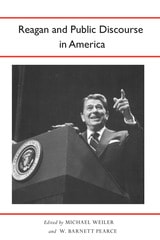
Reagan and Public Discourse in America
Michael Weiler
University of Alabama Press, 1992
The authors show that more than any president since John F. Kennedy, Reagan’s influence flowed from his rhetorical practices. And he is remembered as having reversed certain trends and cast the U.S. on a new course. The contributors to this insightful collection of essays show that Reagan’s rhetorical tactics were matters of primary concern to his administration’s chief political strategists.

Rhetorical Questions
Studies of Public DiscourseEdwin Black
University of Chicago Press, 1992
Locating rhetorical studies at the confluence of literature and politics, Black focuses on the ideological component of seemingly literary texts and the use of literary devices to advance political advocacy. The essays collected here range in subject matter from nineteenth-century oratory to New York Times editorials to the rhetoric of Richard Nixon. Unifying the collection are the concerns of secrecy and disclosure, identity, opposition, the scope of argument in public persuasion, and the historical mutability of rhetorical forms.
The Conundrum of Class
Public Discourse on the Social Order in AmericaMartin J. Burke
University of Chicago Press, 1995
Surveying American political, social, and intellectual life from the late 17th to the end of the 19th century, Burke examines in detail the contested discourse about equality—the way Americans thought and wrote about class, class relations, and their meaning in society.
Burke explores a remarkable range of thought to establish the boundaries of class and the language used to describe it in the works of leading political figures, social reformers, and moral philosophers. He traces a shift from class as a legal category of ranks and orders to socio-economic divisions based on occupations and income. Throughout the century, he finds no permanent consensus about the meaning of class in America and instead describes a culture of conflicting ideas and opinions.
Voices in the Wilderness
Public Discourse and the Paradox of Puritan RhetoricPatricia Roberts-Miller
University of Alabama Press, 1999
Both Jürgen Habermas and Wayne Booth—two of the most influential theorists in the domain of public discourse and good citizenry—argue for an inclusive public deliberation that involves people who are willing to listen to one another, to identify points of agreement and disagreement, and to make good faith attempts to validate any disputed claims. The Puritan voice crying in the wilderness, Roberts-Miller shows, does none of these things. To this individual of conscience engaged in a ceaseless battle of right and wrong against greedy philistines, all inclusion, mediation, and reciprocity are seen as evil, corrupting, and unnecessary. Hence, the voice in the wilderness does not in any real sense participate in public deliberation, only in public pronouncement.
Arguing that our culture’s continuing affection for the ethos of the voice crying in the wilderness is one of our more troubling inheritances from the early American ambivalence to public discourse—including the Puritan denigration of rhetoric—Roberts-Miller contends that the monologic discourse of the Puritans in fact contains within it arguments for dialogism. Thus, the history of rhetoric can provide much richer fields for reimagining discourse than heretofore credited. Roberts-Miller concludes by extending her findings into their practical applications for argumentation in the public sphere and in the composition classroom.