Results by title
4 books match the query 'Publication'
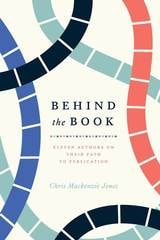
Behind the Book
Eleven Authors on Their Path to PublicationChris Mackenzie Jones
University of Chicago Press, 2018
Behind the Book explores how eleven contemporary first-time authors, in genres ranging from post-apocalyptic fiction to young adult fantasy to travel memoir, navigated these pathways with their debut works. Based on extensive interviews with the authors, it covers the process of writing and publishing a book from beginning to end, including idea generation, developing a process, building a support network, revising the manuscript, finding the right approach to publication, building awareness, and ultimately moving on to the next project. It also includes insights from editors, agents, publishers, and others who helped to bring these projects to life.
Unlike other books on writing craft, Behind the Book looks at the larger picture of how an author’s work and choices can affect the outcome of a project. The authors profiled in each story open up about their challenges, mistakes, and successes. While their paths to publication may be unique, together they offer important lessons that authors of all types can apply to their own writing journeys.
Common Knowledge (Inaugural issue marking return to publication), Volume 8
Jeffrey M. Perl, ed.
Duke University Press, 0
Described by the New York Times as one of two American journals in which public intellectuals and other scholars prefer to publish, the highly acclaimed Common Knowledge has returned to publication after a two-year hiatus. In an effort to place itself in the ferment of intellectual life and broaden its geographical range, the journal has moved to the Middle East, to Israel. Born in an attempt to moderate and get past the "culture wars" of the 90s, Common Knowledge has moved, literally, to a war zone, and accordingly its editorial interests have broadened to include culture wars of a less metaphorical kind.
Its mission is both incredibly ambitious and shockingly simple: to open up lines of communication between the academy and the community of thoughtful people outside its walls. Common Knowledge was created to form a new intellectual model, one based on conversation or cooperation rather than on metaphors adopted from sports and war, of "sides" that one must "take." The journal will collect work from a variety of fields and specialties, including philosophy, religion, psychology, literary criticism, cultural studies, art history, political science, and social, cultural, and intellectual history.
Scholars such as Richard Rorty, Bruno Latour, Clifford Geertz, Julia Kristeva, Karma Nabulsi, and J. G. A. Pocock will cross paths with political figures like Prince Hassan of Jordan and President Arpad Goncz of Hungary, novelists like Susan Sontag, poets like Yves Bonnefoy, composers like Alexander Goehr, and journalists like Adam Michnik. The pages of Common Knowledge are sure to challenge the ways we think about theory and its relevance to humanity. The first volume will feature the beginning of a Seriatim Symposium, “Disagreement, Enmity, and Dispute,” which will include discussions of the title concepts from a variety of theoretical perspectives. The Symposium asks why, in an intellectual context in which “true” and “real” are words that can be used only in condescending scare quotes, there is so much absolute conflict. If truth and reality are constructions, then why aren’t we constructing consensual orders (metaphysical and social) that are conducive to peace, calm, and cooperation?
Contributors for forthcoming issues include: Manfred Frank, Jacques Le Goff, Vicki Hearne, Sissela Bok, Edward Cardinal Cassidy, Linda Hutcheon, G. Thomas Tanselle, Arlette Farge, Marcel Detienne, Caryl Emerson, Stanley Katz, and Peter Laslett.
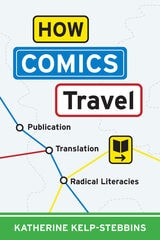
How Comics Travel
Publication, Translation, Radical LiteraciesKatherine Kelp-Stebbins
The Ohio State University Press, 2022
Honorable Mention, 2023 CSS Charles Hatfield Book Prize
In How Comics Travel: Publication, Translation, Radical Literacies, Katherine Kelp-Stebbins challenges the clichéd understanding of comics as a “universal” language, circulating without regard for cultures or borders. Instead, she develops a new methodology of reading for difference. Kelp-Stebbins’s anticolonial, feminist, and antiracist analytical framework engages with comics as sites of struggle over representation in a diverse world. Through comparative case studies of Metro, Tintin, Persepolis, and more, she explores the ways in which graphic narratives locate and dislocate readers in every phase of a transnational comic’s life cycle according to distinct visual, linguistic, and print cultures. How Comics Travel disengages from the constrictive pressures of nationalism and imperialism, both in comics studies and world literature studies more broadly, to offer a new vision of how comics depict and enact the world as a transcultural space.
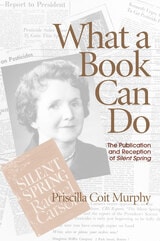
What a Book Can Do
The Publication and Reception of "Silent Spring"Priscilla Coit Murphy
University of Massachusetts Press, 2005
Murphy reviews the publishing history of the Houghton Mifflin edition and the prior New Yorker serialization, describing Carson's approach to her project as well as the views and expectations of her editors. She also documents the response of opponents to Carson's message, notably the powerful chemical industry, including efforts to undermine, delay, or stop publication altogether.
Murphy then investigates the media's role, showing that it went well beyond providing a forum for debate. In addition, she analyzes the perceptions and expectations of the public at large regarding the book, the debate, and the media. By probing all of these perspectives, Murphy sheds new light on the dynamic between newsmaking books, the media, and the public. In the process, she addresses a host of broader questions about the place of books in American culture, past, present, and future.