Results by title
4 books match the query 'Pulp literature, American'

1960s Gay Pulp Fiction
The Misplaced HeritageDrewey Wayne Gunn
University of Massachusetts Press, 2013
As a result of a series of court cases, by the mid-1960s the U.S. post office could no longer interdict books that contained homosexuality. Gay writers were eager to take advantage of this new freedom, but the only houses poised to capitalize on the outpouring of manuscripts were “adult” paperback publishers who marketed their products with salacious covers. Gay critics, unlike their lesbian counterparts, have for the most part declined to take these works seriously, even though they cover an enormous range of genres: adventures, blue-collar and gray-flannel novels, coming-out stories, detective fiction, gothic novels, historical romances, military stories, political novels, prison fiction, romances, satires, sports stories, and spy thrillers—with far more short story collections than is generally realized. Twelve scholars have now banded together to begin a recovery of this largely forgotten explosion of gay writing that occurred in the 1960s.
Descriptions of these pulps have often been inadequate and misinforming, the result of misleading covers, unrepresentative sampling of texts, and a political blindness that refuses to grant worth to pre-Stonewall writing. This volume charts the broader implications of this state of affairs before examining some of the more significant pulp writers from the period. It brings together a diverse range of scholars, methodologies, and reading strategies. The evidence that these essays amass clearly demonstrates the significance of gay pulps for gay literary history, queer cultural studies, and book history.
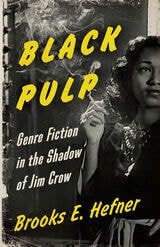
Black Pulp
Genre Fiction in the Shadow of Jim CrowBrooks E. Hefner
University of Minnesota Press, 2021
A deep dive into mid-century African American newspapers, exploring how Black pulp fiction reassembled genre formulas in the service of racial justice
In recent years, Jordan Peele’s Get Out, Marvel’s Black Panther, and HBO’s Watchmen have been lauded for the innovative ways they repurpose genre conventions to criticize white supremacy, celebrate Black resistance, and imagine a more racially just world—important progressive messages widely spread precisely because they are packaged in popular genres. But it turns out, such generic retooling for antiracist purposes is nothing new.
As Brooks E. Hefner’s Black Pulp shows, this tradition of antiracist genre revision begins even earlier than recent studies of Black superhero comics of the 1960s have revealed. Hefner traces it back to a phenomenon that began in the 1920s, to serialized (and sometimes syndicated) genre stories written by Black authors in Black newspapers with large circulations among middle- and working-class Black readers. From the pages of the Pittsburgh Courier and the Baltimore Afro-American, Hefner recovers a rich archive of African American genre fiction from the 1920s through the mid-1950s—spanning everything from romance, hero-adventure, and crime stories to westerns and science fiction. Reading these stories, Hefner explores how their authors deployed, critiqued, and reassembled genre formulas—and the pleasures they offer to readers—in the service of racial justice: to criticize Jim Crow segregation, racial capitalism, and the sexual exploitation of Black women; to imagine successful interracial romance and collective sociopolitical progress; and to cheer Black agency, even retributive violence in the face of white supremacy.
These popular stories differ significantly from contemporaneous, now-canonized African American protest novels that tend to represent Jim Crow America as a deterministic machine and its Black inhabitants as doomed victims. Widely consumed but since forgotten, these genre stories—and Hefner’s incisive analysis of them—offer a more vibrant understanding of African American literary history.
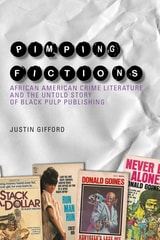
Pimping Fictions
African American Crime Literature and the Untold Story of Black Pulp PublishingJustin Gifford
Temple University Press, 2013
Gifford draws from an impressive array of archival materials to provide a first-of-its-kind literary and cultural history of this distinctive genre. He evaluates the artistic and symbolic representations of pimps, sex-workers, drug dealers, and political revolutionaries in African American crime literature-characters looking to escape the racial containment of prisons and the ghetto.
Gifford also explores the struggles of these black writers in the literary marketplace, from the era of white-owned publishing houses like Holloway House-that fed books and magazines like Players to eager black readers-to the contemporary crop of African American women writers reclaiming the genre as their own.

Robert E. Howard
The Life and Times of a Texas AuthorWillard P. Oliver
University of North Texas Press, 2025