Results by title
3 books match the query 'Punish'
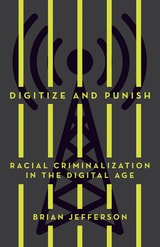
Digitize and Punish
Racial Criminalization in the Digital AgeBrian Jefferson
University of Minnesota Press, 2020
Tracing the rise of digital computing in policing and punishment and its harmful impact on criminalized communities of color
The U.S. Bureau of Justice Statistics estimates that law enforcement agencies have access to more than 100 million names stored in criminal history databases. In some cities, 80 percent of the black male population is registered in these databases. Digitize and Punish explores the long history of digital computing and criminal justice, revealing how big tech, computer scientists, university researchers, and state actors have digitized carceral governance over the past forty years—with devastating impact on poor communities of color.
Providing a comprehensive study of the use of digital technology in American criminal justice, Brian Jefferson shows how the technology has expanded the wars on crime and drugs, enabling our current state of mass incarceration and further entrenching the nation’s racialized policing and punishment. After examining how the criminal justice system conceptualized the benefits of computers to surveil criminalized populations, Jefferson focuses on New York City and Chicago to provide a grounded account of the deployment of digital computing in urban police departments.
By highlighting the intersection of policing and punishment with big data and web technology—resulting in the development of the criminal justice system’s latest tool, crime data centers—Digitize and Punish makes clear the extent to which digital technologies have transformed and intensified the nature of carceral power.

How to Read Foucault's Discipline and Punish
Stephen Shapiro and Anne Schwan
Pluto Press, 2011
Michel Foucault’s Discipline and Punish is one of the best-selling works of critical theory and a key text on many undergraduate courses. However, it is a long, difficult text which makes Anne Schwan and Stephen Shapiro's excellent step-by-step reading guide a welcome addition to the How to Read Theory series.
Undergraduates across a wide range of disciplines are expected to have a solid understanding of Foucault's key terms, which have become commonplace in critical thinking today. While there are many texts that survey Foucault's thought, these are often more general overviews or biographical précis that give little in the way of robust explanation and discussion. In contrast, Schwan and Shapiro take a plain-speaking, yet detailed, approach, specifically designed to give students a thorough understanding of one of the most influential texts in contemporary cultural theory.
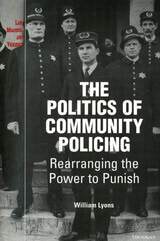
The Politics of Community Policing
Rearranging the Power to PunishWilliam Lyons
University of Michigan Press, 2002