Results by title
23 books match the query 'Punk'
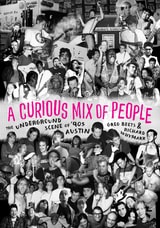
A Curious Mix of People
The Underground Scene of '90s AustinGreg Beets
University of Texas Press, 2023
A twisting path through Austin’s underground music scene in the twentieth century’s last decade, narrated by the people who were there.
It’s 1990 in Austin, Texas. The next decade will be a tipping point in the city's metamorphosis from sleepy college town to major city. Beneath the increasingly slick exterior, though, a group of like-minded contrarians were reimagining an underground music scene. Embracing a do-it-yourself ethos, record labels emerged to release local music, zines cheered and jeered acts beneath the radar of mainstream media outlets, and upstart clubs provided a home venue for new bands to build their sound.
This vibrant scene valued expression over erudition, from the razor-sharp songcraft of Spoon to the fuzzed-out poptones of Sixteen Deluxe, and blurred the boundaries between observer and participant. Evolving in tandem with the city’s emergence on the national stage via the film Slacker and the SXSW conference and festivals, Austin’s musical underground became a spiritual crucible for the uneasy balance between commercial success and cultural authenticity, a tension that still resonates today.
The first book about Austin underground music in the ’90s, A Curious Mix of People is an oral history that tells the story of this transformative decade through the eyes of the musicians, writers, DJs, club owners, record-store employees, and other key figures who were there.
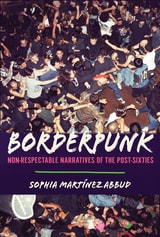
Borderpunk
Non-Respectable Narratives of the Post-SixtiesSophia Martínez Abbud
University of Arizona Press, 2027
The U.S.-Mexico border has long been a home to artists, poets, emos, and punks. In the clandestine undergrounds of borderlands cultural production, there lies an impulse to live below and beyond border surveillance technologies. This book is about the utopic stories that narrate this impulse and the punk literary scenes that facilitate these fabulations.
Using an innovative methodology of “scene-work”—a blend of literary analysis, queer theory, critical regionalism, and auto-ethnography—Borderpunk identifies, aggregates, and outlines the emergent genre of borderpunk cultural productions. Beginning with the post-1960s through the present, author Sophia Martínez Abbud examines how music, playlists, literature, art, and performance borderpunk narratives teach us to elide, undermine, and work against the border’s presumed authority. Through these narratives, readers become attuned to the anarchic sense of abjection that permeates the border regions and the kinds of punk subjectivities emerging from these sites of re-mediation.
Borderpunk offers scenes that refuse notions of respectability at different time periods, geographies, and scales. Following the mechanics of other narrative punk genres, such as cyberpunk or solarpunk, it sketches out the uses of “punk” as a way of being in border spaces—where abjection, relajo, and illegibility become useful tools that encourage us to divest from the norm, participate in horizontal community building, and imagine borders in radical new ways.
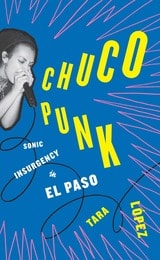
Chuco Punk
Sonic Insurgency in El PasoTara López
University of Texas Press, 2024
2025 Al Lowman Memorial Prize, Texas State Historical Association
An immersive study of the influential and predominantly Chicanx punk rock scene in El Paso, Texas.
Punk rock is known for its daring subversion, and so is the West Texas city of El Paso. In Chuco Punk, Tara López dives into the rebellious sonic history of the city, drawing on more than seventy interviews with punks, as well as unarchived flyers, photos, and other punk memorabilia. Connecting the scene to El Paso's own history as a borderland, a site of segregation, and a city with a long lineage of cultural and musical resistance, López throws readers into the heat of backyard punx shows, the chaos of riots in derelict mechanic shops, and the thrill of skateboarding on the roofs of local middle schools. She reveals how, in this predominantly Chicanx punk rock scene, women forged their own space, sound, and community. Covering the first roots of Chuco punk in the late 1970s through the early 2000s, López moves beyond the breakout bands to shed light on how the scene influenced not only the contours of sound and El Paso but the entire topography of punk rock.
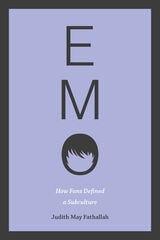
Emo
How Fans Defined a SubcultureJudith May Fathallah
University of Iowa Press, 2020
For many, the word “emo” calls to mind angsty teenagers, shaggy black haircuts, and skinny jeans. A popular music phenomenon in the early 2000s, emo is short for “emotional hardcore,” and refers to both a music genre and a youth scene notable for its androgynous style. Judith May Fathallah pushes beyond the stereotypes and social stigma to explore how online fandom has shaped the definition of emo, with significant implications both for millennial constructs of gender and for contemporary fan studies.
First laying out the debate over what emo is, Fathallah walks superfans and newcomers through the culture surrounding thegenre’s major bands, including the emo holy trinity: My Chemical Romance, Fall Out Boy, and Panic! At the Disco. Next she examines fans’ main mode of participation in the emo subculture—online communities such as LiveJournal, Tumblr, MySpace, and band websites. Taking a hard look at the gender politics that dominated those spaces, she unearths a subculture that simultaneously defines itself by its sensitivity and resistance to traditional forms of masculinity, yet ruthlessly enforces homophobic and sexist standards. Fathallah demonstrates fandom’s key role in defining emo as a concept and genre after 2001, with probing insight into its implications for gender constructions through popular music.
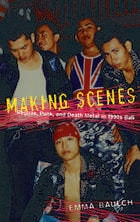
Making Scenes
Reggae, Punk, and Death Metal in 1990s BaliEmma Baulch
Duke University Press, 2007
Making Scenes is an exploration of the subtle politics of identity that took place within and among these scenes throughout the course of the 1990s. Participants in the different scenes often explained their interest in death metal, punk, or reggae in relation to broader ideas about what it meant to be Balinese, which reflected views about Bali’s tourism industry and the cultural dominance of Jakarta, Indonesia’s capital and largest city. Through dance, dress, claims to public spaces, and onstage performances, participants and enthusiasts reworked “Balinese-ness” by synthesizing global media, ideas of national belonging, and local identity politics. Making Scenes chronicles the creation of subcultures at a historical moment when media globalization and the gradual demise of the authoritarian Suharto regime coincided with revitalized, essentialist formulations of the Balinese self.
Music Is Power
Popular Songs, Social Justice, and the Will to ChangeBrad Schreiber
Rutgers University Press, 2024
Honorable Mention, Graphis 2021 Design Annual Competition
Popular music has long been a powerful force for social change. Protest songs have served as anthems regarding war, racism, sexism, ecological destruction, and so many other crucial issues.
Music Is Power takes us on a guided tour through the past one hundred years of politically conscious music, from Pete Seeger and Woody Guthrie to Green Day and NWA. Covering a wide variety of genres, including reggae, country, metal, psychedelia, rap, punk, folk, and soul, Brad Schreiber demonstrates how musicians can take a variety of approaches— angry rallying cries, mournful elegies to the victims of injustice, or even humorous mockeries of authority—to fight for a fairer world. While shining a spotlight on Phil Ochs, Gil Scott-Heron, the Dead Kennedys and other seminal, politicized artists, he also gives readers a new appreciation of classic acts such as Lesley Gore, James Brown, and Black Sabbath, who overcame limitations in their industry to create politically potent music
Music Is Power tells fascinating stories about the origins and the impact of dozens of world-changing songs, while revealing political context and the personal challenges of legendary artists from Bob Dylan to Bob Marley.
Supplemental material (Artist and Title List): https://d3tto5i5w9ogdd.cloudfront.net/wp-content/uploads/2020/07/24001955/Music_Is_Power_Supplementary_Artist_Title_List.doc
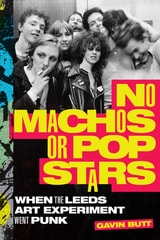
No Machos or Pop Stars
When the Leeds Art Experiment Went PunkGavin Butt
Duke University Press, 2022

PUNK! Las Américas Edition
Edited by Olga Rodríguez-Ulloa, Rodrigo Quijano, and Shane Greene
Intellect Books, 2022
This book interrogates the dominant vision of punk—particularly its white masculine protagonists and deep Anglocentrism—by analyzing punk as a critical lens into the disputed territories of “America,” a term that hides the heterogeneous struggles, global histories, hopes, and despairs of late twentieth- and early twenty-first-century experience. Compiling academic essays and punk paraphernalia (including interviews, zines, poetry, and visual segments) into a single volume, the book explores punk life through its multiple registers: vivid musical dialogues, excessive visual displays, and underground literary expression.
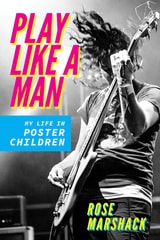
Play Like a Man
My Life in Poster ChildrenRose Marshack
University of Illinois Press, 2023
An inside look at a scene and a career, Play Like a Man is the evocative and humorous tale of one woman’s life in the trenches and online.
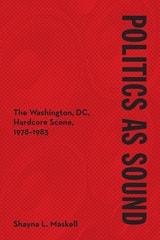
Politics as Sound
The Washington, DC, Hardcore Scene, 1978-1983Shayna L. Maskell
University of Illinois Press, 2021
A fascinating analysis of a punk rock hotbed, Politics as Sound tells the story of how a generation created music that produced--and resisted--politics and power.
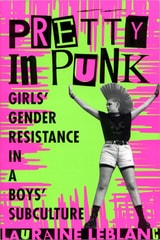
Pretty in Punk
Girl's Gender Resistance in a Boy's SubcultureLeblanc, Lauraine
Rutgers University Press, 1999
Pretty in Punk combines autobiography, interviews, and sophisticated analysis to create the first insider’s examination of the ways punk girls resist gender roles and create strong identities.
Why would an articulate, intelligent, thoughtful young women shave off most of her hair, dye the remainder green, shape it into a mohawk, and glue it onto her head? What attracts girls to male-dominated youth subcultures like the punk movement? What role does the subculture play in their perceptions of themselves, and in their self-esteem? How do girls reconcile a subcultural identity that is deliberately coded “masculine” with the demands of femininity?
Research has focused on the ways media and cultural messages victimize young women, but little attention has been paid to the ways they resist these messages. In Pretty in Punk, Lauraine Leblanc examines what happens when girls ignore these cultural messages, parody ideas of beauty, and refuse to play the games of teenage femininity. She explores the origins and development of the punk subculture, the processes by which girls decide to “go punk,” patterns of resistance to gender norms, and tactics girls use to deal with violence and harassment.
Pretty in Punk takes readers into the lives of girls living on the margins of contemporary culture. Drawing on interviews with 40 girls and women between the ages of 14-37, Leblanc examines the lives of her subjects, illuminating their forms of rebellion and survival. Pretty in Punk lets readers hear the voices of these women as they describe the ways their constructions of femininity—from black lipstick to slamdancing—allow them to reject damaging cultural messages and build strong identities. The price they pay for resisting femininity can be steep—girls tell of parental rejection, school expulsion, institutionalization, and harassment. Leblanc illuminates punk girls’ resistance to adversity, their triumphs over tough challenges, and their work to create individual identities in a masculine world.
Punk Identities, Punk Utopias
Global Punk and MediaEdited by Russ Bestley, Mike Dines, Matt Grimes, Paula Guerra
Intellect Books, 2021
Punk Identities, Punk Utopias unpacks punk and the factors that shape its increasingly complex and indefinable social, political, and economic setting. The third offering in Intellect’s Global Punk series, produced in collaboration with the Punk Scholars Network, this volume examines the broader social, political, and technological concerns that affect punk scenes around the world, from digital technology and new media to gender, ethnicity, identity, and representation.
Drawing on scholarship in cultural studies, musicology, and social sciences, this interdisciplinary collection will add to the academic discussion of contemporary popular culture, particularly in relation to punk and the critical understanding of transnational and cross-cultural dialogue.
Punk Now!!
Contemporary Perspectives on PunkEdited by Matt Grimes and Mike Dines
Intellect Books, 2020
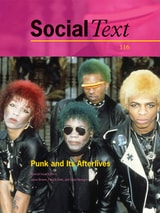
Punk and Its Afterlives, Volume 31
Jayna Brown, Patrick Deer, and Tavia Nyong'o, special issue editors
Duke University Press, 0
Jayna Brown is Associate Professor of Ethnic Studies at the University of California, Riverside. Patrick Deer is Associate Professor of English at New York University. Tavia Nyong’o is Associate Professor of Performance Studies at the Tisch School of the Arts at New York University.
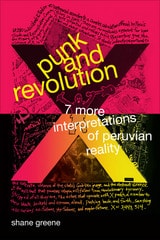
Punk and Revolution
Seven More Interpretations of Peruvian RealityShane Greene
Duke University Press, 2016
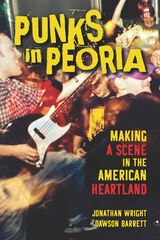
Punks in Peoria
Making a Scene in the American HeartlandJonathan Wright and Dawson Barrett
University of Illinois Press, 2021
Synonymous with American mediocrity, Peoria was fertile ground for the boredom- and anger-fueled fury of punk rock. Jonathan Wright and Dawson Barrett explore the do-it-yourself scene built by Peoria punks, performers, and scenesters in the 1980s and 1990s. From fanzines to indie record shops to renting the VFW hall for an all-ages show, Peoria's punk culture reflected the movement elsewhere, but the city's conservatism and industrial decline offered a richer-than-usual target environment for rebellion. Eyewitness accounts take readers into hangouts and long-lost venues, while interviews with the people who were there trace the ever-changing scene and varied fortunes of local legends like Caustic Defiance, Dollface, and Planes Mistaken for Stars. What emerges is a sympathetic portrait of a youth culture in search of entertainment but just as hungry for community—the shared sense of otherness that, even for one night only, could unite outsiders and discontents under the banner of music.
A raucous look at a small-city underground, Punks in Peoria takes readers off the beaten track to reveal the punk rock life as lived in Anytown, U.S.A.
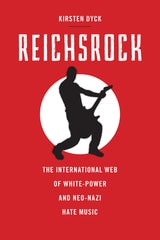
Reichsrock
The International Web of White-Power and Neo-Nazi Hate MusicDyck, Kirsten
Rutgers University Press, 2016
Revenge of the She-Punks
A Feminist Music History from Poly Styrene to Pussy RiotBy Vivien Goldman
University of Texas Press, 2019
As an industry insider and pioneering post-punk musician, Vivien Goldman’s perspective on music journalism is unusually well-rounded. In Revenge of the She-Punks, she probes four themes—identity, money, love, and protest—to explore what makes punk such a liberating art form for women.
With her visceral style, Goldman blends interviews, history, and her personal experience as one of Britain’s first female music writers in a book that reads like a vivid documentary of a genre defined by dismantling boundaries. A discussion of the Patti Smith song “Free Money,” for example, opens with Goldman on a shopping spree with Smith. Tamar-Kali, whose name pays homage to a Hindu goddess, describes the influence of her Gullah ancestors on her music, while the late Poly Styrene's daughter reflects on why her Somali-Scots-Irish mother wrote the 1978 punk anthem “Identity,” with the refrain “Identity is the crisis you can't see.” Other strands feature artists from farther afield (including in Colombia and Indonesia) and genre-busting revolutionaries such as Grace Jones, who wasn't exclusively punk but clearly influenced the movement while absorbing its liberating audacity. From punk's Euro origins to its international reach, this is an exhilarating world tour.

Rock 'n' Roll Movies
Sterritt, David
Rutgers University Press, 2018

Someday All the Adults Will Die!
The Birth of Texas PunkPat Blashill
University of Texas Press, 2025
A deep dive into the early days of punk in Austin, Texas, this oral history immerses readers in a diverse and influential music scene.
Texas has always teemed with music and counterculture. When punk came to the state in 1978, it flourished in San Antonio, Dallas, Houston, and, especially, Austin. Punk and post-punk musicians, including nationally acclaimed bands like the Butthole Surfers, the Big Boys, the Dicks, and Daniel Johnston influenced local culture before slashing into the American musical psyche. (See Kurt Cobain sporting Johnston’s “Hi, How are you?” T-shirt.) Someday All the Adults Will Die! is an oral history of punk in Texas, from its rise in the late 1970s, through its strong anti-racist, feminist, and queer peak, to its dissolution in the late 1980s.
Now a seasoned music journalist, Blashill experienced the zenith of Texas punk as a teenager, and he captures its intensity in words and pictures. Someday All the Adults Will Die! is rife with electrifying images and firsthand tales of what made this scene such a storm of pleasures and terrors, uncompromising artists, and wild performances. This dynamic portrait of an untamed, all-out musical era is a must-read for fans of punk music, counterculture, and live music.
Trans-Global Punk Scenes
The Punk Reader Volume 2Edited by Russ Bestley, Mike Dines, Alastair "Gords" Gordon, and Paula Guerra
Intellect Books, 2021
International in scope and analytical in perspective, the chapters offer insight into the dissemination of punk scenes and their form, structure, and contemporary cultural significance in New Zealand, Indonesia, Singapore, Ireland, South Africa, Mexico, the UK, the US, Siberia, and the Philippines.
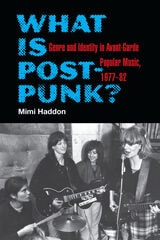
What Is Post-Punk?
Genre and Identity in Avant-Garde Popular Music, 1977-82Mimi Haddon
University of Michigan Press, 2020
Popular music in the US and UK during the late 1970s and early 1980s was wildly eclectic and experimental. “Post-punk,” as it was retroactively labeled, could include electro-pop melodies, distorted guitars, avant-garde industrial sounds, and reggae beats, and thus is not an easily definable musical category.
What Is Post-Punk? combines a close reading of the late-1970s music press discourse with musical analyses and theories of identity to unpack post-punk’s status as a genre. Mimi Haddon traces the discursive foundations of post-punk across publications such as Sounds, ZigZag, Melody Maker, the Village Voice, and NME, and presents case studies of bands including Wire, PiL, Joy Division, the Raincoats, and Pere Ubu. By positioning post-punk in relation to genres such as punk, new wave, dub, and disco, Haddon explores the boundaries of post-punk, and reveals it as a community of tastes and predilections rather than a stylistically unified whole. Haddon diversifies the discourse around post-punk, exploring both its gender and racial dynamics and its proto-industrial aesthetics to restore the historical complexity surrounding the genre’s terms and origins.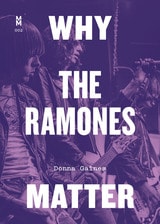
Why the Ramones Matter
By Donna Gaines
University of Texas Press, 2018
The central experience of the Ramones and their music is of being an outsider, an outcast, a person who’s somehow defective, and the revolt against shame and self-loathing. The fans, argues Donna Gaines, got it right away, from their own experience of alienation at home, at school, on the streets, and from themselves. This sense of estrangement and marginality permeates everything the Ramones still offer us as artists, and as people. Why the Ramones Matter compellingly makes the case that the Ramones gave us everything; they saved rock and roll, modeled DIY ethics, and addressed our deepest collective traumas, from the personal to the historical.