Results by title
13 books match the query 'Punk rock music'
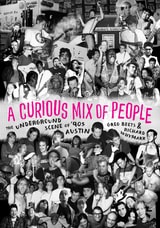
A Curious Mix of People
The Underground Scene of '90s AustinGreg Beets
University of Texas Press, 2023
A twisting path through Austin’s underground music scene in the twentieth century’s last decade, narrated by the people who were there.
It’s 1990 in Austin, Texas. The next decade will be a tipping point in the city's metamorphosis from sleepy college town to major city. Beneath the increasingly slick exterior, though, a group of like-minded contrarians were reimagining an underground music scene. Embracing a do-it-yourself ethos, record labels emerged to release local music, zines cheered and jeered acts beneath the radar of mainstream media outlets, and upstart clubs provided a home venue for new bands to build their sound.
This vibrant scene valued expression over erudition, from the razor-sharp songcraft of Spoon to the fuzzed-out poptones of Sixteen Deluxe, and blurred the boundaries between observer and participant. Evolving in tandem with the city’s emergence on the national stage via the film Slacker and the SXSW conference and festivals, Austin’s musical underground became a spiritual crucible for the uneasy balance between commercial success and cultural authenticity, a tension that still resonates today.
The first book about Austin underground music in the ’90s, A Curious Mix of People is an oral history that tells the story of this transformative decade through the eyes of the musicians, writers, DJs, club owners, record-store employees, and other key figures who were there.
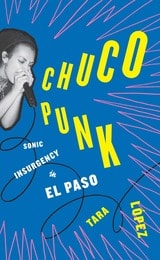
Chuco Punk
Sonic Insurgency in El PasoTara López
University of Texas Press, 2024
2025 Al Lowman Memorial Prize, Texas State Historical Association
An immersive study of the influential and predominantly Chicanx punk rock scene in El Paso, Texas.
Punk rock is known for its daring subversion, and so is the West Texas city of El Paso. In Chuco Punk, Tara López dives into the rebellious sonic history of the city, drawing on more than seventy interviews with punks, as well as unarchived flyers, photos, and other punk memorabilia. Connecting the scene to El Paso's own history as a borderland, a site of segregation, and a city with a long lineage of cultural and musical resistance, López throws readers into the heat of backyard punx shows, the chaos of riots in derelict mechanic shops, and the thrill of skateboarding on the roofs of local middle schools. She reveals how, in this predominantly Chicanx punk rock scene, women forged their own space, sound, and community. Covering the first roots of Chuco punk in the late 1970s through the early 2000s, López moves beyond the breakout bands to shed light on how the scene influenced not only the contours of sound and El Paso but the entire topography of punk rock.
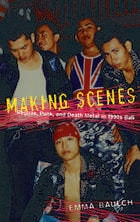
Making Scenes
Reggae, Punk, and Death Metal in 1990s BaliEmma Baulch
Duke University Press, 2007
Making Scenes is an exploration of the subtle politics of identity that took place within and among these scenes throughout the course of the 1990s. Participants in the different scenes often explained their interest in death metal, punk, or reggae in relation to broader ideas about what it meant to be Balinese, which reflected views about Bali’s tourism industry and the cultural dominance of Jakarta, Indonesia’s capital and largest city. Through dance, dress, claims to public spaces, and onstage performances, participants and enthusiasts reworked “Balinese-ness” by synthesizing global media, ideas of national belonging, and local identity politics. Making Scenes chronicles the creation of subcultures at a historical moment when media globalization and the gradual demise of the authoritarian Suharto regime coincided with revitalized, essentialist formulations of the Balinese self.
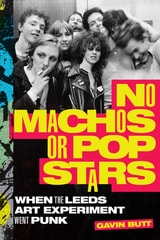
No Machos or Pop Stars
When the Leeds Art Experiment Went PunkGavin Butt
Duke University Press, 2022

Politics as Sound
The Washington, DC, Hardcore Scene, 1978-1983Shayna L. Maskell
University of Illinois Press, 2021
A fascinating analysis of a punk rock hotbed, Politics as Sound tells the story of how a generation created music that produced--and resisted--politics and power.
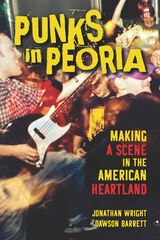
Punks in Peoria
Making a Scene in the American HeartlandJonathan Wright and Dawson Barrett
University of Illinois Press, 2021
Synonymous with American mediocrity, Peoria was fertile ground for the boredom- and anger-fueled fury of punk rock. Jonathan Wright and Dawson Barrett explore the do-it-yourself scene built by Peoria punks, performers, and scenesters in the 1980s and 1990s. From fanzines to indie record shops to renting the VFW hall for an all-ages show, Peoria's punk culture reflected the movement elsewhere, but the city's conservatism and industrial decline offered a richer-than-usual target environment for rebellion. Eyewitness accounts take readers into hangouts and long-lost venues, while interviews with the people who were there trace the ever-changing scene and varied fortunes of local legends like Caustic Defiance, Dollface, and Planes Mistaken for Stars. What emerges is a sympathetic portrait of a youth culture in search of entertainment but just as hungry for community—the shared sense of otherness that, even for one night only, could unite outsiders and discontents under the banner of music.
A raucous look at a small-city underground, Punks in Peoria takes readers off the beaten track to reveal the punk rock life as lived in Anytown, U.S.A.

Reichsrock
The International Web of White-Power and Neo-Nazi Hate MusicDyck, Kirsten
Rutgers University Press, 2016
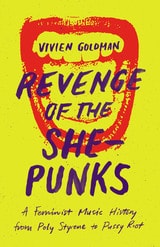
Revenge of the She-Punks
A Feminist Music History from Poly Styrene to Pussy RiotBy Vivien Goldman
University of Texas Press, 2019
As an industry insider and pioneering post-punk musician, Vivien Goldman’s perspective on music journalism is unusually well-rounded. In Revenge of the She-Punks, she probes four themes—identity, money, love, and protest—to explore what makes punk such a liberating art form for women.
With her visceral style, Goldman blends interviews, history, and her personal experience as one of Britain’s first female music writers in a book that reads like a vivid documentary of a genre defined by dismantling boundaries. A discussion of the Patti Smith song “Free Money,” for example, opens with Goldman on a shopping spree with Smith. Tamar-Kali, whose name pays homage to a Hindu goddess, describes the influence of her Gullah ancestors on her music, while the late Poly Styrene's daughter reflects on why her Somali-Scots-Irish mother wrote the 1978 punk anthem “Identity,” with the refrain “Identity is the crisis you can't see.” Other strands feature artists from farther afield (including in Colombia and Indonesia) and genre-busting revolutionaries such as Grace Jones, who wasn't exclusively punk but clearly influenced the movement while absorbing its liberating audacity. From punk's Euro origins to its international reach, this is an exhilarating world tour.

Some Wear Leather, Some Wear Lace
The Worldwide Compendium of Postpunk and Goth in the 1980sAndi Harriman and Marloes Bontje
Intellect Books, 2014
A book about the music, the individual, and the creativity of a worldwide community rather than theoretical definitions of a subculture, Some Wear Leather, Some Wear Lace considers a subject not often covered by academic books. Whether you were part of the scene or are just fascinated by different modes of expression, this book will transport you to another time and place.

Someday All the Adults Will Die!
The Birth of Texas PunkPat Blashill
University of Texas Press, 2025
A deep dive into the early days of punk in Austin, Texas, this oral history immerses readers in a diverse and influential music scene.
Texas has always teemed with music and counterculture. When punk came to the state in 1978, it flourished in San Antonio, Dallas, Houston, and, especially, Austin. Punk and post-punk musicians, including nationally acclaimed bands like the Butthole Surfers, the Big Boys, the Dicks, and Daniel Johnston influenced local culture before slashing into the American musical psyche. (See Kurt Cobain sporting Johnston’s “Hi, How are you?” T-shirt.) Someday All the Adults Will Die! is an oral history of punk in Texas, from its rise in the late 1970s, through its strong anti-racist, feminist, and queer peak, to its dissolution in the late 1980s.
Now a seasoned music journalist, Blashill experienced the zenith of Texas punk as a teenager, and he captures its intensity in words and pictures. Someday All the Adults Will Die! is rife with electrifying images and firsthand tales of what made this scene such a storm of pleasures and terrors, uncompromising artists, and wild performances. This dynamic portrait of an untamed, all-out musical era is a must-read for fans of punk music, counterculture, and live music.
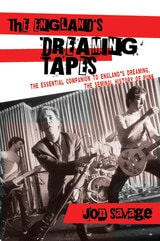
The England’s Dreaming Tapes
Jon Savage
University of Minnesota Press, 2010
Here is the story of a generation that changed the world in just a few months in 1976, as told by the scene's major figures: all four original Sex Pistols as well as Joe Strummer, Chrissie Hynde, Jordan, Siouxsie Sioux, Viv Albertine, Adam Ant, Lee Black Childers, Howard Devoto, Pete Shelley, Syl Sylvain, Debbie Wilson, Tony Wilson, Jah Wobble, and many others. Together, they offer a sweeping history of the late 1960s and the 1970s-not just the era's music, but also its radical politics, social issues, fashion, and culture.
An invaluable source of information about a movement that has become obscured by myth, these vivid, unvarnished interviews were conducted when punk was only a decade old. In many cases, this was the first time that the subjects had talked about the period. The interviews describe the founding of the Sex Pistols; 430 King's Road, site of the legendary boutique Sex, which helped establish the punk aesthetic; punk rock New York; the cultural landscapes of London and its suburbs; the writers who covered punk; and the Manchester music scene centered around Factory Records.
With The England's Dreaming Tapes, Savage gives us the first and final word on the music, fashion, and attitude that defined this influential and incendiary era.
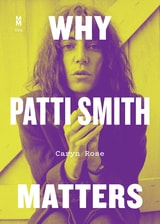
Why Patti Smith Matters
Caryn Rose
University of Texas Press, 2022
Patti Smith arrived in New York City at the end of the Age of Aquarius in search of work and purpose. What she found—what she fostered—was a cultural revolution. Through her poetry, her songs, her unapologetic vocal power, and her very presence as a woman fronting a rock band, she kicked open a door that countless others walked through. No other musician has better embodied the “nothing-to-hide” rawness of punk, nor has any other done more to nurture a place in society for misfits of every stripe.
Why Patti Smith Matters is the first book about the iconic artist written by a woman. The veteran music journalist Caryn Rose contextualizes Smith’s creative work, her influence, and her wide-ranging and still-evolving impact on rock and roll, visual art, and the written word. Rose goes deep into Smith’s oeuvre, from her first album, Horses, to acclaimed memoirs operating at a surprising remove from her music. The portrait of a ceaseless inventor, Why Patti Smith Matters rescues punk’s poet laureate from “strong woman” clichés. Of course Smith is strong. She is also a nuanced thinker. A maker of beautiful and challenging things. A transformative artist who has not simply entertained but also empowered millions.
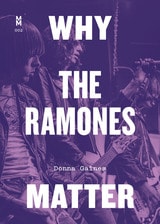
Why the Ramones Matter
By Donna Gaines
University of Texas Press, 2018
The central experience of the Ramones and their music is of being an outsider, an outcast, a person who’s somehow defective, and the revolt against shame and self-loathing. The fans, argues Donna Gaines, got it right away, from their own experience of alienation at home, at school, on the streets, and from themselves. This sense of estrangement and marginality permeates everything the Ramones still offer us as artists, and as people. Why the Ramones Matter compellingly makes the case that the Ramones gave us everything; they saved rock and roll, modeled DIY ethics, and addressed our deepest collective traumas, from the personal to the historical.