Results by title
6 books match the query 'Puppet theater'

Humor and Comedy in Puppetry
Celebration in Popular CultureUniversity of Wisconsin Press, 1987
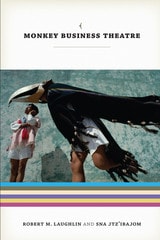
Monkey Business Theatre
By Robert M. Laughlin and Sna Jtz'ibajom
University of Texas Press, 2008
In 1983, a group of citizens in San Cristóbal de las Casas, Chiapas, formed Sna Jtz'ibajom, the Tzotzil-Tzeltal Maya writers' cooperative. In the two decades since, this group has evolved from writing and publishing bilingual booklets to writing and performing plays that have earned them national and international renown.
Anthropologist Robert M. Laughlin has been a part of the group since its beginnings, and he offers a unique perspective on its development as a Mayan cultural force. The Monkey Business Theatre, or Teatro Lo'il Maxil, as this branch of Sna Jtz'ibajom calls itself, has presented plays in virtually every corner of the state of Chiapas, as well as in Mexico City, Guatemala, Honduras, Canada, and in many museums and universities in the United States. It has presented to the world, for the first time in drama, a view of the culture of the Mayas of Chiapas.
In this work, Laughlin presents a translation of twelve of the plays created by Sna Jtz'ibajom, along with an introduction for each. Half of the plays are based on myths and half on the social, political, and economic problems that have confronted—and continue to confront—the Mayas of Chiapas.

One-Person Puppetry Streamlined and Simplified
With 38 Folk-Tale ScriptsYvonne Amar Frey
American Library Association, 2004
Puppet
An Essay on Uncanny LifeKenneth Gross
University of Chicago Press, 2011
The puppet creates delight and fear. It may evoke the innocent play of childhood, or become a tool of ritual magic, able to negotiate with ghosts and gods. Puppets can be creepy things, secretive, inanimate while also full of spirit, alive with gesture and voice. In this eloquent book, Kenneth Gross contemplates the fascination of these unsettling objects—objects that are also actors and images of life.
The poetry of the puppet is central here, whether in its blunt grotesquery or symbolic simplicity, and always in its talent for metamorphosis. On a meditative journey to seek the idiosyncratic shapes of puppets on stage, Gross looks at the anarchic Punch and Judy show, the sacred shadow theater of Bali, and experimental theaters in Europe and the United States, where puppets enact everything from Baroque opera and Shakespearean tragedy to Beckettian farce. Throughout, he interweaves accounts of the myriad faces of the puppet in literature—Collodi’s cruel, wooden Pinocchio, puppetlike characters in Kafka and Dickens, Rilke’s puppet-angels, the dark puppeteering of Philip Roth’s Micky Sabbath—as well as in the work of artists Joseph Cornell and Paul Klee. The puppet emerges here as a hungry creature, seducer and destroyer, demon and clown. It is a test of our experience of things, of the human and inhuman. A book about reseeing what we know, or what we think we know, Puppet evokes the startling power of puppets as mirrors of the uncanny in life and art.
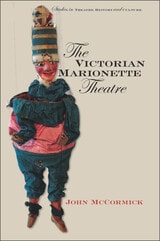
The Victorian Marionette Theatre
John Mccormick
University of Iowa Press, 2004
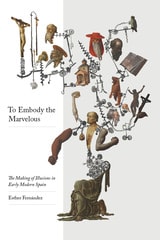
To Embody the Marvelous
The Making of Illusions in Early Modern SpainEsther Fernández
Vanderbilt University Press, 2021
Winner of the Nancy Staub Award, UNIMA-USA (Union Internationale de la Marionnette), 2023
In its exploration of puppetry and animation as the performative media of choice for mastering the art of illusion, To Embody the Marvelous engages with early modern notions of wonder in religious, artistic, and social contexts.
From jointed, wood-carved figures of Christ, saintly marionettes that performed hagiographical dramas, experimental puppets and automata in Cervantes' Don Quixote, and the mechanical sets around which playwright Calderón de la Barca devised secular magic shows to deconstruct superstitions, these historical and fictional artifacts reenvisioned religious, artistic, and social notions that led early modern society to critically wrestle with enchantment and disenchantment.
The use of animated performance objects in Spanish theatrical contexts during the sixteenth and seventeenth centuries became one of the most effective pedagogical means to engage with civil society. Regardless of social strata, readers and spectators alike were caught up in a paradigm shift wherein belief systems were increasingly governed by reason—even though the discursive primacy of supernatural doxa and Christian wonder remained firmly entrenched. Thanks to their potential for motion, religious and profane puppets, automata, and mechanical stage props deployed a rationalized sense of wonder that illustrates the relationship between faith and reason, reevaluates the boundaries of fiction in art and entertainment cultures, acknowledges the rise of science and technology, and questions normative authority.