Results by title
12 books match the query 'Quality'
A Quality of Loss
Mcinerny
St. Augustine's Press, 2025
The world in the 1970s was a cultural upheaval in many respects. This novel is a story of the deepest disruption but in the quietest and most hidden of places––namely, a monk living in isolation who is turned upside down by recent developments in the Catholic Church motivated by post-modern plans.
Brother Martin journals what he doesn't identify as confusion in D.Q. McInerny's debut novel that paints the portrait of a period in history that many are only now taking more seriously. What happened before the turn into the new millennium, and why are the effects of Vatican Council II more obvious and influential now than they were in the immediate wake of this council? The story of Brother Martin is a time capsule for many readers, but for others it is an insight into life that was stubbornly resistant to modern thinking in favor of the transcendent and eternal with respect to spirituality. McInerny shows through story-telling how much the institution was anything but a hinderance to the human soul and how much we may have lost by rejecting old forms on the sole basis of not having come up with them ourselves. This story is a generational bridge and reveals religious life in a truthful and still generous light.
A Question of Quality
Popularity and Value in Modern Creative WritingEdited by Louis Filler
University of Wisconsin Press, 1976
The subjects treated in this symposium have one major characteristic in common, that they have recently, or relatively recently, enjoyed high popularity among readers. Also, they have received from substantial to torrents of comment.
Clean Water, 2nd ed
An Introduction to Water Quality and Water Pollution ControlKenneth M. Vigil
Oregon State University Press, 2003
Most other books on water quality and pollution control are highly technical and very specific, and are aimed at engineers, scientists, or attorneys. Clean Water, on the other hand, is a comprehensive discussion of the subject intended for a wider audience of science students, educators, and the general public.
Vigil avoids the use of technical jargon and uses many photos and diagrams to illustrate and explain concepts. He provides sufficient detail to educate readers about many broad topics and includes additional references at the end of each chapter for exploring specific topics in more detail.
Clean Water summarizes the basic fundamentals of water chemistry and microbiology and outlines important water quality rules and regulations, all in concise, understandable prose. It describes the basic scientific principles behind water pollution control and the broader approach of addressing water pollution problems through watershed management. There are sections on drinking water and on citizen involvement in water pollution control efforts at home and in the community.

Quality Maintenance in Stored Grains and Seeds
Clyde M. Christensen and Richard A. Meronuck
University of Minnesota Press, 1986
Quality Maintenance in Stored Grains and Seeds was first published in 1986. Minnesota Archive Editions uses digital technology to make long-unavailable books once again accessible, and are published unaltered from the original University of Minnesota Press editions.
Storage molds are a major cause of quality loss in grains and seeds held in farm bins and tanks, in commercial elevators and warehouses, and in barge and ship transport. The damage done by these storage molds is at first invisible, but later shows up as caking, mustiness, total spoilage of part or all of the grain, and heating - sometimes to the temperature of ignition. The authors, both of whom have had extensive first-hand field and laboratory experience with these grain storage fungi and the problems they cause, summarize in readable and readily understandable form the basic principles and specific practices to be followed in order to minimize such losses.
Chapters are devoted to grain grades and quality; storage fungi; conditions that promote or prevent loss in quality; spoilage in barge and ship transport; mycotoxins (toxic compounds produced by fungi growing in grains and feeds) and mycotoxicoses (the diseases caused in animals that consume such toxic products); insects, mites, and storage fungi, quality control; and identification of storage fungi as an aid in evaluation of grain condition and storability.

The Color Line and the Quality of Life in America
Reynolds Farley
Russell Sage Foundation, 1987
The Quality of American Life
Perceptions, Evaluations, and SatisfactionsAngus Campbell
Russell Sage Foundation, 1976
The Quality of Divided Democracies
Minority Inclusion, Exclusion, and Representation in the New EuropeLicia Cianetti
University of Michigan Press, 2019
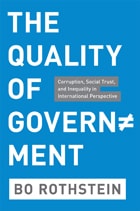
The Quality of Government
Corruption, Social Trust, and Inequality in International PerspectiveBo Rothstein
University of Chicago Press, 2011

The Quality of Home Runs
The Passion, Politics, and Language of Cuban BaseballThomas F. Carter
Duke University Press, 2008
As an avid baseball fan, Carter draws on his experiences listening to and participating in discussions of baseball in Cuba (particularly in Havana) and among Cubans living abroad to describe how baseball provides the ground for negotiations of national, masculine, and class identities wherever Cubans gather. He considers the elaborate spectacle of Cuban baseball as well as the relationship between the socialist state and the enormously popular sport. Carter provides a detailed history of baseball in Cuba, analyzing players, policies, rivalries, and fans, and he describes how the sport has forged connections (or reinforced divisions) between Cuba and other nations. Drawing on insights from cultural studies, political theory, and anthropology, he maintains that sport and other forms of play should be taken seriously as crucibles of social and cultural experience.
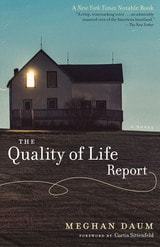
The Quality of Life Report
A NovelBy Meghan Daum, Foreword by Curtis Sittenfeld
University of Texas Press, 2017

The Quality of the Archaeological Record
Charles Perreault
University of Chicago Press, 2019
In The Quality of the Archaeological Record, Charles Perreault shows that archaeology not only faces a parallel problem, but may also find a model in the rise of paleobiology for a shift in the science and theory of the field. To get there, he proposes a more macroscale approach to making sense of the archaeological record, an approach that reveals patterns and processes not visible within the span of a human lifetime, but rather across an observation window thousands of years long and thousands of kilometers wide. Just as with the fossil record, the archaeological record has the scope necessary to detect macroscale cultural phenomena because it can provide samples that are large enough to cancel out the noise generated by micro-scale events. By recalibrating their research to the quality of the archaeological record and developing a true macroarchaeology program, Perreault argues, archaeologists can finally unleash the full contributive value of their discipline.
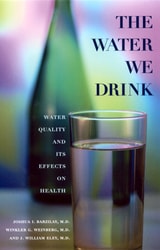
The Water We Drink
Water Quality and Its Effects on HealthJoshua I. Barzilay, M.D., Winkler G. Weinberg, M.D. and J.William Eley, M.D.
Rutgers University Press, 1999
We all drink water and water-based fluids, yet most of us take water for granted. We assume that when we turn on the tap to fill our glass, bathtub, or washing machine, clean water will flow. But is it really safe? And if it is not, what can we do about it? The doctors who have written The Water We Drink provide readers with practical information on the health issues relating to water quality and suggest ways we can improve the quality and safety of our drinking water.
Most of us do not realize that any small amount of contaminants found in drinking water may, over time, increase our susceptibility to many of the chronic illnesses that are becoming increasingly prevalent in our society as the population ages, illnesses such as Alzheimer’s disease and cancer. Contaminants have also been linked to increased rates of infertility.
TheWater We Drink begins with a review of the history of water, disease, and drinking water as it relates to disease and sanitation. The manner in which drinking water is currently regulated is described, along with information on water sources and treatment. The authors then examine health issues relating to drinking water, including infectious diseases, cancer risks, estrogens and fertility, and the effects of mineral and heavy metal content. They look at the benefits and risks of bottled waters and of water purification systems currently available to consumers.
The book also provides clear, understandable lists of contaminants levels in drinking water both regulated and unregulated by law, cancer causing contaminants of drinking water and their sources, and the mineral and sodium contents of commonly used bottled waters. A helpful glossary of terms, as well as a bibliography of additional agencies, books, and web sites to consult for more information on drinking water and health, are also provided.