Results by title
5 books match the query 'Questions about'
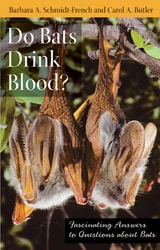
Do Bats Drink Blood?
Fascinating Answers to Questions about BatsSchmidt-French, Barbara A
Rutgers University Press, 2009
Highly beneficial animals, bats are critical to global ecological, economic, and public health. Do Bats Drink Blood? illuminates the role bats play in the ecosystem, their complex social behavior, and how they glide through the night sky using their acute hearing: echolocation skills that have helped in the development of navigational aids for the blind. Personal in voice with the perspective of a skilled bat researcher, this book explores wide-ranging topics as well as common questions people have about bats, providing a trove of fascinating facts.
Featuring rare color and black-and-white photographs, including some by renowned biologist, photographer, and author Merlin Tuttle, Do Bats Drink Blood? provides a comprehensive resource for general readers, students, teachers, zoo and museum enthusiasts, farmers and orchardists, or anyone who may encounter or be fascinated by these extraordinary animals.
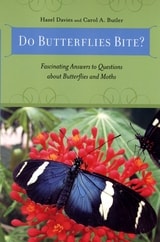
Do Butterflies Bite?
Fascinating Answers to Questions about Butterflies and MothsDavies, Hazel
Rutgers University Press, 2008
Every year, thousands of people visit butterfly conservatories to stand in quiet awe of the simple beauty displayed by these magical creatures. Hazel Davies and Carol A. Butler capture the sense of wonderment and curiosity experienced by adults and children alike in this book about butterflies and their taxonomic cousins, the moths and the skippers. Beautifully illustrated with color and black and white photographs, and drawings by renowned artist William Howe, this book is an essential resource for parents, teachers, students, or anyone who has ever been entranced by these fascinating, fluttering creatures.
Covering everything from their basic biology to their complex behaviors at every stage of life to issues in butterfly conservation, Davies and Butler explore wide-ranging topics and supply a trove of intriguing facts. You'll find tips on how to attract more butterflies to your garden, how to photograph them, and even how to raise them in your own home. Arranged in a question and answer format, the book provides detailed information written in an accessible style that brings to life the science and natural history of these insects. In addition, sidebars throughout the book detail an assortment of butterfly trivia, while extensive appendices direct you to organizations, web sites, and more than 200 indoor and outdoor public exhibits, where you can learn more or connect with other lepidopterophiles (butterfly lovers).
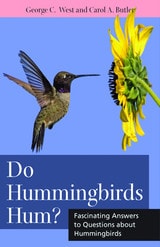
Do Hummingbirds Hum?
Fascinating Answers to Questions about HummingbirdsWest, George C
Rutgers University Press, 2010
These tiny, colorful birds have long fascinated birders, amateur naturalists, and gardeners. But, do they really hum?
In Do Hummingbirds Hum? George C. West, who has studied and banded over 13,500 hummingbirds in Arizona, and Carol A. Butler provide an overview of hummingbird biology for the general reader, and more detailed discussions of their morphology and behavior for those who want to fly beyond the basics. Enriched with beautiful and rare photography, including a section in vivid color, this engaging question and answer guide offers readers a wide range of information about these glorious pollinators as well as tips for attracting, photographing, and observing hummingbirds in the wild or in captivity.
Questions About Questions
Inquiries into the Cognitive Bases of SurveysJudith M. Tanur
Russell Sage Foundation, 1992
Why Do Bees Buzz?
Fascinating Answers to Questions about BeesElizabeth Capaldi Evans and Carol A. Butler
Rutgers University Press, 2010
Why Do Bees Buzz? reports on the mysterious "colony collapse disorder" that has affected honey bee populations, as well as other captivating topics, such as their complex, highly social lives, and how other species of bees are unique and different from honey bees. Organized in chapters that cover everything from these provocative pollinators' basic biology to the aggressive nature of killer bees, this insightful question and answer guide provides a honeycomb of compelling facts.
With clarity and depth, bee biologist Elizabeth Capaldi Evans and coauthor Carol A. Butler examine the lives of honey bees, as well as other species such as orchid bees, bumblebees, and stingless bees. Accessible to readers on every level, and including the latest research and theory for the more sophisticated reader, the authors reveal more than one hundred critical answers to questions about the lives of bees.
Concepts about speciation, evolutionary adaptation and pollination, as well as historical details about topics such as Mayan beekeeping and the appearance of bees in rock art, are arranged in easy-to-follow sidebars that highlight the text. Color and black and white photographs and drawings enhance the beauty and usefulness of Why Do Bees Buzz?