Results by title
2 books match the query 'Quiet Zone'

The Quiet Zone
Caribbean Expressive Cultures and the Feminist Aesthetics of DisturbancePetal Kimberly Samuel
Rutgers University Press, 2026
A serene beach. The classroom of an elite private school. The still nights in an upscale residential neighborhood. An acclaimed poet with a quiet, dignified mode of address. The sonic etiquette and experience of quiet is integral to each of these scenes. The Quiet Zone examines what the emergence of quiet as an elite aesthetic, privilege, and entitlement means for minoritized people who are often narrated as loud, disruptive, and disturbing, sonically, visually, and otherwise. Taking the Caribbean and its diasporas as its key sites of study, the book explores what we can learn from efforts to transform the region into the quintessential site of quiet leisure, in part, through the enactment of regimes of sonic discipline and surveillance directed against its majority Black population. Analyzing the work of Afro-Caribbean artists that catalog and critique sonic surveillance, the book questions the ways that quiet gets produced both as a regulatory ideal of racial, gender, sexual, national, and civilizational belonging and as a universal object of desire
[more]
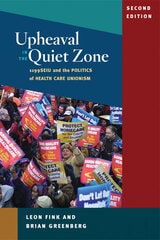
Upheaval in the Quiet Zone
1199/SEIU and the Politics of Healthcare UnionismLeon Fink and Brian Greenberg
University of Illinois Press, 2008
This expanded second edition of Upheaval in the Quiet Zone updates the dramatic story of an insurgent labor union that by the end of the 1980s had established itself as a vital force in the modern labor movement. But even bigger changes were on the way. Overcoming internal divisions that originated in its 1930s-inflected and civil rights-era militancy, 1199SEIU adopted a new strategy of labor-management cooperation to emerge as a key player in state and city politics. When SEIU president Andrew Stern laid plans in 2006 for a new national health care workers union that would simultaneously reach out to the unorganized and campaign for universal, national health insurance, he turned to 1199 president Dennis Rivera--and the 1199 political model--to lead the effort. With new material that updates the union's history since the 1990s, this book conveys the promise and problems of movement-building in the twenty-first century health care industry.
[more]