Results by title
2 books match the query 'Rabelais, François'
Advertising the Self in Renaissance France
Lemaire, Marot, and RabelaisScott Francis
University of Delaware Press, 2019
Published by University of Delaware Press. Distributed worldwide by Rutgers University Press.
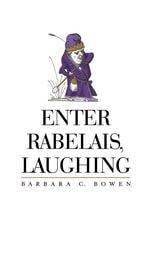
Enter Rabelais, Laughing
Barbara C. Bowen
Vanderbilt University Press, 1998
While most books about Rabelais have relatively little to say about his comedic genius, Enter Rabelais, Laughing analyzes the many sides of Rabelais's humor, focusing on why his writing was so hilariously funny to sixteenth-century readers. The author begins by discussing how the Renaissance defined laughter and situates Rabelais in a long tradition of literary laughter. Subsequent chapters examine specific contexts relevant to Gargantua and Pantagruel, beginning with the comic aspects of epic, chronicle, mock-epic, and farce, and proceeding to Renaissance and Reformation humanist satire, rhetoric, medicine, and law. All of these chapters combine information, much of it new, on the humanist message Rabelais wanted to convey to his readers, with an analysis of how he used his wit to reinforce his message.
Rarely is a writer's work treated in such illuminating detail. On a broad level, Enter Rabelais, Laughing serves as an excellent introduction to French Renaissance literature and exhibits a remarkably charming and lucid writing style, free of jargon. To Rabelais scholars in particular it offers a thorough and innovative analysis that corrects misconceptions and questions commonly held views.