Results by title

10 books match the query 'Race in art'

cover of Adrian Piper: Race, Gender, and Embodiment

Adrian Piper

Race, Gender, and Embodiment

John P. Bowles

Duke University Press, 2011

In 1972 the artist Adrian Piper began periodically dressing as a persona called the Mythic Being, striding the streets of New York in a mustache, Afro wig, and mirrored sunglasses with a cigar in the corner of her mouth. Her Mythic Being performances critically engaged with popular representations of race, gender, sexuality, and class; they challenged viewers to accept personal responsibility for xenophobia and discrimination and the conditions that allowed them to persist. Piper’s work confronts viewers and forces them to reconsider assumptions about the social construction of identity. Adrian Piper: Race, Gender, and Embodiment is an in-depth analysis of this pioneering artist’s work, illustrated with more than ninety images, including twenty-one in color.

Over the course of a decade, John P. Bowles and Piper conversed about her art and its meaning, reception, and relation to her scholarship on Kant’s philosophy. Drawing on those conversations, Bowles locates Piper’s work at the nexus of Conceptual and feminist art of the late 1960s and 1970s. Piper was the only African American woman associated with the Conceptual artists of the 1960s and one of only a few African Americans to participate in exhibitions of the nascent feminist art movement in the early 1970s. Bowles contends that Piper’s work is ultimately about our responsibility for the world in which we live.
[more]
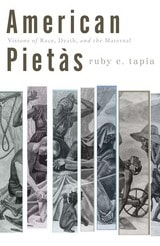
cover of American Pietàs: Visions of Race, Death, and the Maternal

American Pietàs

Visions of Race, Death, and the Maternal

Ruby C. Tapia

University of Minnesota Press, 2010

In American Pietàs, Ruby C. Tapia reveals how visual representations of racialized motherhood shape and reflect national citizenship. By means of a sustained engagement with Roland Barthes’s suturing of race, death, and the maternal in Camera Lucida, Tapia contends that the contradictory essence of the photograph is both as a signifier of death and a guarantor of resurrection.

Tapia explores the implications of this argument for racialized productions of death and the maternal in the context of specific cultural moments: the commemoration of Princess Diana in U.S. magazines; the intertext of Toni Morrison’s and Hollywood’s Beloved; the social and cultural death in teen pregnancy, imaged and regulated in California’s Partnership for Responsible Parenting campaigns; and popular constructions of the “Widows of 9/11” in print and televisual journalism.

Taken together, these various visual media texts function in American Pietàs as cultural artifacts and as visual nodes in a larger network of racialized productions of maternal bodies in contexts of national death and remembering. To engage this network is to ask how and toward what end the racial project of the nation imbues some maternal bodies with resurrecting power and leaves others for dead. In the spaces between these different maternities, says Tapia, U.S. citizen-subjects are born—and reborn.
[more]
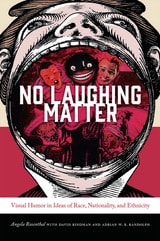
cover of No Laughing Matter: Visual Humor in Ideas of Race, Nationality, and Ethnicity

No Laughing Matter

Visual Humor in Ideas of Race, Nationality, and Ethnicity

Edited by Angela Rosenthal, David Bindman, and Adrian W. B. Randolph

Dartmouth College Press, 2015
In the wake of the Charlie Hebdo attacks, this collection—which gathers scholars in the fields of race, ethnicity, and humor—seems especially urgent. Inspired by Denmark’s Muhammad cartoons controversy, the contributors inquire into the role that racial and ethnic stereotypes play in visual humor and the thin line that separates broad characterization as a source of humor from its power to shock or exploit. The authors investigate the ways in which humor is used to demean or give identity to racial, national, or ethnic groups and explore how humor works differently in different media, such as cartoons, photographs, film, video, television, and physical performance. This is a timely and necessary study that will appeal to scholars across disciplines.
[more]
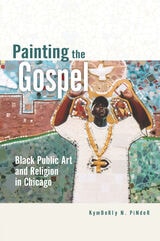
cover of Painting the Gospel: Black Public Art and Religion in Chicago

Painting the Gospel

Black Public Art and Religion in Chicago

Kymberly Pinder

University of Illinois Press, 2016

Innovative and lavishly illustrated, Painting the Gospel offers an indispensable contribution to conversations about African American art, theology, politics, and identity in Chicago. Kymberly N. Pinder escorts readers on an eye-opening odyssey to the murals, stained glass, and sculptures dotting the city's African American churches and neighborhoods. Moving from Chicago's oldest black Christ figure to contemporary religious street art, Pinder explores ideas like blackness in public, art for black communities, and the relationship of Afrocentric art to Black Liberation Theology. She also focuses attention on art excluded from scholarship due to racial or religious particularity. Throughout, she reflects on the myriad ways private black identities assert public and political goals through imagery.
 
Painting the Gospel includes maps and tour itineraries that allow readers to make conceptual, historical, and geographical connections among the works.

 
[more]
cover of Races of Mankind: The Sculptures of Malvina Hoffman

Races of Mankind

The Sculptures of Malvina Hoffman

Marianne Kinkel

University of Illinois Press, 2011

In 1930, Chicago's Field Museum of Natural History commissioned sculptor Malvina Hoffman to produce three-dimensional models of racial types for an anthropology display called The Races of Mankind. Marianne Kinkel’s cultural biography of the long-running exhibition measures how Hoffman’s ninety-one bronze and stone sculptures impacted perceptions of race in twentieth-century visual culture. Kinkel looks at how Hoffman's collaborations with curators and anthropologists transformed the commission from a traditional physical anthropology display into a fine art exhibit. She also tracks appearances of statuettes of the works in New York and Paris exhibitions and looks at how publishers used images of the sculptures to illustrate atlases, maps, and encyclopedias. The volume concludes with the dismantling of the exhibit in 1969 and the Field Museum’s redeployment of some of the sculptures in new educational settings.

A fascinating cultural history, Races of Mankind examines how we continually re-negotiate the veracity of race through collaborative processes involved in the production, display, and circulation of visual representations.
[more]
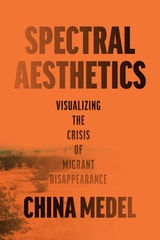
cover of Spectral Aesthetics: Visualizing the Crisis of Migrant Disappearance

Spectral Aesthetics

Visualizing the Crisis of Migrant Disappearance

China Medel

University of Texas Press, 2026

Analyzing how artists reimagine migrant disappearance and visibility at the US–Mexico border.

In the mid-1990s, the US government implemented Prevention through Deterrence, a major buildup of troops, walls, and surveillance around El Paso and San Diego. Cut off from these crucial urban crossings, migrants flowed into the dangerous surrounding deserts, where some ten thousand have since died. This is all according to plan: Pentagon documents describe the strategy of funneling migrants toward “mortal danger.”

In this bracing critique, China Medel explores the aesthetics enabling and resisting the crisis of migrant death. The nation-state’s performance of sovereignty along the border, predicated on mass casualties, is tolerated and even celebrated, thanks to the images in our heads of racialized and therefore criminal bodies, made invisible as they disintegrate in the baking sand. Spectral Aesthetics shows how state officials and mainstream media, relying on postracial ideologies and white-supremacist agendas, collectively foster this picture of a brown body so abject that it is disposable. In close readings of artworks contesting this murderous visual regime, Medel discovers an alternative kind of sight, one emphasizing the ghostly traces of the dead. These are images not of the individual “alien” but of life itself, indisposable.

[more]
cover of Teaching Race in the European Renaissance: A Classroom Guide

Teaching Race in the European Renaissance

A Classroom Guide

Edited by Anna Wainwright and Matthieu Chapman

Arizona Center for Medieval and Renaissance Studies, 2023

A multidisciplinary guide to classroom discussion of race in the European Renaissance.
 
Teaching Race in the European Renaissance: A Classroom Guide provides both educators and students the tools they need to discuss race in the European Renaissance both in its unique historical contexts and as part of a broader continuum with racial thinking today. The volume gathers scholars of the English, French, Italian, and Iberian Renaissances to provide exercises, lesson plans, methodologies, readings, and other resources designed to bring discussions of race into a broad spectrum of classes on the early modern period, from literature to art history to the history of science. This book is designed to help educators create more diverse and inclusive syllabi and curricula that engage and address a diverse, twenty-first-century student body composed of students from a growing variety of cultural, national, ethnic, and racial backgrounds. By providing clear, concise, and diverse methodologies and analytical focuses, Teaching Race in the European Renaissance: A Classroom Guide will help educators in all areas of Renaissance Studies overcome the anxiety and fear that can come with stepping outside of their expertise to engage with the topic of race, while also providing expert scholars of race in the Renaissance with new techniques and pedagogies to enhance the classroom experience of their students.
[more]
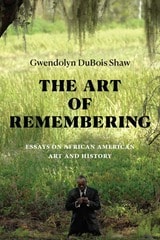
cover of The Art of Remembering: Essays on African American Art and History

The Art of Remembering

Essays on African American Art and History

Gwendolyn DuBois Shaw

Duke University Press, 2024

In The Art of Remembering art historian and curator Gwendolyn DuBois Shaw explores African American art and representation from the height of the British colonial period to the present. She engages in the process of "rememory"—the recovery of facts and narratives of African American creativity and self-representation that have been purposefully set aside, actively ignored, and disremembered. In analyses of the work of artists ranging from Scipio Moorhead, Moses Williams, and Aaron Douglas to Barbara Chase-Riboud, Kara Walker, Kehinde Wiley, and Deana Lawson, Shaw demonstrates that African American art and history may be remembered and understood anew through a process of intensive close looking, cultural and historical contextualization, and biographic recuperation or consideration. Shaw shows how embracing rememory expands the possibilities of history by acknowledging the existence of multiple forms of knowledge and ways of understanding an event or interpreting an object. In so doing, Shaw thinks beyond canonical interpretations of art and material and visual culture to imagine “what if,” asking what else did we once know that has been lost.
[more]
cover of The Human in Bits: Graphical Computers, Black Abstractions

The Human in Bits

Graphical Computers, Black Abstractions

Kris Cohen

Duke University Press, 2025

In The Human in Bits, Kris Cohen examines black abstractionist painting to demonstrate how race and computation are intimately entangled with the personal computer’s graphic user interface. He shows how the personal computer and the graphical field of its screen meant to transform the human by transforming what environments humans were to labor in. It also provided the means for whiteness to tie itself to notions of colorblind meritocracy. Cohen focuses on the post-1960s experiments of black abstractionists Alma Thomas, Jack Whitten, Charles Gaines, and Julie Mehretu, who developed a nonrepresentational approach to blackness that was oriented more toward constraint than human expression. From Gaines’s use of grids to Mehretu’s layering of paint, these artists—in their knowledge that black life had always been conflated with numbers and bits of information—flirted with repetition, systems, and formulas to test other ways of being human. By demonstrating how these artists bypassed the white fear that the human would become interchangeable with data, Cohen reframes modernism and modernist art to account for racialization in computational cultures.
[more]
cover of Travel & See: Black Diaspora Art Practices since the 1980s

Travel & See

Black Diaspora Art Practices since the 1980s

Kobena Mercer

Duke University Press, 2016

Over the years, Kobena Mercer has critically illuminated the visual innovations of African American and black British artists. In Travel & See he presents a diasporic model of criticism that gives close attention to aesthetic strategies while tracing the shifting political and cultural contexts in which black visual art circulates. In eighteen essays, which cover the period from 1992 to 2012 and discuss such leading artists as Isaac Julien, Renée Green, Kerry James Marshall, and Yinka Shonibare, Mercer provides nothing less than a counternarrative of global contemporary art that reveals how the “dialogical principle” of cross-cultural interaction not only has transformed commonplace perceptions of blackness today but challenges us to rethink the entangled history of modernism as well.
 
 
[more]