Results by title

3 books match the query 'Racial Inequality'
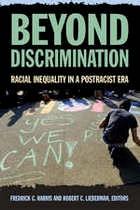
cover of Beyond Discrimination: Racial Inequality in a Post-Racist Era

Beyond Discrimination

Racial Inequality in a Post-Racist Era

Fredrick C. Harris

Russell Sage Foundation, 2013
Nearly a half century after the civil rights movement, racial inequality remains a defining feature of American life. Along a wide range of social and economic dimensions, African Americans consistently lag behind whites. This troubling divide has persisted even as many of the obvious barriers to equality, such as state-sanctioned segregation and overt racial hostility, have markedly declined. How then can we explain the stubborn persistence of racial inequality? In Beyond Discrimination: Racial Inequality in a Post-Racist Era, a diverse group of scholars provides a more precise understanding of when and how racial inequality can occur without its most common antecedents, prejudice and discrimination. Beyond Discrimination focuses on the often hidden political, economic and historical mechanisms that now sustain the black-white divide in America. The first set of chapters examines the historical legacies that have shaped contemporary race relations. Desmond King reviews the civil rights movement to pinpoint why racial inequality became an especially salient issue in American politics. He argues that while the civil rights protests led the federal government to enforce certain political rights, such as the right to vote, addressing racial inequities in housing, education, and income never became a national priority. The volume then considers the impact of racial attitudes in American society and institutions. Phillip Goff outlines promising new collaborations between police departments and social scientists that will improve the measurement of racial bias in policing. The book finally focuses on the structural processes that perpetuate racial inequality. Devin Fergus discusses an obscure set of tax and insurance policies that, without being overtly racially drawn, penalizes residents of minority neighborhoods and imposes an economic handicap on poor blacks and Latinos. Naa Oyo Kwate shows how apparently neutral and apolitical market forces concentrate fast food and alcohol advertising in minority urban neighborhoods to the detriment of the health of the community. As it addresses the most pressing arenas of racial inequality, from education and employment to criminal justice and health, Beyond Discrimination exposes the unequal consequences of the ordinary workings of American society. It offers promising pathways for future research on the growing complexity of race relations in the United States.
[more]
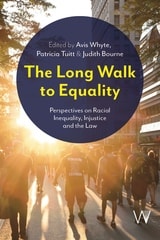
cover of The Long Walk to Equality: Perspectives on Racial Inequality, Injustice and the Law

The Long Walk to Equality

Perspectives on Racial Inequality, Injustice and the Law

Avis Whyte, Patricia Tuitt and Judith Bourne

University of Westminster Press, 2024
In 1965 the UK enacted the Race Relations Act while the International Convention on the Elimination of all Forms of Racial Discrimination (ICERD) opened for signature and ratification. In the US, the changes that brought down the walls of segregation, conveying some equality to black people essentially began with the Civil Rights Act of 1964. These ground-breaking instruments marked a commitment—domestically and internationally by the state parties to the ICERD—to address racial injustice and inequality through legal means.Yet, the intervening years reveal the challenges of pursuing racial justice and equality through the medium of law. In recent years, allegations of institutional racism have been levelled against numerous public institutions in the UK, while the rise of populism globally has challenged the ability of law to effect change.This edited collection draws attention to the need to reflect on the persistence of racial inequalities and injustices despite law’s intervention and arguably because of its ‘unconscious’ role in their promotion. It does so from a multiplicity of perspectives ranging from the doctrinal, socio-legal, critical and theoretical, thereby generating different kinds of knowledge about race and law. By exploring contemporary issues in racial justice and equality, contributors examine the role of law—whether domestic or international, hard or soft—in advancing racial equality and justice and consider whether it can effect substantive change.
[more]
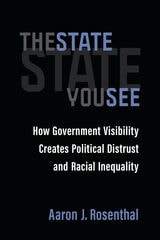
cover of The State You See: How Government Visibility Creates Political Distrust and Racial Inequality

The State You See

How Government Visibility Creates Political Distrust and Racial Inequality

Aaron J. Rosenthal

University of Michigan Press, 2023

The State You See uncovers a racial gap in the way the American government appears in people’s lives. It makes it clear that public policy changes over the last fifty years have driven all Americans to distrust the government that they see in their lives, even though Americans of different races are not seeing the same kind of government.

For white people, these policy changes have involved a rising number of generous benefits submerged within America’s tax code, which taken together cost the government more than Social Security and Medicare combined. Political attention focused on this has helped make welfare and taxes more visible representations of government for white Americans. As a result, white people are left with the misperception that government does nothing for them, apart from take their tax money to spend on welfare. Distrust of government is the result. For people of color, distrust is also rampant but for different reasons. Over the last fifty years, America has witnessed increasingly overbearing policing and swelling incarceration numbers. These changes have disproportionately impacted communities of color, helping to make the criminal legal system a unique visible manifestation of government in these communities.

While distrust of government emerges in both cases, these different roots lead to different consequences. White people are mobilized into politics by their distrust, feeling that they must speak up in order to reclaim their misspent tax dollars. In contrast, people of color are pushed away from government due to a belief that engaging in American elections will yield the same kind of unresponsiveness and violence that comes from interactions with the police. The result is a perpetuation of the same kind of racial inequality that has always been present in American democracy. The State You See is essential reading for anyone interested in understanding how the American government engages in subtle forms of discrimination and how it continues to uphold racial inequality in the present day.

[more]