Results by title
20 books match the query 'Racial Justice'

Be Not Afraid
A Southern Journey Through Law, Liberty, and Civil RightsJack Drake
University of Alabama Press, 2026
A civil rights attorney’s unflinching memoir about the fight against segregation and systemic racism through landmark legal battles in Alabama
Be Not Afraid: A Southern Journey Through Law, Liberty, and Civil Rights is a timely and unflinching memoir from civil rights attorney Jack Drake, who has spent decades on the front lines of Alabama’s legal battles for racial justice. Raised in a segregated community in Gardendale, Alabama, Drake came of age during the civil rights movement and became a pivotal figure in cases that reshaped the state’s legal and moral landscape.
Drake helped reform Alabama’s grossly inadequate mental health system and supported voting rights efforts throughout Alabama. His career underscores the crucial role private attorneys and grassroots advocates played in enforcing civil rights laws long after their passage.
Through vivid recollections of courtroom battles, civil rights alliances, and personal transformation, Be Not Afraid offers an intimate view into the persistence and courage required to challenge systemic injustice. At a time when debates over equity and democracy remain pressing, Drake’s story is both a powerful reflection on the past and a call to action for the present. It speaks to the enduring importance of legal advocacy and community solidarity in the fight for a more just society, making it essential reading for those engaged in civil rights history, law, or social change.
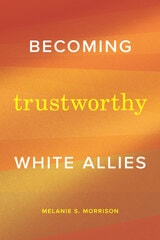
Becoming Trustworthy White Allies
Melanie S. Morrison
Duke University Press, 2025
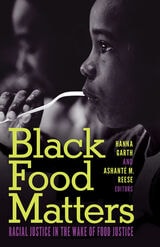
Black Food Matters
Racial Justice in the Wake of Food JusticeHanna Garth
University of Minnesota Press, 2020
An in-depth look at Black food and the challenges it faces today
For Black Americans, the food system is broken. When it comes to nutrition, Black consumers experience an unjust and inequitable distribution of resources. Black Food Matters examines these issues through in-depth essays that analyze how Blackness is contested through food, differing ideas of what makes our sustenance “healthy,” and Black individuals’ own beliefs about what their cuisine should be.
Primarily written by nonwhite scholars, and framed through a focus on Black agency instead of deprivation, the essays here showcase Black communities fighting for the survival of their food culture. The book takes readers into the real world of Black sustenance, examining animal husbandry practices in South Carolina, the work done by the Black Panthers to ensure food equality, and Black women who are pioneering urban agriculture. These essays also explore individual and community values, the influence of history, and the ongoing struggle to meet needs and affirm Black life.
A comprehensive look at Black food culture and the various forms of violence that threaten the future of this cuisine, Black Food Matters centers Blackness in a field that has too often framed Black issues through a white-centric lens, offering new ways to think about access, privilege, equity, and justice.
Contributors: Adam Bledsoe, U of Minnesota; Billy Hall; Analena Hope Hassberg, California State Polytechnic U, Pomona; Yuson Jung, Wayne State U; Kimberly Kasper, Rhodes College; Tyler McCreary, Florida State U; Andrew Newman, Wayne State U; Gillian Richards-Greaves, Coastal Carolina U; Monica M. White, U of Wisconsin–Madison; Brian Williams, Mississippi State U; Judith Williams, Florida International U; Psyche Williams-Forson, U of Maryland, College Park; Willie J. Wright, Rutgers U.
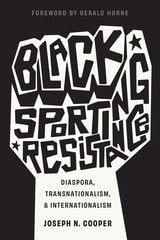
Black Sporting Resistance
Diaspora, Transnationalism, and InternationalismJoseph N. Cooper
Rutgers University Press, 2025
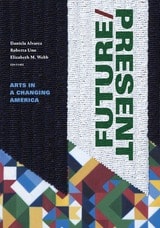
FUTURE/PRESENT
Arts in a Changing AmericaDaniela Alvarez, Roberta Uno, and Elizabeth M. Webb, editors
Duke University Press, 2024
Selected contributors. Dahlak Brathwaite, adrienne maree brown, Jeff Chang, Tameca Cole, Ofelia Esparza, Antoine Hunter, Nobuko Miyamoto, Wendy Red Star, Spel, Jose Antonio Vargas, Carrie Mae Weems, Hinaleimoana Kwai Kong Wong-Kalu
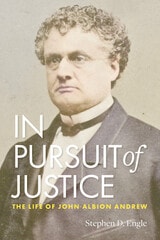
In Pursuit of Justice
The Life of John Albion AndrewStephen D. Engle
University of Massachusetts Press, 2023
Widely known as the “poor man’s lawyer” in antebellum Boston, John Albion Andrew (1818–1867) was involved in nearly every cause and case that advanced social and racial justice in Boston in the years preceding the Civil War. Inspired by the legacies of John Quincy Adams and Ralph Waldo Emerson, and mentored by Charles Sumner, Andrew devoted himself to the battle for equality. By day, he fought to protect those condemned to the death penalty, women seeking divorce, and fugitives ensnared by the Fugitive Slave Law. By night, he coordinated logistics and funding for the Underground Railroad as it ferried enslaved African Americans northward.
In this revealing and accessible biography, Stephen D. Engle traces Andrew’s life and legacy, giving this important, but largely forgotten, figure his due. Rising to national prominence during the Civil War years as the governor of Massachusetts, Andrew raised the African American regiment known as the Glorious 54th and rallied thousands of soldiers to the Union cause. Upon his sudden death in 1867, a correspondent for Harper’s Weekly wrote, “Not since the news came of Abraham Lincoln’s death were so many hearts truly smitten.”
Justice at Work
The Rise of Economic and Racial Justice Coalitions in CitiesMarc Doussard
University of Minnesota Press, 2022
A pathbreaking look at how progressive policy change for economic justice has swept U.S. cities
In the 2010s cities and counties across the United States witnessed long-overdue change as they engaged more than ever before with questions of social, economic, and racial justice. After decades of urban economic restructuring that intensified class divides and institutional and systemic racism, dozens of local governments countered the conventional wisdom that cities couldn’t address inequality—enacting progressive labor market policies, from $15 minimum wages to paid sick leave.
Justice at Work examines the mutually reinforcing roles of economic and racial justice organizing and policy entrepreneurship in building power and support for policy changes. Bridging urban social movement and urban politics studies, it demonstrates how economic and racial justice coalitions are collectively the critical institution underpinning progressive change. It also shows that urban policy change is driven by “urban policy entrepreneurs” who use public space and the intangible resources of the city to open “agenda windows” for progressive policy proposals incubated through national networks.
Through case studies of organizing and policy change efforts in cities including Chicago, Seattle, and New Orleans around minimum wages, targeted hiring, paid time off, fair scheduling, and anti-austerity, Marc Doussard and Greg Schrock show that the contemporary wave of successful progressive organizing efforts is likely to endure. Yet they caution that success is dependent on skillful organizing that builds and sustains power at the grassroots—and skillful policy work inside City Hall. By promoting justice at—and increasingly beyond—work, these movements hold the potential to unlock a new model for inclusive economic development in cities.
Literacy and Racial Justice
The Politics of Learning after Brown v. Board of EducationCatherine Prendergast. Foreword by Gloria Ladson-Billings
Southern Illinois University Press, 2003
In anticipation of the fiftieth anniversary of the landmark Brown v. Board of Education decision, Catherine Prendergast draws on a combination of insights from legal studies and literacy studies to interrogate contemporary multicultural literacy initiatives, thus providing a sound historical basis that informs current debates over affirmative action, school vouchers, reparations, and high-stakes standardized testing.
As a result of Brown and subsequent crucial civil rights court cases, literacy and racial justice are firmly enmeshed in the American imagination—so much so that it is difficult to discuss one without referencing the other. Breaking with the accepted wisdom that the Brown decision was an unambiguous victory for the betterment of race relations, Literacy and Racial Justice: The Politics of Learning after Brown v. Board of Education finds that the ruling reinforced traditional conceptions of literacy as primarily white property to be controlled and disseminated by an empowered majority. Prendergast examines civil rights era Supreme Court rulings and immigration cases spanning a century of racial injustice to challenge the myth of assimilation through literacy. Advancing from Ways with Words, Shirley Brice Heath’s landmark study of desegregated communities, Prendergast argues that it is a shared understanding of literacy as white property which continues to impact problematic classroom dynamics and education practices.
To offer a positive model for reimagining literacy instruction that is truly in the service of racial justice, Prendergast presents a naturalistic study of an alternative public secondary school. Outlining new directions and priorities for inclusive literacy scholarship in America, Literacy and Racial Justice concludes that a literate citizen is one who can engage rather than overlook longstanding legacies of racial strife.
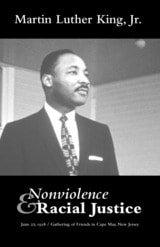
Nonviolence and Racial Justice
Martin Luther King
QuakerPress, 1958
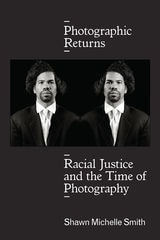
Photographic Returns
Racial Justice and the Time of PhotographyShawn Michelle Smith
Duke University Press, 2020

Progressive Women in Conservative Times
Racial Justice, Peace, and FeminismSusan Lynn
Rutgers University Press, 1992
Susan Lynn explores women's progressive social reform efforts in the 1940s and 1950s, an era when women activists promoted a postwar vision of a society based on an expanded welfare state, a powerful labor movement, a strong tradition of civil liberties, racial equality, and a peaceful international order. Lynn focuses on two organizations, the YWCA and the American Friends Service Committee, to explore this agenda.
Race and Environmental Justice in the Era of Climate Change and COVID-19
Tatiana Konrad
Michigan State University Press, 2025
Some White Folks
The Interracial Politics of Sympathy, Suffering, and SolidarityJennifer Chudy
University of Chicago Press, 2024
A pioneering exploration of the unexamined roots and effect of racial sympathy within American politics.
There is racial inequality in America, and some people are distressed over it while others are not. This is a book about white people who feel that distress. For decades, political scientists have studied the effects of white racial prejudice, but Jennifer Chudy shows that white racial sympathy for Black Americans’ suffering is also a potent force in modern American politics. Grounded in the history of Black-white relations in America, racial sympathy is unique. It is not equivalent to a low level of racial prejudice or sympathy for other marginalized groups. Some White Folks reveals how racial sympathy shapes a significant number of white Americans’ opinions on policy areas ranging from the social welfare state to the criminal justice system. Under certain circumstances, it can also spur action—although effects on political behavior are weaker and less consistent, for reasons Chudy examines.
Drawing on diverse quantitative and qualitative evidence and integrating insights from multiple disciplines, Chudy explores the origins, importance, and complexity of racial sympathy, as well as the practical implications for political and movement leaders. A companion to the rich literature on prejudice, Some White Folks demonstrates the multifaceted role of race in American politics and public opinion.
The Long Walk to Equality
Perspectives on Racial Inequality, Injustice and the LawAvis Whyte, Patricia Tuitt and Judith Bourne
University of Westminster Press, 2024
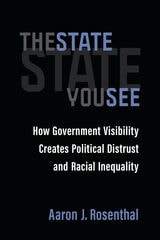
The State You See
How Government Visibility Creates Political Distrust and Racial InequalityAaron J. Rosenthal
University of Michigan Press, 2023
The State You See uncovers a racial gap in the way the American government appears in people’s lives. It makes it clear that public policy changes over the last fifty years have driven all Americans to distrust the government that they see in their lives, even though Americans of different races are not seeing the same kind of government.
For white people, these policy changes have involved a rising number of generous benefits submerged within America’s tax code, which taken together cost the government more than Social Security and Medicare combined. Political attention focused on this has helped make welfare and taxes more visible representations of government for white Americans. As a result, white people are left with the misperception that government does nothing for them, apart from take their tax money to spend on welfare. Distrust of government is the result. For people of color, distrust is also rampant but for different reasons. Over the last fifty years, America has witnessed increasingly overbearing policing and swelling incarceration numbers. These changes have disproportionately impacted communities of color, helping to make the criminal legal system a unique visible manifestation of government in these communities.
While distrust of government emerges in both cases, these different roots lead to different consequences. White people are mobilized into politics by their distrust, feeling that they must speak up in order to reclaim their misspent tax dollars. In contrast, people of color are pushed away from government due to a belief that engaging in American elections will yield the same kind of unresponsiveness and violence that comes from interactions with the police. The result is a perpetuation of the same kind of racial inequality that has always been present in American democracy. The State You See is essential reading for anyone interested in understanding how the American government engages in subtle forms of discrimination and how it continues to uphold racial inequality in the present day.
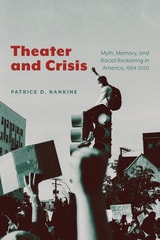
Theater and Crisis
Myth, Memory, and Racial Reckoning in America, 1964-2020Patrice D. Rankine
Lever Press, 2024
Rather than approaching the problem of racial reckoning through history, where periodization and progress are dominant narratives, Theater and Crisis argues that myth and memory allow for better theorization about recurring events from the past, their haunting, and what these apparent ghosts ask of us. Building on the study of myth as active, processual storytelling, Rankine acknowledges that it grounds and orients groups toward significant events. Theater and Crisis aligns narratives about Emmett Till, Trayvon Martin, and George Floyd, among others, with ancient, mythic figures such as Christ, Dionysus, Oedipus, and Moses. As living and verbal visitations, these stories performed on stage encode the past through their epiphanies in the present, urging audiences toward shared meaning.
Rankine traces the cyclical hauntings of race through the refiguring of mythic stories across the past 75 years in the plays of James Baldwin, Ntozake Shange, Antoinette Nwandu, and many more, and in response to flashpoints in US racial history, such as the 1955 lynching of Emmett Till, the upheavals of the 1960s and 1970s, the wars on drugs and crime, and the continued violence against and disenfranchisement of Black people into the twenty-first century. Theater and Crisis explores the appearance of myth on the American stage and showcases the ongoing response by the theatrical establishment to transform the stage into a space for racial reckoning. This timely book is essential reading for scholars of theater studies, classics, and American studies.
Trafficking in Antiblackness
Modern-Day Slavery, White Indemnity, and Racial JusticeLyndsey P. Beutin
Duke University Press, 2023
Truth Be Told
White Nostalgia and Antiracist Queer Resistance in “Post-Truth” AmericaLaura Elliot Tetreault
The Ohio State University Press, 2025
Taking a critical disinformation studies approach, Tetreault analyzes post-truth political messaging in the US after 2016. Using racial rhetorical criticism combined with a queer lens, they focus on how contemporary antiracist, queer, and feminist activists used various forms of cultural production to work against disinformation and its circulation, enacting refusal and insisting on the validity of their own knowledges as a form of community care. Tetreault ultimately argues that it’s not just the truth that academics must advocate for; they must question whose truth and how that truth is mediated and circulated.
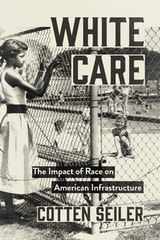
White Care
The Impact of Race on American InfrastructureCotten Seiler
University of Chicago Press, 2026
Infrastructure delivers to its users a range of benefits, from health, safety, and sanitation to mobility, energy, and education. It is, as Cotten Seiler argues, how modern states show care for their populations. White Care recounts the rise and fall of public infrastructure in the United States, unearthing its origins as an investment in those Americans deemed most highly evolved, showing the political stakes of its desegregation, and accounting for its current state of dilapidation.
From the late nineteenth century through much of the twentieth, government investments in physical (“hard”) and social (“soft”) infrastructure constituted a regime of care that Seiler calls “custodial liberalism.” This regime achieved legitimacy with the New Deal, which conferred upon white citizens a bounty of life-enhancing public works. But custodial liberalism began to unravel in the postwar decades, as Americans of color gained access to public schools, housing, swimming pools, parks, and other sites from which they had long been excluded. As the infrastructural commons were desegregated, white Americans withdrew from the social compact that had empowered them and turned toward neoliberalism, with its program of austerity and privatization. This racialized renunciation has deprived everyone—including themselves—of a cleaner, greener, healthier, safer, more affordable, and more functional environment.
Writing Centers and Racial Justice
A Guidebook for Critical PraxisTalisha Haltiwanger Morrison
Utah State University Press, 2023
In five thematically organized sections—Countering Racism and Colonialism in Higher Education; Recruitment, Hiring, and Retention; Tutor Education and Professional Development; Engaging with Campus and Community; and Holding Our Professional Organizations Accountable—scholars from a variety of institutions, both large and small, public and private, present critical reflection and concrete guidance on anti-racist writing center administrative policies and practices. Several chapters include sample materials, such as course syllabi, consultant education activities, and recruitment materials, to help current and aspiring writing center administrators implement changes in their own contexts.
Writing Centers and Racial Justice is the first book to offer clear and actionable advice on how writing centers and their staff can take up racial or social justice work that will result in real sustainable change. Writing center directors, professionals, and tutors, as well as administrators and decision makers at the institutional level, will benefit from this thoughtful and effective text.