Results by title
22 books match the query 'Racism in education'
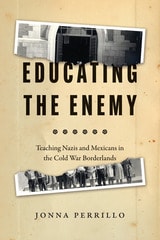
Educating the Enemy
Teaching Nazis and Mexicans in the Cold War BorderlandsJonna Perrillo
University of Chicago Press, 2022
Educating the Enemy begins with the 144 children of Nazi scientists who moved to El Paso, Texas, in 1946 as part of the military program called Operation Paperclip. These German children were bused daily from a military outpost to four El Paso public schools. Though born into a fascist enemy nation, the German children were quickly integrated into the schools and, by proxy, American society. Their rapid assimilation offered evidence that American public schools played a vital role in ensuring the victory of democracy over fascism.
Jonna Perrillo not only tells this fascinating story of Cold War educational policy, but she draws an important contrast with another, much more numerous population of children in the El Paso public schools: Mexican Americans. Like everywhere else in the Southwest, Mexican American children in El Paso were segregated into “Mexican” schools, where the children received a vastly different educational experience. Not only were they penalized for speaking Spanish—the only language all but a few spoke due to segregation—they were tracked for low-wage and low-prestige careers, with limited opportunities for economic success. Educating the Enemy charts what two groups of children—one that might have been considered the enemy, the other that was treated as such—reveal about the ways political assimilation has been treated by schools as an easier, more viable project than racial or ethnic assimilation.
Listen to an interview with the author here and read an interview in Time and a piece based on the book in the Boston Review.
Engineering Manhood
Race and the Antebellum Virginia Military InstituteJonson Miller
Lever Press, 2020
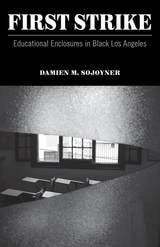
First Strike
Educational Enclosures in Black Los AngelesDamien M. Sojoyner
University of Minnesota Press, 2016
California is a state of immense contradictions. Home to colossal wealth and long portrayed as a bastion of opportunity, it also has one of the largest prison populations in the United States and consistently ranks on the bottom of education indexes. Taking a unique, multifaceted insider’s perspective, First Strike delves into the root causes of its ever-expansive prison system and disastrous educational policy.
Recentering analysis of Black masculinity beyond public rhetoric, First Strike critiques the trope of the “school-to-prison pipeline” and instead explores the realm of public school as a form of “enclosure” that has influenced the schooling (and denial of schooling) and imprisonment of Black people in California. Through a fascinating ethnography of a public school in Los Angeles County, and a “day in the life tour” of the effect of prisons on the education of Black youth, Damien M. Sojoyner looks at the contestation over education in the Black community from Reconstruction to the civil rights and Black liberation movements of the past three decades.
Policy makers, school districts, and local governments have long known that there is a relationship between high incarceration rates and school failure. First Strike is the first book that demonstrates why that connection exists and shows how school districts, cities and states have been complicit and can reverse a disturbing and needless trend. Rather than rely upon state-sponsored ideological or policy-driven models that do nothing more than to maintain structures of hierarchal domination, it allows us to resituate our framework of understanding and begin looking for solutions in spaces that are readily available and are immersed in radically democratic social visions of the future.
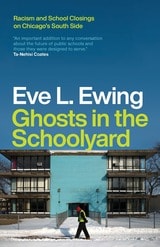
Ghosts in the Schoolyard
Racism and School Closings on Chicago's South SideEve L. Ewing
University of Chicago Press, 2018
That’s how Eve L. Ewing opens Ghosts in the Schoolyard: describing Chicago Public Schools from the outside. The way politicians and pundits and parents of kids who attend other schools talk about them, with a mix of pity and contempt.
But Ewing knows Chicago Public Schools from the inside: as a student, then a teacher, and now a scholar who studies them. And that perspective has shown her that public schools are not buildings full of failures—they’re an integral part of their neighborhoods, at the heart of their communities, storehouses of history and memory that bring people together.
Never was that role more apparent than in 2013 when Mayor Rahm Emanuel announced an unprecedented wave of school closings. Pitched simultaneously as a solution to a budget problem, a response to declining enrollments, and a chance to purge bad schools that were dragging down the whole system, the plan was met with a roar of protest from parents, students, and teachers. But if these schools were so bad, why did people care so much about keeping them open, to the point that some would even go on a hunger strike?
Ewing’s answer begins with a story of systemic racism, inequality, bad faith, and distrust that stretches deep into Chicago history. Rooting her exploration in the historic African American neighborhood of Bronzeville, Ewing reveals that this issue is about much more than just schools. Black communities see the closing of their schools—schools that are certainly less than perfect but that are theirs—as one more in a long line of racist policies. The fight to keep them open is yet another front in the ongoing struggle of black people in America to build successful lives and achieve true self-determination.
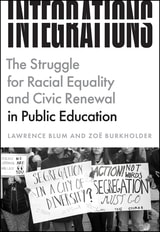
Integrations
The Struggle for Racial Equality and Civic Renewal in Public EducationLawrence Blum and Zoë Burkholder
University of Chicago Press, 2021
Integrations focuses on multiple marginalized groups in American schooling: African Americans, Native Americans, Latinxs, and Asian Americans. The authors show that in order to grapple with integration in a meaningful way, we must think of integration in the plural, both in its multiple histories and in the many possible definitions of and courses of action for integration. Ultimately, the authors show, integration cannot guarantee educational equality and justice, but it is an essential component of civic education that prepares students for life in our multiracial democracy.
Liberation and Education
Perspectives on Black Educational ThoughtRonald E. Chennault
Rutgers University Press, 2026
Liberation and Education brings together a collection of essays about Black educators’ and organizations’ quests to cultivate and employ educational strategies for the liberation of Black people. The contributions examine the enduring nature of Black people’s thinking about education prior to and through enslavement to the present. It documents a variety of critical accounts of how Black people have developed ways to free themselves mentally from the legacies of slavery, the view of Black inferiority, and historical and systemic racism.
Power, Protest, and the Public Schools
Jewish and African American Struggles in New York CityMelissa F. Weiner
Rutgers University Press, 2012
Progressive Dystopia
Abolition, Antiblackness, and Schooling in San FranciscoSavannah Shange
Duke University Press, 2019
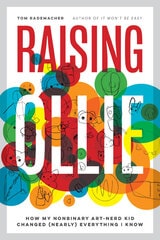
Raising Ollie
How My Nonbinary Art-Nerd Kid Changed (Nearly) Everything I KnowTom Rademacher
University of Minnesota Press, 2021
The account of one radically new school year for a Teacher of the Year and for his nonbinary, art-obsessed, brilliant child
Seven-year-old Ollie was researching local advanced school programs—because every second grader does that, right? Ollie, who used to hate weekends because they meant no school, was crying on the way to school almost every day. Sure, there were the slings and arrows of bullies and bad teachers, but, maybe worse, Ollie, a funny, anxious, smart kid with a thing for choir and an eye for graphic art, was gravely underchallenged and also struggling with identity and how to live totally as themselves. Ollie begged to switch to a new school with “kids like me,” where they wouldn’t feel so alone, or so bored, and so they made the change.
Raising Ollie is dad Tom Rademacher’s story (really, many stories) of that eventful and sometimes painful school year, parenting Ollie and relearning every day what it means to be a father and teacher. As Ollie—who is nonbinary and uses they/them pronouns, and prefers art to athletics, vegetables to cake, and animals to most humans—flourishes in their new school, Rademacher is making an eye-opening adjustment to a new school of his own, one that’s whiter and more suburban than anywhere he has previously taught, with a history of racial tension that he tries to address and navigate.
While Ollie is learning to code, 3D model, animate, speak Japanese, and finally feel comfortable at school, Rademacher increasingly sees how his own educational struggles, anxieties, and childhood upbringing are reflected in his teaching, writing, and parenting, as well as in Ollie’s experience. And with this story of one anything-but-academic year of inquiry and wonder, doubt and revelation, he shows us how raising a kid changes everything—and how much raising a kid like Ollie can teach us about who we are and what we’re doing in the world.
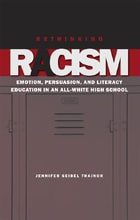
Rethinking Racism
Emotion, Persuasion, and Literacy Education in an All-White High SchoolJennifer Seibel Trainor
Southern Illinois University Press, 2008
In Rethinking Racism: Emotion, Persuasion, and Literacy Education in an All-White High School, Jennifer Seibel Trainor proposes a new understanding of the roots of racism, one that is based on attention to the role of emotion and the dynamics of persuasion. This one-year ethnographic study argues against previous assumptions about racism, demonstrating instead how rhetoric and emotion, as well as the processes and culture of schools, are involved in the formation of racist beliefs.
Telling the story of a year spent in an all-white high school, Trainor suggests that contrary to prevailing opinion, racism often does not stem from ignorance, a lack of exposure to other cultures, or the desire to protect white privilege. Rather, the causes of racism are frequently found in the realms of emotion and language, as opposed to rational calculations of privilege or political ideologies. Trainor maintains that racist assertions often originate not from prejudiced attitudes or beliefs but from metaphorical connections between racist ideas and nonracist values. These values are reinforced, even promoted by schooling via "emotioned rules" in place in classrooms: in tacit, unexamined lessons, rituals, and practices that exert a powerful—though largely unacknowledged—persuasive force on student feelings and beliefs about race.
Through in-depth analysis of established anti-racist pedagogies, student behavior, and racial discourses, Trainor illustrates the manner in which racist ideas are subtly upheld through social and literacy education in the classroom—and are thus embedded in the infrastructures of schools themselves. It is the emotional and rhetorical framework of the classroom that lends racism its compelling power in the minds of students, even as teachers endeavor to address the issue of cultural discrimination. This effort is continually hindered by an incomplete understanding of the function of emotions in relation to antiracist persuasion and cannot be remedied until the root of the problem is addressed.
Rethinking Racism calls for a fresh approach to understanding racism and its causes, offering crucial insight into the formative role of schooling in the perpetuation of discriminatory beliefs. In addition, this highly readable narrative draws from white students' own stories about the meanings of race in their learning and their lives. It thus provides new ways of thinking about how researchers and teachers rep- resent whiteness. Blending narrative with more traditional forms of ethnographic analysis, Rethinking Racism uncovers the ways in which constructions of racism originate in literacy research and in our classrooms—and how these constructions themselves can limit the rhetorical positions students enact.
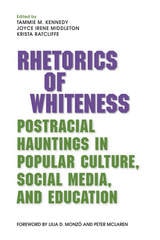
Rhetorics of Whiteness
Postracial Hauntings in Popular Culture, Social Media, and EducationEdited by Tammie M. Kennedy, Joyce Irene Middleton, Krista Ratcliffe, with a foreword by Lilia D. Monzó and Peter McLaren
Southern Illinois University Press, 2017
With the election of our first black president, many Americans began to argue that we had finally ended racism, claiming that we now live in a postracial era. Yet near-daily news reports regularly invoke white as a demographic category and recount instances of racialized violence as well as an increased sensitivity to expressions of racial unrest. Clearly, American society isn’t as color-blind as people would like to believe. In Rhetorics of Whiteness: Postracial Hauntings in Popular Culture, Social Media, and Education, contributors reveal how identifications with racialized whiteness continue to manifest themselves in American culture.
The sixteen essays that comprise this collection not only render visible how racialized whiteness infiltrates new twenty-first-century discourses and material spaces but also offer critical tactics for disrupting this normative whiteness. Specifically, contributors examine popular culture (novels, films, TV), social media (YouTube, eHarmony, Facebook), education (state law, the textbook industry, dual credit programs), pedagogy (tactics for teaching via narratives, emotional literacy, and mindfulness) as well as cultural theories (concepts of racialized space, anti-dialogicism, and color blindness). Offering new approaches to understanding racialized whiteness, this volume emphasizes the importance of a rhetorical lens for employing whiteness studies’ theories and methods to identify, analyze, interpret, and interrupt representations of whiteness.
Although whiteness studies has been waning as an active research field for the past decade, the contributors to Rhetorics of Whiteness assert that it hasn’t lost its relevancy because racialized whiteness and issues of systemic racism persist in American society and culture today. Few whiteness studies texts have been published in rhetoric and composition in the past decade, so this collection should quickly become mandatory reading. By focusing on common, yet often overlooked, contemporary examples of how racialized whiteness haunts U.S. society, Rhetorics of Whiteness serves as a valuable text for scholars in the field as well as anyone else interested in the topic.
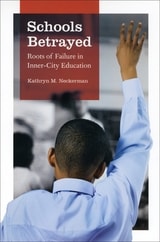
Schools Betrayed
Roots of Failure in Inner-City EducationKathryn M. Neckerman
University of Chicago Press, 2007
The problems commonly associated with inner-city schools were not nearly as pervasive a century ago, when black children in most northern cities attended school alongside white children. In Schools Betrayed, her innovative history of race and urban education, Kathryn M. Neckerman tells the story of how and why these schools came to serve black children so much worse than their white counterparts.
Focusing on Chicago public schools between 1900 and 1960, Neckerman compares the circumstances of blacks and white immigrants, groups that had similarly little wealth and status yet came to gain vastly different benefits from their education. Their divergent educational outcomes, she contends, stemmed from Chicago officials’ decision to deal with rising African American migration by segregating schools and denying black students equal resources. And it deepened, she shows, because of techniques for managing academic failure that only reinforced inequality. Ultimately, these tactics eroded the legitimacy of the schools in Chicago’s black community, leaving educators unable to help their most disadvantaged students.
Schools Betrayed will be required reading for anyone who cares about urban education.

Swimming Against the Tide
African American Girls and Science EducationSandra L. Hanson
Temple University Press, 2009
“They looked at us like we were not supposed to be scientists,” says one young African American girl, describing one openly hostile reaction she encountered in the classroom. In this significant study, Sandra Hanson explains that although many young minority girls are interested in science, the racism and sexism in the field discourage them from pursuing it after high school. Those girls that remain highly motivated to continue studying science must “swim against the tide.”
Hanson examines the experiences of African American girls in science education using multiple methods of quantitative and qualitative research, including a web survey and vignette techniques. She understands the complex interaction between race and gender in the science domain and, using a multicultural and feminist framework of analysis, addresses the role of agency and resistance that encourages and sustains interest in science in African American families and communities.
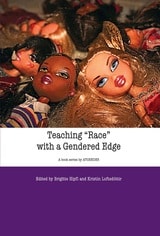
Teaching "Race" with a Gendered Edge
Brigitte Hipfl
Central European University Press, 2012

The Black Model Minority Student
African Immigrants and the Contradictions of Race in AmericaMercy Agyepong
University of Chicago Press, 2027
Explores the contradictory perceptions of African immigrant students in New York City and reveals how anti-Blackness persists even within predominantly Black and Brown schools.
African immigrant students are often celebrated in the United States as academically successful and culturally disciplined. But what happens when praise itself becomes part of a racial hierarchy? In The Black Model Minority Student, sociologist of education Mercy Agyepong traces the complex experiences of West African immigrant students attending public high schools in New York City.
Using ethnographic and interview data from predominantly Black and Brown schools in the Bronx, Agyepong shows that African immigrant students are often viewed through two competing yet coexisting narratives: as intellectually capable and hardworking, yet also as uncivilized or socially inferior. These perceptions are not incidental, but central to how anti-Blackness operates and how racial hierarchies are sustained in the United States. While the model minority stereotype shaped their experiences in Black and Brown high schools, West African immigrant students found that this seemingly favorable stereotype mattered less once they graduated and entered the white spaces of higher education and other social settings. At every step, African students—regardless of their national origins—were disadvantaged by racial stereotypes.
Theoretically grounded yet deeply human, The Black Model Minority Student offers an important new perspective on race, immigration, and education in contemporary America.
The Enduring Legacy
Structured Inequality in America's Public SchoolsMark Ryan
University of Michigan Press, 2020
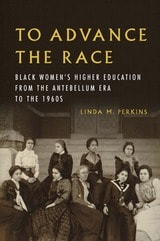
To Advance the Race
Black Women's Higher Education from the Antebellum Era to the 1960sLinda M. Perkins
University of Illinois Press, 2024
A first of its kind history, To Advance the Race is an enlightening look at African American women and their multi-generational commitment to the ideal of education as a collective achievement.
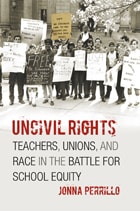
Uncivil Rights
Teachers, Unions, and Race in the Battle for School EquityJonna Perrillo
University of Chicago Press, 2012
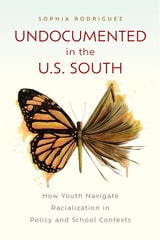
Undocumented in the U.S. South
How Youth Navigate Racialization in Policy and School ContextsSophia Rodriguez
Rutgers University Press, 2025
Whiteness Interrupted
White Teachers and Racial Identity in Predominantly Black SchoolsMarcus Bell
Duke University Press, 2021
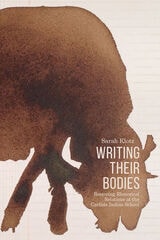
Writing Their Bodies
Restoring Rhetorical Relations at the Carlisle Indian SchoolSarah Klotz
Utah State University Press, 2020
This approach tracks the relationship between curriculum and resistance and enumerates an anti-assimilationist methodology for teachers and scholars of writing in contemporary classrooms. From the Carlisle archive emerges the concept of a rhetoric of relations, a set of Native American communicative practices that circulates in processes of intercultural interpretation and world-making. Klotz explores how embodied and material practices allowed Indigenous rhetors to maintain their cultural identities in the off-reservation boarding school system and critiques the settler fantasy of benevolence that propels assimilationist models of English education.
Writing Their Bodies moves beyond language and literacy education where educators standardize and limit their students’ means of communication and describes the extraordinary expressive repositories that Indigenous rhetors draw upon to survive, persist, and build futures in colonial institutions of education.
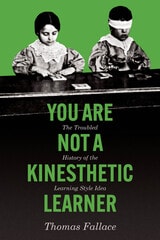
You Are Not a Kinesthetic Learner
The Troubled History of the Learning Style IdeaThomas Fallace
University of Chicago Press, 2025
The widely embraced notion that we all process information in one of three distinct modes—visual, auditory, or kinesthetic—has informed educational practices for decades. In recent years, however, numerous studies have questioned the effectiveness of aligning instruction with the alleged learning styles of individual students. So, why is it still commonplace in the literature on beneficial teaching at all levels of education?
In You Are Not a Kinesthetic Learner: The Troubled History of a Dangerous Idea, historian Thomas Fallace traces the origins, evolution, and history of the learning style idea, demonstrating its relationship to a legacy of unequal education for children of color. Fallace argues that the research supporting the learning style idea was problematic from its inception in the 1910s and that it was used to label and justify a diminished curriculum for many Black and Latine students, whose cultural differences were perceived as weaknesses. In recent years, numerous empirical studies have not found the approach to be effective. This fascinating history clearly shows the danger of sorting and labeling students with permanent style identities and makes a strong case for removing learning styles as the basis for any educators’ instructional toolkit.
The first book-length history of learning styles, You Are Not a Kinesthetic Learner encourages us all to consider the research, be open to future developments and updates, and question even our most intuitive assumptions.