Results by title
151 books match the query 'Radicalism' and 18 start with a
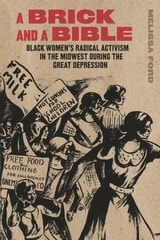
A Brick and a Bible
Black Women's Radical Activism in the Midwest during the Great DepressionMelissa Ford
Southern Illinois University Press, 2022
Uncovering the social revolution led by Black women in the heartland
In this first study of Black radicalism in midwestern cities before the civil rights movement, Melissa Ford connects the activism of Black women who championed justice during the Great Depression to those involved in the Ferguson Uprising and the Black Lives Matter movement. A Brick and a Bible examines how African American working-class women, many of whom had just migrated to “the promised land” only to find hunger, cold, and unemployment, forged a region of revolutionary potential.
A Brick and a Bible theorizes a tradition of Midwestern Black radicalism, a praxis-based ideology informed by but divergent from American Communism. Midwestern Black radicalism that contests that interlocking systems of oppression directly relates the distinct racial, political, geographic, economic, and gendered characteristics that make up the American heartland. This volume illustrates how, at the risk of their careers, their reputations, and even their lives, African American working-class women in the Midwest used their position to shape a unique form of social activism.
Case studies of Detroit, St. Louis, Chicago, and Cleveland—hotbeds of radical activism—follow African American women across the Midwest as they participated in the Ford Hunger March, organized the Funsten Nut Pickers’ strike, led the Sopkin Dressmakers’ strike, and supported the Unemployed Councils and the Scottsboro Boys’ defense. Ford profoundly reimagines how we remember and interpret these “ordinary” women doing extraordinary things across the heartland. Once overlooked, their activism shaped a radical tradition in midwestern cities that continues to be seen in cities like Ferguson and Minneapolis today.

A Collection of Ranter Writings
Spiritual Liberty and Sexual Freedom in the English RevolutionNigel Smith
Pluto Press, 2014
The Ranters - like the Levellers and the Diggers - were a group of religious libertarians who flourished during the English Civil War (1642–1651), a period of social and religious turmoil which saw, in the words of the historian Christopher Hill, 'the world turned upside down'.
A Collection of Ranter Writings is the most notable attempt to anthologise the key Ranter writings, bringing together some of the most remarkable, visionary and unforgettable texts. The subjects range from the limits to pleasure and divine right, to social justice and collective action.
The Ranters have intrigued and captivated generations of scholars and philosophers. This carefully curated collection will be of great interest to historians, philosophers and all those trying to understand past radical traditions.

A Conspiratorial Life
Robert Welch, the John Birch Society, and the Revolution of American ConservatismEdward H. Miller
University of Chicago Press, 2021
Though you may not know his name, Robert Welch (1899-1985)—founder of the John Birch Society—is easily one of the most significant architects of our current political moment. In A Conspiratorial Life, the first full-scale biography of Welch, Edward H. Miller delves deep into the life of an overlooked figure whose ideas nevertheless reshaped the American right.
A child prodigy who entered college at age 12, Welch became an unlikely candy magnate, founding the company that created Sugar Daddies, Junior Mints, and other famed confections. In 1958, he funneled his wealth into establishing the organization that would define his legacy and change the face of American politics: the John Birch Society. Though the group’s paranoiac right-wing nativism was dismissed by conservative thinkers like William F. Buckley, its ideas gradually moved from the far-right fringe into the mainstream. By exploring the development of Welch’s political worldview, A Conspiratorial Life shows how the John Birch Society’s rabid libertarianism—and its highly effective grassroots networking—became a profound, yet often ignored or derided influence on the modern Republican Party. Miller convincingly connects the accusatory conservatism of the midcentury John Birch Society to the inflammatory rhetoric of the Tea Party, the Trump administration, Q, and more. As this book makes clear, whether or not you know his name or what he accomplished, it’s hard to deny that we’re living in Robert Welch’s America.

A Conspiratorial Life
Robert Welch, the John Birch Society, and the Revolution of American ConservatismEdward H. Miller
University of Chicago Press, 2021
This is an auto-narrated audiobook edition of this book.
The first full-scale biography of Robert Welch, who founded the John Birch Society and planted some of modern conservatism’s most insidious seeds.
Though you may not know his name, Robert Welch (1899-1985)—founder of the John Birch Society—is easily one of the most significant architects of our current political moment. In A Conspiratorial Life, the first full-scale biography of Welch, Edward H. Miller delves deep into the life of an overlooked figure whose ideas nevertheless reshaped the American right.
A child prodigy who entered college at age 12, Welch became an unlikely candy magnate, founding the company that created Sugar Daddies, Junior Mints, and other famed confections. In 1958, he funneled his wealth into establishing the organization that would define his legacy and change the face of American politics: the John Birch Society. Though the group’s paranoiac right-wing nativism was dismissed by conservative thinkers like William F. Buckley, its ideas gradually moved from the far-right fringe into the mainstream. By exploring the development of Welch’s political worldview, A Conspiratorial Life shows how the John Birch Society’s rabid libertarianism—and its highly effective grassroots networking—became a profound, yet often ignored or derided influence on the modern Republican Party. Miller convincingly connects the accusatory conservatism of the midcentury John Birch Society to the inflammatory rhetoric of the Tea Party, the Trump administration, Q, and more. As this book makes clear, whether or not you know his name or what he accomplished, it’s hard to deny that we’re living in Robert Welch’s America.
A Radical Convergence
Latter-day Saints and Their Utopian Socialist OriginsErik J. Freeman
University of Illinois Press, 2026
Erik J. Freeman uses the lives of radical converts to explore the international socialist politics that permeated the early Church. These energetic newcomers fueled LDS expansion even as they laid the foundation for a global religion. At the same time, utopian socialists within the Church helped lay the groundwork for later political and social movements and progressive ideas. The Church in the United States pivoted toward capitalism after the turn of the century, but socialist thought remained—and remain—an important thread throughout LDS communities around the world.
Provocative and sweeping, A Radical Convergence tells the surprising story of utopian socialism's place in Church history.
A Radical Spirit
The History and Potential of the Latter Day Saint TraditionEdited by Andrew Bolton, Taunalyn Ford, and Patrick Q. Mason
University of Illinois Press, 2027
Early followers of Joseph Smith believed their new faith could organize society from the ground up and create a religious community shaped by justice, equality, and spiritual transformation. The essayists look at the movement’s diverse influences—religious, philosophical, and cultural—alongside the economic, gender, and racial issues that informed its radicalism. They also trace the competing pressures inside and outside the movement that helped determine which radical ideas survived and which faded or were later enhanced.
Eye-opening and expansive, A Radical Spirit rediscovers implications of the original heart of the Restoration tradition that thrived among the marginalized poor in the USA, Canada and in Europe—a radical Spirit of Jesus that offers possibilities for our times.
Contributors: Andrew Bolton, Gerard Charmley, Rebekah Clark, Taunalyn Ford, Russell Arben Fox, Erik J. Freeman, David J. Howlett, Brad A. Martell, Lori Martell, Patrick Q. Mason, Michael Ratcliffe, Jennifer Reeder, Joseph M. Spencer, Jordan T. Watkins, Walker Wright
A Thousand Plateaus
Capitalism and SchizophreniaGilles Deleuze
University of Minnesota Press, 1987
Abbie Hoffman
American RebelJezer, Marty
Rutgers University Press, 1993
"... Abbie, more than any other radical, showed potheads how to demonstrate and radicals how to dance." -- Chicago Tribune
"... deeply sympathetic and scrupulously detached-a triumph of judicious empathy." -- MARTIN DUBERMAN, Distinguished Professor of History, Lehman/The Graduate School, C.U.N.Y.
"... details Hoffman's humor, manic energy, depressive spells, political skills, and above all, his Incurable and still contagious optimism." -- Entertainment Weekly
"Here's the Abbie I knew and loved! Marty Jezer has captured him in all his complexity, dedication, humor, and heart." -- ANITA HOFFMAN
Abolitionist Politics and the Coming of the Civil War
James Brewer Stewart
University of Massachusetts Press, 2008
Before the Civil War, slaveholders made themselves into the most powerful, most deeply rooted, and best organized private interest group within the United States. Not only did slavery represent the national economy's second largest capital investment, exceeded only by investment in real estate, but guarantees of its perpetuation were studded throughout the U.S. Constitution. The vast majority of white Americans, in North and South, accepted the institution, and pro-slavery presidents and congressmen consistently promoted its interests.
In Abolitionist Politics and the Coming of the Civil War, James Brewer Stewart explains how a small group of radical activists, the abolitionist movement, played a pivotal role in turning American politics against this formidable system. He examines what influence the movement had in creating the political crises that led to civil war and evaluates the extent to which a small number of zealous reformers made a truly significant political difference when demanding that their nation face up to its most excruciating moral problem. In making these assessments, Stewart addresses a series of more specific questions: What were the abolitionists actually up against when seeking the overthrow of slavery and white supremacy? What motivated and sustained them during their long and difficult struggles? What larger historical contexts (religious, social, economic, cultural, and political) influenced their choices and determined their behavior? What roles did extraordinary leaders play in shaping the movement, and what were the contributions of abolitionism's unheralded “foot soldiers”? What factors ultimately determined, for better or worse, the abolitionists' impact on American politics and the realization of their equalitarian goals?
Affective Communities
Anticolonial Thought, Fin-de-Siecle Radicalism, and the Politics of FriendshipLeela Gandhi
Duke University Press, 2006
Gandhi weaves together the stories of a number of South Asian and European friendships that flourished between 1878 and 1914, tracing the complex historical networks connecting figures like the English socialist and homosexual reformer Edward Carpenter and the young Indian barrister M. K. Gandhi, or the Jewish French mystic Mirra Alfassa and the Cambridge-educated Indian yogi and extremist Sri Aurobindo. In a global milieu where the battle lines of empire are reemerging in newer and more pernicious configurations, Affective Communities challenges homogeneous portrayals of “the West” and its role in relation to anticolonial struggles. Drawing on Derrida’s theory of friendship, Gandhi puts forth a powerful new model of the political: one that finds in friendship a crucial resource for anti-imperialism and transnational collaboration.
Against Normalization
Writing Radical Democracy in South AfricaAnthony O'Brien
Duke University Press, 2001
O’Brien brings together an unusual array of contemporary South African writing: cultural theory and debate, worker poetry, black and white feminist writing, Black Consciousness drama, the letters of exiled writers, and postapartheid fiction and film. Paying subtle attention to well-known figures like Nadine Gordimer, Bessie Head, and Njabulo Ndebele, but also foregrounding less-studied writers like Ingrid de Kok, Nise Malange, Maishe Maponya, and the Zimbabwean Dambudzo Marechera, he reveals in their work the construction of a political aesthetic more radically democratic than the current normalization of nationalism, ballot-box democracy, and liberal humanism in culture could imagine. Juxtaposing his readings of these writers with the theoretical traditions of postcolonial thinkers about race, gender, and nation like Paul Gilroy, bell hooks, and Gayatri Spivak, and with others such as Samuel Beckett and Vaclav Havel, O’Brien adopts a uniquely comparatist and internationalist approach to understanding South African writing and its relationship to the cultural settlement after apartheid.
With its appeal to specialists in South African fiction, poetry, history, and politics, to other Africanists, and to those in the fields of colonial, postcolonial, race, and gender studies, Against Normalization will make a significant intervention in the debates about cultural production in the postcolonial areas of global capitalism.

Aliens and Dissenters
Federal Suppression of Radicals, 1903-1933William Preston, Jr.
University of Illinois Press, 1994
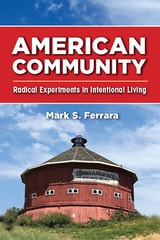
American Community
Radical Experiments in Intentional LivingMark S. Ferrara
Rutgers University Press, 2020
American Community takes us inside forty of the most interesting intentional communities in the nation’s history, from the colonial era to the present day. You will learn about such little-known experiments in cooperative living as the Icarian communities, which took the utopian ideas expounded in a 1840 French novel and put them into practice, ultimately spreading to five states over fifty years. Plus, it covers more recent communities such as Arizona’s Arcosanti, designed by architect Paolo Soleri as a model for ecologically sustainable living.
In this provocative and engaging book, Mark Ferrara guides readers through an array of intentional communities that boldly challenged capitalist economic arrangements in order to attain ideals of harmony, equality, and social justice. By shining a light on these forgotten histories, it shows that far from being foreign concepts, communitarianism and socialism have always been vital parts of the American experience.

An Era of Disruption and Violence
The FBI and the Shattering of the Sixties New LeftAaron J. Leonard
Rutgers University Press, 2027
Throughout the decade of the sixties, the FBI and other elements of the government undertook a massive effort to contain the movement against the American apartheid system and the war in Vietnam. The prime focus of these increasingly repressive efforts was the young radicals of the New Left, residing in the Students for a Democratic Society. Utilizing thousands of pages of unexamined FBI files, voluminous reports from Congress, and the author’s files obtained through Freedom of Information filings, this book will tell the story of the massive repression set loose against SDS, the group’s breakup due to internecine factionalism, and how this was encouraged and amplified at every turn by secret measures deployed by the FBI.
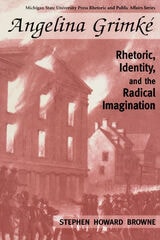
Angelina Grimke
Rhetoric, Identity, and the Radical ImaginationStephen H. Browne
Michigan State University Press, 1999
Abolitionist, women's rights activist, and social reformer, Angelina Grimké (1805-79) was among the first women in American history to seize the public stage in pursuit of radical social reform. "I will lift up my voice like a trumpet," she proclaimed, "and show this people their transgressions." And when she did lift her voice in public, on behalf of the public, she found that, in creating herself, she might transform the world. In the process, Grimké crossed the wires of race, gender, and power, and produced explosions that lit up the world of antebellum reform. Among the most remarkable features of Angelina Grimké's rhetorical career was her ability to stage public contests for the soul of America—bringing opposing ideas together to give them voice, depth, and range to create new and more compelling visions of social change.
Angelina Grimké: Rhetoric, Identity, and the Radical Imagination is the first full-length study to explore the rhetorical legacy of this most unusual advocate for human rights. Stephen Browne examines her epistolary and oratorical art and argues that rhetoric gave Grimké a means to fashion not only her message but her very identity as a moral force.

Anti-Imperialist Modernism
Race and Transnational Radical Culture from the Great Depression to the Cold WarBenjamin Balthaser
University of Michigan Press, 2015

AntoloGaia
Queering the Seventies, A Radical Trans MemoirPorpora Marcasciano
Rutgers University Press, 2024
In this stirring memoir by a member of the first generation of LGBTQ+ activists in Italy, Porpora Marcasciano tells her story and shares the struggles and accomplishments of her fellow activists who achieved so much in the 1970s yet suffered devastating losses during the AIDS epidemic of the 1980s. AntoloGaia offers an insider’s look at the beginnings of the gay liberation movement in Italy and reveals how it was intimately intertwined with other forms of left-wing activism. At the same time, it powerfully conveys the queer joy of a young person from a small village first encountering the vibrant sexual minority communities of Naples, Bologna, and Rome. As Marcasciano starts to embrace her trans identity, she meets the famous anthropologist Pino Simonelli, who introduces her to Naples’s unique femminielli subculture and gives her the name Porporino, which she later shortens to Porpora. In keeping with this story of gender, sexual, and political discovery, AntoloGaia is the first piece of Italian life-writing to use gender-neutral and mixed-gender language.
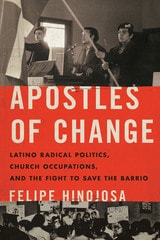
Apostles of Change
Latino Radical Politics, Church Occupations, and the Fight to Save the BarrioBy Felipe Hinojosa
University of Texas Press, 2021
2021 Finalist Raul Yzaguirre Best Political/Current Affairs Book, International Latino Book Awards
Winner of the Texas Association of Chicanos in Higher Education Inaugural Book Award
Unraveling the intertwined histories of Latino radicalism and religion in urban America, this book examines how Latino activists transformed churches into staging grounds for protest against urban renewal and displacement.
In the late 1960s, the American city found itself in steep decline. An urban crisis fueled by federal policy wreaked destruction and displacement on poor and working-class families. The urban drama included religious institutions, themselves undergoing fundamental change, that debated whether to stay in the city or move to the suburbs. Against the backdrop of the Black and Brown Power movements, which challenged economic inequality and white supremacy, young Latino radicals began occupying churches and disrupting services to compel church communities to join their protests against urban renewal, poverty, police brutality, and racism.
Apostles of Change tells the story of these occupations and establishes their context within the urban crisis; relates the tensions they created; and articulates the activists' bold, new vision for the church and the world. Through case studies from Chicago, Los Angeles, New York City, and Houston, Felipe Hinojosa reveals how Latino freedom movements frequently crossed boundaries between faith and politics and argues that understanding the history of these radical politics is essential to understanding the dynamic changes in Latino religious groups from the late 1960s to the early 1980s.