Results by title
3 books match the query 'Radio audiences'
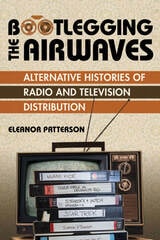
Bootlegging the Airwaves
Alternative Histories of Radio and Television DistributionEleanor Patterson
University of Illinois Press, 2024
Long before internet archives and the anytime, anywhere convenience of streaming, people collected, traded, and shared radio and television content via informal networks that crisscrossed transnational boundaries.
Eleanor Patterson’s fascinating cultural history explores the distribution of radio and TV tapes from the 1960s through the 1980s. Looking at bootlegging against the backdrop of mass media’s formative years, Patterson delves into some of the major subcultures of the era. Old-time radio aficionados felt the impact of inexpensive audio recording equipment and the controversies surrounding programs like Amos ‘n’ Andy. Bootlegging communities devoted to buddy cop TV shows like Starsky and Hutch allowed women to articulate female pleasure and sexuality while Star Trek videos in Australia inspired a grassroots subculture built around community viewings of episodes. Tape trading also had a profound influence on creating an intellectual pro wrestling fandom that aided wrestling’s growth into an international sports entertainment industry.
Contested Airwaves
American Radio at Home and Abroad, 1914-1946Michael A. Krysko
University of Illinois Press, 2025
Controversial American-led radio initiatives sparked a kaleidoscope of conflicts and rivalries from the medium’s earliest days through the end of World War II. Michael A. Krysko explores how the medium engaged the knowledge, assumptions, and prejudices that fueled listeners’ and policymakers’ objections to foreign and unwelcome radio content.
Krysko considers Americans’ antagonism toward non-English language broadcasting; issues of identity, geography, and sovereignty that propelled opposition to Mexico’s “border blaster” stations; how a project aimed at helping Cajun-speaking listeners became a French-only celebration of Acadian culture; a failed initiative to teach English to Latin Americans via shortwave broadcasting; enduring US-Panamanian conflicts over the control of radio in and around the Panama Canal; and how farmers from across the Southwest protested a radio treaty’s perceived preferential treatment of Cuba. Paying particular attention to the act of listening, Krysko shows how these initiatives illuminated and solidified divisions rooted in identity, nationalism, and prejudice.
Clear and wide-ranging, Contested Airwaves reveals early radio’s place at the nexus of public programming, transnational relations, and its own evolution as a communication medium.
Under the Radar
Tracking Western Radio Listeners in the Soviet UnionR. Eugene Parta
Central European University Press, 2022
Western democracy is currently under attack by a resurgent Russia, weaponizing new technologies and social media. How to respond? During the Cold War, the West fought off similar Soviet propaganda assaults with shortwave radio broadcasts. Founded in 1949, the US-funded Radio Free Europe/Radio Liberty broadcast uncensored information to the Soviet republics in their own languages. About one-third of Soviet urban adults listened to Western radio. The broadcasts played a key role in ending the Cold War and eroding the communist empire.
R. Eugene Parta was for many years the director of Soviet Area Audience Research at RFE/RL, charged among others with gathering listener feedback. In this book he relates a remarkable Cold War operation to assess the impact of Western radio broadcasts on Soviet listeners by using a novel survey research approach. Given the impossibility of interviewing Soviet citizens in their own country, it pioneered audacious interview methods in order to fly under the radar and talk to Soviets traveling abroad, ultimately creating a database of 51,000 interviews which offered unparalleled insights into the media habits and mindset of the Soviet public. By recounting how the “impossible” mission was carried out, Under the Radar also shows how the lessons of the past can help counter the threat from a once and current adversary.