Results by title

6 books match the query 'Radiology, Radiotherapy & Nuclear Medicine'
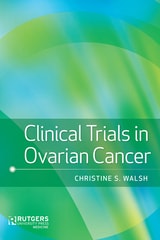
cover of Clinical Trials in Ovarian Cancer

Clinical Trials in Ovarian Cancer

Walsh, Christine S

Rutgers University Press, 2017
When a patient is diagnosed with a gynecological malignancy, she and her doctors must make urgent, high-risk decisions about her course of treatment. In selecting an appropriate plan of care, physicians must weigh the patient’s individual needs, the tumor’s specific characteristics, and the treatment’s potential side effects. Because there is no one-size-fits-all treatment solution, a plethora of clinical trials have been performed on ovarian cancer patients, but clinicians may struggle to keep up with this ever-growing body of research.   
 
Collecting and synthesizing research findings from a wide array of medical journal articles and book chapters, Clinical Trials in Ovarian Cancer provides physicians with an invaluable resource. Gynecologic oncologist Christine S. Walsh systematically outlines each of the seminal Phase III trials that have shaped the treatment of ovarian cancers, detailing the rationale for the trial, the patient population studied, treatment delivery methods, efficacy, toxicity, and trial conclusions. She provides a clear overview of established treatments, as well as still-controversial experimental approaches. 
 
The first book to organize this cutting-edge research into an easy-to-use reference, Clinical Trials in Ovarian Cancer should help medical personnel at all levels provide their patients with the highest standard of care. 
 
[more]
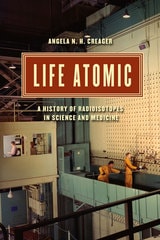
cover of Life Atomic: A History of Radioisotopes in Science and Medicine

Life Atomic

A History of Radioisotopes in Science and Medicine

Angela N. H. Creager

University of Chicago Press, 2013
After World War II, the US Atomic Energy Commission (AEC) began mass-producing radioisotopes, sending out nearly 64,000 shipments of radioactive materials to scientists and physicians by 1955. Even as the atomic bomb became the focus of Cold War anxiety, radioisotopes represented the government’s efforts to harness the power of the atom for peace—advancing medicine, domestic energy, and foreign relations.
           
In Life Atomic, Angela N. H. Creager tells the story of how these radioisotopes, which were simultaneously scientific tools and political icons, transformed biomedicine and ecology. Government-produced radioisotopes provided physicians with new tools for diagnosis and therapy, specifically cancer therapy, and enabled biologists to trace molecular transformations. Yet the government’s attempt to present radioisotopes as marvelous dividends of the atomic age was undercut in the 1950s by the fallout debates, as scientists and citizens recognized the hazards of low-level radiation. Creager reveals that growing consciousness of the danger of radioactivity did not reduce the demand for radioisotopes at hospitals and laboratories, but it did change their popular representation from a therapeutic agent to an environmental poison. She then demonstrates how, by the late twentieth century, public fear of radioactivity overshadowed any appreciation of the positive consequences of the AEC’s provision of radioisotopes for research and medicine.
[more]
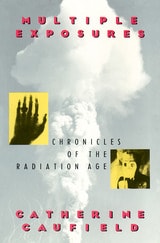
cover of Multiple Exposures: Chronicles of the Radiation Age

Multiple Exposures

Chronicles of the Radiation Age

Catherine Caufield

University of Chicago Press, 1990

"Catherine Caufield has written an important book on an important topic:
the history behind the safety standards limiting the effects of high energy
radiation on human beings. . . . Provides an immense amount of information
in a very readable form."—W. Alan Runciman, Prometheus

"From fallout and radon to radioactive smoke detectors and dental X-rays,
Caufield traces the proliferation of the uses of radiation in medicine,
industry and the military, and in generating energy. An intelligent,
non-alarmist history."—Publishers Weekly
[more]
cover of Precision Medicine Oncology: A Primer

Precision Medicine Oncology

A Primer

Lorna Rodriguez-Rodriguez

Rutgers University Press, 2019

Precision medicine is rapidly becoming the standard-of-care for the treatment of cancer patients. This is made possible, in part, by the ready availability and reasonable costs of comprehensive DNA and RNA sequencing assays. However, precision medicine is complex and incorporates entirely new types of data and treatment paradigms that are outside of the training of most oncologists in practice today.

Precision Medicine Oncology: A Primer is a concise review of the fundamental principles and applications of precision medicine, intended for clinicians, particularly those working in oncology. It provides an accessible introduction to the technological advances in DNA and RNA sequencing, gives a detailed overview of approaches to the interpretation of molecular test results and their point-of-care implementation for individual patients, and describes innovative clinical trial designs in oncology as well as characteristics of the computational infrastructures through which massive quantities of data are collected, stored, and used in precision medicine oncology.
 
[more]
cover of Precision Radiation Oncology

Precision Radiation Oncology

Haffty, Bruce G

Rutgers University Press, 2018

Precision medicine is a rapidly-evolving field in the management of cancer. The use of novel molecular or genetic signatures in local-regional management is still in its infancy. Precision Radiation Oncology demystifies this state-of-the-art research and technology. 

By describing current existing clinical and pathologic features, and focusing on the ability to improve outcomes in cancer using radiation therapy, this book discusses incorporating novel genomic- or biology-based biomarkers in the treatment of patients moving radiation oncology into precision/personalized medicine. Precision Radiation Oncology provides readers with an overview of the new developments of precision medicine in radiation oncology, further advancing the integration of new research findings into individualized radiation therapy and its clinical applications.  
 
[more]
cover of The Radiology Handbook: A Pocket Guide to Medical Imaging

The Radiology Handbook

A Pocket Guide to Medical Imaging

J. S. Benseler

Ohio University Press, 2006

Designed for busy medical students, The Radiology Handbook is a quick and easy reference for any practitioner who needs information on ordering or interpreting images.

The book is divided into three parts:

- Part I presents a table, organized from head to toe, with recommended imaging tests for common clinical conditions.

- Part II is organized in a question and answer format that covers the following topics: how each major imaging modality works to create an image; what the basic precepts of image interpretation in each body system are; and where to find information and resources for continued learning.

- Part III is an imaging quiz beginning at the head and ending at the foot. Sixty images are provided to self-test knowledge about normal imaging anatomy and common imaging pathology.

Published in collaboration with the Ohio University College of Osteopathic Medicine, The Radiology Handbook is a convenient pocket-sized resource designed for medical students and non radiologists.

[more]