Results by title
6 books match the query 'Rafting (Sports)'
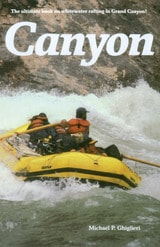
Canyon
Michael P. Ghiglieri
University of Arizona Press, 1992
From Lee's Ferry to Diamond Creek, Ghiglieri leads you down 226 miles of wild river and through some of the most breathtaking scenery on earth. Along the way, he navigates the Colorado River's dozens of notorious rapids—many of which drop fifteen feet or more—and shares the excitement of waves and boulders, thunder and foam. Recounting a real journey through this geological wonder, Canyon interweaves heart-pounding adventure with factual insights into the world of Grand Canyon. Between the rapids, Ghiglieri relates tales of river runners past and present, lessons in geology and wildlife, observations on the impact of Glen Canyon Dam, and stories of Native inhabitants, from Anasazi ancestors to Havasupai Rastafarians. This trip also offers more than its share of human drama for the passengers aboard, leaving them with tales of their own to tell.
"Running the Colorado River in the Grand Canyon is to me the most impressive journey on our planet," writes Ghiglieri, "an adventure that leaves no traveler unchanged." For anyone who has ever shared or contemplated that adventure, Canyon recreates an unforgettable ride.
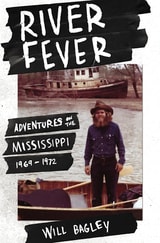
River Fever
Adventures on the Mississippi, 1969-1972Will Bagley
Signature Books, 2019
Beginning in the spring of 1969, Huckleberry Finn inspired a question: Could you build a raft, float down the Mississippi River to New Orleans, and on the way learn something about America and its peoples? Will Bagley, a vagrant longhair and future prize-winning western historian, and his friends could, and did. Now, a half century after the adventure, Bagley tells his story.
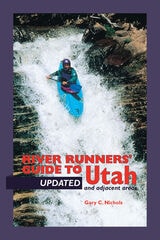
River Runners' Guide To Utah and Adjacent Areas
Gary C Nichols
University of Utah Press, 1986
A fully revised and updated edition of Gary Nichols’ widely used guide to river running in Utah. Major changes have occurred on Big and Little Cottonwood Creeks, which have many new drops with dangerous hydraulics. This edition accounts for these and other alterations in the state’s waterways over the past fifteen years. Also, several of the original river access points are now on private land. Alternative access points are presented and users are alerted to the necessity of requesting permission. All this and much more will once again make A River Runners’ Guide to Utah and Adjacent Areas the one source for vital and reliable information on more than ninety river trips for beginner and expert alike. It includes:
-Over 90 river trips with descriptions and maps
-Location of access and take-out points
-Instructions for all skill levels
-Ratings of all waterways by levels of difficulty
-Identification of danger areas and obstacles
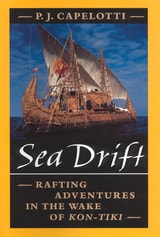
Sea Drift
Rafting Adventures in the Wake of Kon-TikiCapelotti, P. J
Rutgers University Press, 2001
It was the original Survivor series, only without the omnipresent cameras, paramedics, and faux tribal rituals. Between the spring of 1947 and the summer of the year 2000, more than forty expeditions sought to drift across the oceans of the world on rafts made from straw, from bamboo, and from the same kinds of wood that children use to make model airplanes. These audacious raft voyages began with the legendary Kon-Tiki expedition, under the leadership of the renowned Norwegian explorer Thor Heyerdahl. The Kon-Tiki balsa wood raft drifted more than four thousand miles from Peru to Polynesia, and remained afloat months after experts predicted it would sink to the bottom of the Pacific. Heyerdahl’s radical thesis of a prehistoric world where ancient mariners drifted between continents on ocean currents electrified the postwar world. His Kon-Tiki: Across the Pacific by Raft sold twenty million copies in sixty-five languages.
Sea Drift is the first and only book to document all of the transoceanic raft expeditions that were organized and carried out in the half century after Kon-Tiki. But it is much more than a simple history of exploration. Readers learn of the Mormon who drifted to Hawaii to prove that wise men from Israel had colonized America, and the Frenchman who squeezed fresh water from the entrails of fish as he drifted alone across the Atlantic in a rubber boat. Then there was the anthropologist who put five men and six women on a raft to see who would make love to whom first.
Spanning more than fifty years and recounting more than forty expeditions, Sea Drift is a riveting chronicle of human daring, endurance, and folly.
The River Wild
A Celebrated Journey Down the Whitewater Rapids of the Grand CanyonCecil Kuhne
University of Utah Press, 2026
Embark on an unforgettable adventure down the mighty Colorado River in The River Wild: A Celebrated Journey down the Whitewater Rapids of the Grand Canyon. Former professional river guide Cecil Kuhne takes readers through 225 miles of towering canyon walls, surging currents, and legendary rapids that have challenged explorers for over 150 years. From the historic first descent of John Wesley Powell’s expedition to the modern thrill-seekers navigating Lava Falls, Crystal, and Hance, this book captures the heart-pounding excitement of whitewater rafting.
With vivid descriptions of the canyon’s breathtaking geology, lush flora, and abundant wildlife, Kuhne blends history, adventure, and natural beauty into an immersive journey. Whether you’re a seasoned river runner or an armchair explorer, The River Wild offers a front-row seat to one of the world’s most exhilarating river expeditions.
Woman Of The River
Georgie White Clark, Whitewater PioneerRichard Westwood
Utah State University Press, 1997
Georgie White Clark-adventurer, raconteur, eccentric--first came to know the canyons of the Colorado River by swimming portions of them with a single companion. She subsequently hiked and rafted portions of the canyons, increasingly sharing her love of the Colorado River with friends and acquaintances. At first establishing a part-time guide service as a way to support her own river trips, she went on to become perhaps the canyons' best-known river guide, introducing their rapids to many others-on the river, via her large-capacity rubber rafts, and across the nation, via magazine articles and movies. Georgie Clark saw the river and her sport change with the building of Glen Canyon Dam, enormous increases in the popularity of river running, and increased National Park Service regulation of rafting and river guides. Adjusting, though not always easily, to the changes, she helped transform an elite adventure sport into a major tourist activity.