Results by title
3 books match the query 'Railroads in literature'
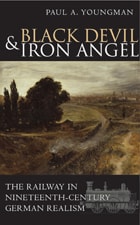
Black devil and iron angel
the railway in nineteenth-century German realismPaul A. Youngman
Catholic University of America Press, 2005
Black Devil and Iron Angel examines how the railway was received and represented by a variety of nineteenth-century German and Austrian realist authors including Berthold Auerbach, Theodor Fontane, and Gerhart Hauptmann.
[more]
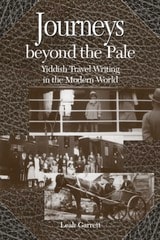
Journeys beyond the Pale
Yiddish Travel Writing in the Modern WorldLeah V. Garrett
University of Wisconsin Press, 2003
Journeys beyond the Pale is the first book to examine how Yiddish writers, from Mendele Moycher Sforim to Der Nister to the famed Sholem Aleichem, used motifs of travel to express their complicated relationship with modernization. The story of the Jews of the Pale of settlement encompasses current-day Russia, the Ukraine, Belarus, and Poland.
[more]
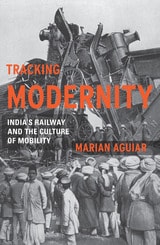
Tracking Modernity
India’s Railway and the Culture of MobilityMarian Aguiar
University of Minnesota Press, 2010
From Mohandas Gandhi’s nineteenth-century tour in a third-class compartment to the recent cinematic shenanigans of Wes Anderson’s The Darjeeling Limited, the railway has been one of India’s most potent emblems of modern life. In the first in-depth analysis of representations of the Indian railway, Marian Aguiar interprets modernity through the legacy of this transformative technology.
Since the colonial period in India, the railway has been idealized as a rational utopia—a moving box in which racial and class differences might be amalgamated under a civic, secular, and public order. Aguiar charts this powerful image into the postcolonial period, showing how the culture of mobility exposes this symbol of reason as surprisingly dynamic and productive. Looking in turn at the partition of India, labor relations, rituals of travel, works of literature and film, visual culture, and the Mumbai train bombings of 2006, Aguiar finds incongruities she terms “counternarratives of modernity” to signify how they work both with and against the dominant rhetoric. Revealing railways as a microcosm of tensions within Indian culture, Aguiar demonstrates how their representations have challenged prevailing ideas of modernity.
[more]