Results by title
14 books match the query 'Rain forest ecology'
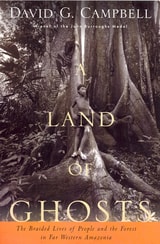
A Land of Ghosts
The Braided Lives of People and the Forest in Far Western AmazoniaCampbell, David G
Rutgers University Press, 2007
For thirty years David G. Campbell has explored the Amazon, an enchanting terrain of forest and river that is home to the greatest diversity of plants and animals to have ever existed, anywhere at any time, during the four-billion-year history of life on Earth.
With great artistic flair, Campbell describes a journey up the Rio Moa, a remote tributary of the Amazon River, 2,800 miles from its mouth. Here he joins three old friends: Arito, a caiman hunter turned paleontologist; Tarzan, a street urchin brought up in a bordello; and Pimentel, a master canoe pilot. They travel together deep into the rainforest and set up camp in order to survey every woody plant on a two-hectare plot of land with about as many tree species as in all of North America.
Campbell introduces us to two remarkable women, Dona Cabocla, a widow who raised six children on that lonely frontier, and Dona Ausira, a Nokini Native American who is the last speaker of her tribe's ages-old language. These pioneers live in a land whose original inhabitants were wiped out by centuries of disease, slavery, and genocide, taking their traditions and languages with them. He explores the intimate relationship between the extinction of native language and the extirpation of biological diversity. "It's hard for a people to love a place that is not defined in words and thus cannot be understood. And it's easy to give away something for which there are no words, something you never knew existed."
In elegant prose that enchants and entrances, Campbell has written an elegy for the Amazon forest and its peoples-for what has become a land of ghosts.
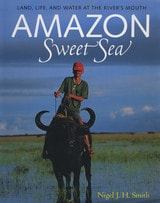
Amazon Sweet Sea
Land, Life, and Water at the River's MouthBy Nigel J. H. Smith
University of Texas Press, 2002
Far into the Atlantic Ocean, the outflow from the Amazon River creates a "sweet sea" of fresh water. At the river's mouth, a vast delta of river channels and marshes, floodplain and upland forests, open and scrub savannas, floating meadows, and mangrove swamps hosts an astonishingly diverse assemblage of plant and animal life. So rich is this biological treasure house that early European explorers deemed it inexhaustible.
In this highly readable book, Nigel Smith explores how human use of the Amazon estuary's natural resources has been affected by technological change, rapid urban growth, and accelerated market integration. Avoiding alarmist rhetoric, he shows how human intervention in the estuary has actually diversified agriculture and helped save floodplain forests from wanton destruction. His findings underscore the importance of understanding the history of land use and the ecological knowledge of local people when formulating development and conservation policies. The book will be of interest to everyone concerned with the fate of tropical forests, conserving biodiversity, and developing natural resources in a sustainable manner.
Cultural Forests of the Amazon
A Historical Ecology of People and Their LandscapesWilliam Balee
University of Alabama Press, 2013
Cultural Forests of the Amazon is a comprehensive and diverse account of how indigenous people transformed landscapes and managed resources in the most extensive region of tropical forests in the world.
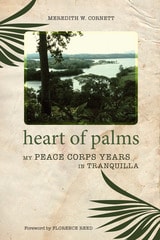
Heart of Palms
My Peace Corps Years in TranquillaMeredith W. Cornett
University of Alabama Press, 2014
A memoir of service, culture and transformation in a rural Panamanian village by a young American woman trained as a community forester for the Peace Corp.
In the storied fifty-year history of the US Peace Corps, Heart of Palms is the first Peace Corps memoir set in Panama, the slender isthmus that connects two continents and two oceans. In her memoir, Meredith Cornett transports readers to the remote village of Tranquilla, where dugout canoes are the mainstay of daily transportation, life and nature are permeated by witchcraft, and a restful night’s sleep may be disturbed by a raiding phalanx of army ants.
Cornett is sent to help counter the rapid deforestation that is destroying the ecosystem and livelihoods of the Panama Canal watershed region. Her first chapters chronicle her arrival and struggles not only with the social issues of language, loneliness, and insecurity, but also with the tragicomic basics of mastering open-fire cookery and intrusions by insects and poisonous snakes. As she grows to understand the region and its people, her keen eye discerns the overwhelming scope of her task. Unable to plant trees faster than they are lost, she writes with moving clarity about her sense of powerlessness.
Combating deforestation leads Cornett into an equally fierce battle against her own feelings of fear and isolation. Her journey to Panama becomes a parallel journey into herself. In this way, Heart of Palms is much more than a record of her Peace Corps service; it is also a moving environmental coming-of-age story and nuanced meditation on one village’s relationship to nature. When she returns home two years later, Cornett brings with her both skills and experience and a remarkable, newfound sense of confidence and mission.
Writing with rueful, self-deprecating humor, Cornett lets us ride along with her on a wave of naïve optimism, a wave that breaks not only on fear and intimidation, but also on tedium and isolation. Heart of Palms offers a bracing alternative to the romantic idealism common to Peace Corps memoirs and will be valued as a welcome addition to writing about the Peace Corps and environmental service.
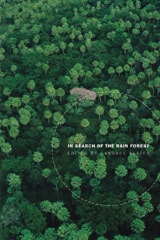
In Search of the Rain Forest
Candace Slater, ed.
Duke University Press, 2004
From diverse disciplines—history, archaeology, sociology, literature, law, and cultural anthropology—the contributors provide case studies from Latin America, Asia, and Africa. They point the way toward a search for a rain forest that is both a natural entity and a social history, an inhabited place and a shifting set of ideas. The essayists demonstrate how the single image of a wild and yet fragile forest became fixed in the popular mind in the late twentieth century, thereby influencing the policies of corporations, environmental groups, and governments. Such simplistic conceptions, In Search of the Rain Forest shows, might lead companies to tout their “green” technologies even as they try to downplay the dissenting voices of native populations. Or they might cause a government to create a tiger reserve that displaces peaceful peasants while opening the doors to poachers and bandits. By encouraging a nuanced understanding of distinctive, constantly evolving forests with different social and natural histories, this volume provides an important impetus for protection efforts that take into account the rain forest in all of its complexity.
Contributors. Scott Fedick, Alex Greene, Paul Greenough, Nancy Peluso, Suzana Sawyer, Candace Slater, Charles Zerner

In the Rainforest
Report from a Strange, Beautiful, Imperiled WorldCatherine Caufield
University of Chicago Press, 1986
"I recommend In the Rainforest as scientific journalism at its best, and [Caufield's] book as the one to read to become informed about the tropical crisis. Caufield traveled the world, went to the difficult places, sometimes beautiful and often dispiriting, mastered the important ideas, and talked to an impressive number of people on all sides of the issues. . . . There are villains in abundance: corrupt government agents who aid in the destruction of native tribes, greedy caballero landowners, and even the governmental planners who with the best of intentions rush heedlessly toward the environmental degradation of their own countries."—E. O. Wilson, Science
"The whole book is filled with amazing facts. . . . Moving and informative."—Ellen W. Chu, New York Times Book Review
La Selva
Ecology and Natural History of a Neotropical Rain ForestEdited by Lucinda A. McDade, Kamaljit S. Bawa, Henry A. Hespenheide, and Gary S.
University of Chicago Press, 1994
the most intensively studied and best-understood tropical field sites
in the world. For over thirty years, La Selva has been a major focus
of research on rainforest ecology, flora, and fauna. This volume
provides the first comprehensive review of this research, covering La
Selva's geographical history and physical setting, its plant and
animal life, and agricultural development and land use.
Drawing together a wealth of information never before available in a
single volume, La Selva offers a substantive treatment of the
ecology of a rainforest. Part 1 summarizes research on the physical
setting and environment of the rainforest, as well as the history of
the research station. Some chapters in this part focus on climate,
geomorphology, and aquatic systems, while others look at soils,
nutrient acquisition, and cycles of energy.
Part 2 synthesizes what is known about the plant community. It begins
with chapters on vegetation types and plant diversity, and also
explores plant demography, spatial patterns of trees, and the impact
of treefall gaps on forest structure and dynamics. Other chapters
address plant physiological ecology, as well as plant reproductive
systems.
Part 3 covers the animal community, summarizing information on the six
best-known animal taxa of the region: fishes, amphibians, reptiles,
birds, mammals, and butterflies. This part includes an overview of
faunal studies at La Selva and a chapter on animal population biology,
which examines animal demography and abundance, and interactions
between predators and prey. Part 4 addresses interactions between
plants and animals and the effects of these interactions on species
diversity.
Part 5 considers the impact of land use and agricultural development
on La Selva and other areas of Costa Rica. One chapter examines land
colonization and conservation in Sarapiqui, another covers subsistence
and commercial agricultural development in the Atlantic lowlands
region, and a third looks at the forest industry in northeastern Costa
Rica. This part also assesses the role and research priorities of La
Selva.
La Selva provides an introduction to tropical ecology for
students and researchers at La Selva, a major source of comparative
information for biologists working in other tropical areas, and a
valuable resource for conservationists.
The Ecology of the Barí
Rainforest Horticulturalists of South AmericaBy Stephen Beckerman and Roberto Lizarralde
University of Texas Press, 2013
Inhabiting the rainforest of the southwest Maracaibo Basin, split by the border between Colombia and Venezuela, the Barí have survived centuries of incursions. Anthropologist Roberto Lizarralde began studying the Barí in 1960, when he made the first modern peaceful contact with this previously unreceptive people; he was joined by anthropologist Stephen Beckerman in 1970. The Ecology of the Barí showcases the findings of their singular long-term study.
Detailing the Barí’s relations with natural and social environments, this work presents quantitative subsistence data unmatched elsewhere in anthropological publications. The authors’ lengthy longitudinal fieldwork provided the rare opportunity to study a tribal people before, during, and after their aboriginal patterns of subsistence and reproduction were eroded by the modern world. Of particular interest is the book’s exploration of partible paternity—the widespread belief in lowland South America that a child can have more than one biological father. The study illustrates its quantitative findings with an in-depth biographical sketch of the remarkable life of an individual Barí woman and a history of Barí relations with outsiders, as well as a description of the rainforest environment that has informed all aspects of Barí history for the past five hundred years. Focusing on subsistence, defense, and reproduction, the chapters beautifully capture the Barí’s traditional culture and the loss represented by its substantial transformation over the past half-century.
The Fate of the Forest
Developers, Destroyers, and Defenders of the Amazon, Updated EditionSusanna B. Hecht and Alexander Cockburn
University of Chicago Press, 2010
The Amazon rain forest covers more than five million square kilometers, amid the territories of nine different nations. It represents over half of the planet’s remaining rain forest. Is it truly in peril? What steps are necessary to save it? To understand the future of Amazonia, one must know how its history was forged: in the eras of large pre-Columbian populations, in the gold rush of conquistadors, in centuries of slavery, in the schemes of Brazil’s military dictators in the 1960s and 1970s, and in new globalized economies where Brazilian soy and beef now dominate, while the market in carbon credits raises the value of standing forest.
Susanna Hecht and Alexander Cockburn show in compelling detail the panorama of destruction as it unfolded, and also reveal the extraordinary turnaround that is now taking place, thanks to both the social movements, and the emergence of new environmental markets. Exploring the role of human hands in destroying—and saving—this vast forested region, The Fate of the Forest pivots on the murder of Chico Mendes, the legendary labor and environmental organizer assassinated after successful confrontations with big ranchers. A multifaceted portrait of Eden under siege, complete with a new preface and afterword by the authors, this book demonstrates that those who would hold a mirror up to nature must first learn the lessons offered by some of their own people.
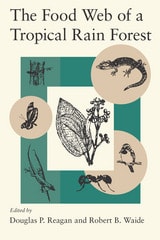
The Food Web of a Tropical Rain Forest
Edited by Douglas P. Reagan and Robert B. Waide
University of Chicago Press, 1996
This volume helps fill the gap by presenting a comprehensive description and analysis of the animal community of the tropical rain forest at El Verde, Puerto Rico. Building on more than a decade of field research, the contributors weave the complex strands of information about the energy flow within the forest—who eats whom—into a powerful tool for understanding community dynamics known as a food web. This systematic approach to organizing the natural histories of the many species at El Verde also reveals basic patterns and processes common to all rain forests, making this book a valuable contribution for anyone concerned with studying and protecting these fragile ecosystems.
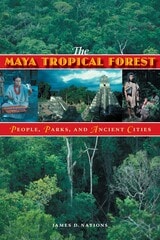
The Maya Tropical Forest
People, Parks, and Ancient CitiesBy James D. Nations
University of Texas Press, 2006
The Maya Tropical Forest, which occupies the lowlands of southern Mexico, Guatemala, and Belize, is the closest rainforest to the United States and one of the most popular tourist destinations in the Western Hemisphere. It has been home to the Maya peoples for nearly four millennia, starting around 1800 BC. Ancient cities in the rainforest such as Palenque, Yaxchilan, Tikal, and Caracol draw thousands of tourists and scholars seeking to learn more about the prehistoric Maya. Their contemporary descendants, the modern Maya, utilize the forest's natural resources in village life and international trade, while striving to protect their homeland from deforestation and environmental degradation.
Writing for both visitors and conservationists, James Nations tells the fascinating story of how ancient and modern Maya peoples have used and guarded the rich natural resources of the Maya Tropical Forest. He opens with a natural history that profiles the forest's significant animals and plants. Nations then describes the Maya peoples, biological preserves, and major archaeological sites in Mexico, Guatemala, and Belize. Drawing on more than twenty-five years of conservation work in the Maya Tropical Forest, Nations tells first-hand stories of the creation of national parks and other protected areas to safeguard the region's natural resources and archaeological heritage. He concludes with an expert assessment of the forest's future in which he calls for expanded archaeological tourism to create an ecologically sustainable economic base for the region.
Tropical Forest Remnants
Ecology, Management, and Conservation of Fragmented CommunitiesEdited by William F. Laurance and Richard O. Bierregaard Jr.
University of Chicago Press, 1997
Tropical Forest Remnants provides the best information available to help us
understand, manage, and conserve the remaining fragments. Covering geographic areas from Southeast Asia and Australia to Madagascar and the New World, this volume summarizes what is known about the ecology, management, restoration, socioeconomics, and conservation of fragmented forests. Thirty-three papers present results of recent research as
well as updates from decades-long projects in progress. Two final chapters synthesize the state of research on tropical forest fragmentation and identify key priorities for future work.
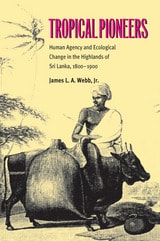
Tropical Pioneers
Human Agency and Ecological Change in the Highlands of Sri Lanka, 1800–1900James L. A. Webb Jr.
Ohio University Press, 2002
In 1800, the highlands of Sri Lanka had some of the most biologically diverse primary tropical rainforest ecosystems in the world. By 1900, only a few craggy corners and mountain caps had been spared the fire stick. Highland villagers, through the extension of slash-and-burn agriculture, and British managers, through the creation of plantations—first of coffee, then cinchona, and finally tea—had removed virtually the entire primary forest cover.
Tropical Pioneers documents the conversion of a tropical rainforest biome and the collision between what previously had been more discrete ecological zones within South Asia. The ecological impacts were transformational. Author James L. A. Webb, Jr., demonstrates that profound ecological disruption occurred in the central highlands of Sri Lanka during the nineteenth century and suggests that the theme of ecological crisis brought about by the integration of tropical ecological zones during precolonial and colonial periods alike is an important one for historians to investigate elsewhere.
Tropical Pioneers is based on extensive research in the National Archives of Sri Lanka, the National Agricultural Library at Gannaruwa, the Library of the Royal Asiatic Society-Ceylon Branch, the Royal Botanic Gardens at Kew, the Public Record Office of the United Kingdom, and the British Library.
Tropical Rainforests
Past, Present, and FutureEdited by Eldredge Bermingham, Christopher Dick, and Craig Moritz
University of Chicago Press, 2005